LOHUM And CSIR-IMMT Partner To Develop Indigenous Rare-Earth Magnet Technology
ECONOMY & POLICY

LOHUM And CSIR-IMMT Partner To Develop Indigenous Rare-Earth Magnet Technology

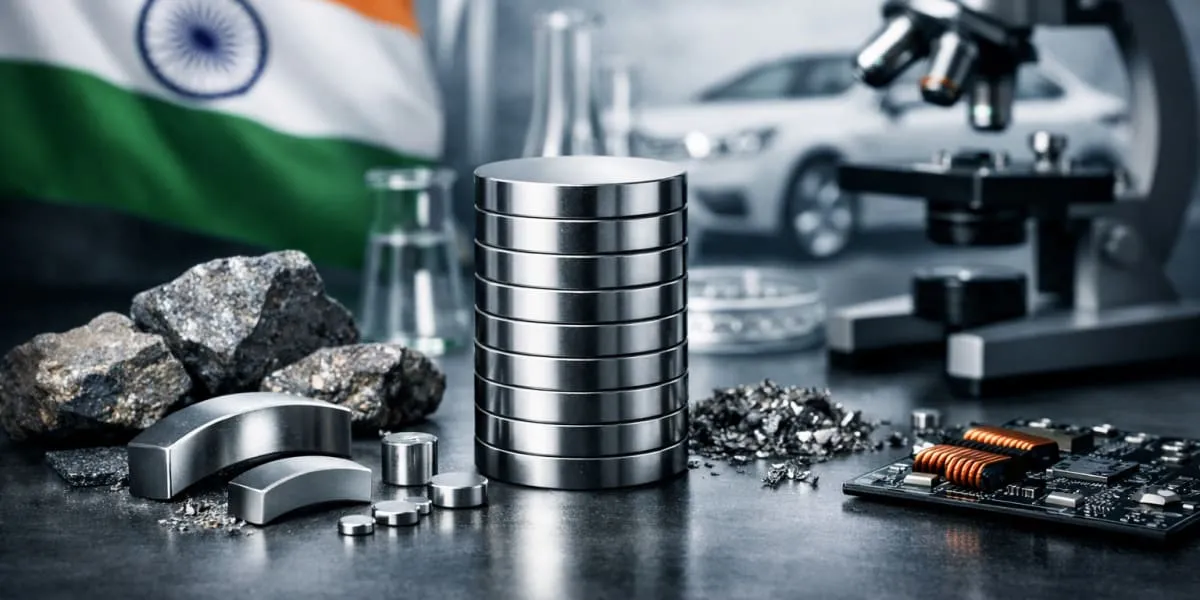
India remains heavily dependent on imports across the rare-earth magnet value chain despite the growing demand for electric vehicles, renewable energy systems and advanced electronics. Rare-earth permanent magnets are therefore central to industrial resilience, technological sovereignty and long-term economic security. Developing domestic capabilities has been identified as vital to reduce strategic vulnerability and support local manufacturing.

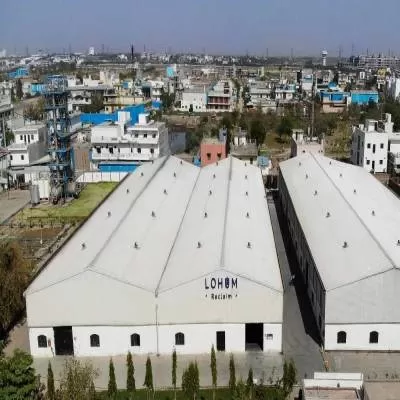
LOHUM, a diversified producer of sustainable critical minerals and advanced materials, and the Council of Scientific and Industrial Research Institute of Minerals and Materials Technology (CSIR-IMMT) have signed a memorandum of understanding to advance indigenous technology capabilities. The collaboration targets production of critical rare-earth materials used in high-performance permanent magnets. The announcement underlines a public–private approach to bridging research and industrial application within India.

Work will focus on developing and validating processes for the production of metallised neodymium-praseodymium (NdPr), one of the core materials required for high-performance magnets. The jointly developed technology aims to provide a safer alternative to the commonly used metal removal by ladle process of molten salt electrolysis. Emphasis will be placed on process safety and scalable methods that can be integrated into existing manufacturing workflows.

LOHUM and the institute will combine scientific research, process development expertise and industrial execution capabilities to translate laboratory results into commercial processes. The collaboration is expected to involve joint validation, pilot studies and knowledge transfer to accelerate technology readiness within the country. Stakeholders noted that aligning academic research with industrial needs is fundamental to building a resilient value chain.

LOHUM founder and chief executive Rajat Verma said that India’s rare-earth magnet ambitions cannot be realised through manufacturing capacity alone and require indigenous control over critical technologies and materials across the value chain. The statement described the partnership with CSIR-IMMT as a strategic step towards building that capability within India. The memorandum positions the partners to contribute to a domestic supply of materials crucial for sectors from defence to renewable energy.

India remains heavily dependent on imports across the rare-earth magnet value chain despite the growing demand for electric vehicles, renewable energy systems and advanced electronics. Rare-earth permanent magnets are therefore central to industrial resilience, technological sovereignty and long-term economic security. Developing domestic capabilities has been identified as vital to reduce strategic vulnerability and support local manufacturing. LOHUM, a diversified producer of sustainable critical minerals and advanced materials, and the Council of Scientific and Industrial Research Institute of Minerals and Materials Technology (CSIR-IMMT) have signed a memorandum of understanding to advance indigenous technology capabilities. The collaboration targets production of critical rare-earth materials used in high-performance permanent magnets. The announcement underlines a public–private approach to bridging research and industrial application within India. Work will focus on developing and validating processes for the production of metallised neodymium-praseodymium (NdPr), one of the core materials required for high-performance magnets. The jointly developed technology aims to provide a safer alternative to the commonly used metal removal by ladle process of molten salt electrolysis. Emphasis will be placed on process safety and scalable methods that can be integrated into existing manufacturing workflows. LOHUM and the institute will combine scientific research, process development expertise and industrial execution capabilities to translate laboratory results into commercial processes. The collaboration is expected to involve joint validation, pilot studies and knowledge transfer to accelerate technology readiness within the country. Stakeholders noted that aligning academic research with industrial needs is fundamental to building a resilient value chain. LOHUM founder and chief executive Rajat Verma said that India’s rare-earth magnet ambitions cannot be realised through manufacturing capacity alone and require indigenous control over critical technologies and materials across the value chain. The statement described the partnership with CSIR-IMMT as a strategic step towards building that capability within India. The memorandum positions the partners to contribute to a domestic supply of materials crucial for sectors from defence to renewable energy.

Next Story
Infrastructure Urban

SCLR Extension Nears Completion Linking BKC With Signal-Free Route

The Santacruz-Chembur Link Road (SCLR) extension towards Bandra-Kurla Complex (BKC) via the Mumbai University campus has entered its final stage, bringing motorists closer to a direct, signal-free connection between the Western Express Highway and the city’s commercial district. The elevated connector is being built as an arm from the SCLR alignment and will link the western suburbs with BKC without surface signals. The link is designed to reduce journey times for commuters travelling from the western suburbs to BKC and to improve access to eastern Mumbai. By carrying through traffic above s..

Next Story
Infrastructure Transport

Raiganj MP Seeks Bengal Only Highway Link To Siliguri

Raiganj Member of Parliament Kartik Chandra Paul met Union Minister for Road Transport and Highways Nitin Gadkari in New Delhi to press for a new stretch of national highway in North Dinajpur district. He urged approval for a Bengal-to-Bengal link that would connect National Highways 12 and 27 to allow vehicles bound for Siliguri to avoid the current route through Kishanganj in neighbouring Bihar. He also submitted a proposed alignment of the new road to the ministry for consideration. At present vehicles from Raiganj travel along NH-12 and join NH-27 at Purnia More in Dalkhola, a route that p..

Next Story
Infrastructure Transport

Airport Kilambakkam Metro Line To Be Extended To Chengalpattu

Chennai Metro Rail (CMRL) has invited tenders for two detailed project reports that would extend its rail network to Chengalpattu in the south and extend Corridor-5 to Wimco Nagar in the north as part of a second wave of expansion beyond the operator's corridors under construction. The move signals an acceleration of planning for suburban links and interchange nodes. The larger of the two studies covers a roughly 27km extension from the planned Kilambakkam metro station to Chengalpattu under Corridor-1, Phase I. CMRL floated the tender at an estimated cost of Rs 21.6 mn. The proposed line woul..

Advertisement

Subscribe to Our Newsletter

Get daily newsletters around different themes from Construction world.

STAY CONNECTED

Advertisement

Advertisement

Advertisement