Hettich Poddar Institute, Biesse Sign MoU to Boost Woodwork Skills
ECONOMY & POLICY

Hettich Poddar Institute, Biesse Sign MoU to Boost Woodwork Skills

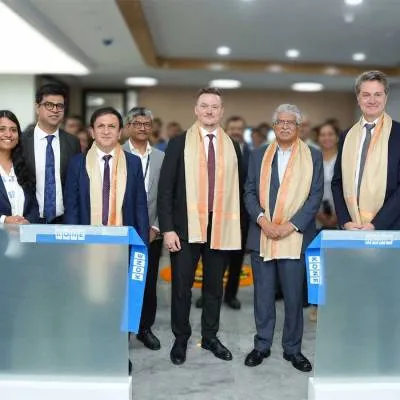
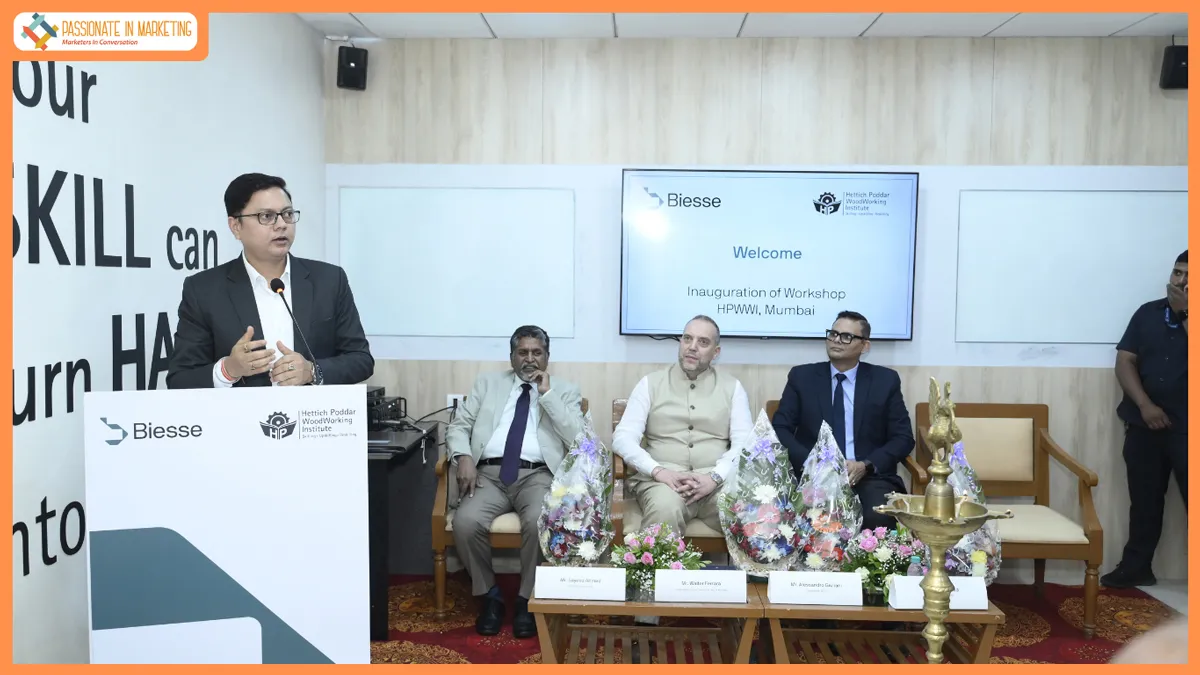
The Hettich Poddar Wood Working Institute (HPWWI) has signed a new Memorandum of Understanding (MoU) with Biesse, marking a significant advancement in skill development for India’s woodworking sector.

The collaboration will enhance training on advanced woodworking machinery, equipping learners with the technical expertise needed to integrate modern technology into traditional craftsmanship. Beyond technical education, the partnership reflects a shared commitment to upskilling India’s workforce, promoting environmental responsibility and creating long-term value for the country.

This agreement represents the second collaboration between HPWWI and Biesse, following their partnership in Faridabad. The expansion to Bhandup, Mumbai signifies Biesse’s strategic entry into India’s financial capital and reinforces its investment in future-ready manufacturing talent.

HPWWI Director and Hettich India CHRO Amit Prasad said: “At HPWWI, our focus is on creating an environment where skill meets technology and learning leads to livelihood. This collaboration brings Biesse’s advanced machines into our training ecosystem, enabling students to design and create using world-class tools. It further strengthens our commitment to preparing every trainee for the future of manufacturing.”

CEO of Biesse India Sayeed Ahmed noted that India’s woodworking industry is rapidly evolving from traditional methods to highly advanced, technology-led operations. “Through this MoU, we are bridging the technology gap and empowering individuals to grow with it. Real progress happens when machines and people work together to create lasting value for the nation,” he said.

The partnership was formally announced during ‘Technology Day with Biesse’, in the presence of Walter Ferrara, Consul General of Italy in Mumbai. He highlighted the synergy between Italian innovation and Indian craftsmanship, calling it a pathway to a more inclusive and sustainable future.

Live workshops and interactive sessions demonstrated how Biesse’s machinery can be seamlessly integrated into HPWWI’s training curriculum, giving students hands-on, industry-aligned experience.

HPWWI expressed gratitude to Biesse for its continued support and shared vision for empowering India’s skilled workforce and contributing to a smarter, more sustainable future for manufacturing.

The Hettich Poddar Wood Working Institute (HPWWI) has signed a new Memorandum of Understanding (MoU) with Biesse, marking a significant advancement in skill development for India’s woodworking sector. The collaboration will enhance training on advanced woodworking machinery, equipping learners with the technical expertise needed to integrate modern technology into traditional craftsmanship. Beyond technical education, the partnership reflects a shared commitment to upskilling India’s workforce, promoting environmental responsibility and creating long-term value for the country. This agreement represents the second collaboration between HPWWI and Biesse, following their partnership in Faridabad. The expansion to Bhandup, Mumbai signifies Biesse’s strategic entry into India’s financial capital and reinforces its investment in future-ready manufacturing talent. HPWWI Director and Hettich India CHRO Amit Prasad said: “At HPWWI, our focus is on creating an environment where skill meets technology and learning leads to livelihood. This collaboration brings Biesse’s advanced machines into our training ecosystem, enabling students to design and create using world-class tools. It further strengthens our commitment to preparing every trainee for the future of manufacturing.” CEO of Biesse India Sayeed Ahmed noted that India’s woodworking industry is rapidly evolving from traditional methods to highly advanced, technology-led operations. “Through this MoU, we are bridging the technology gap and empowering individuals to grow with it. Real progress happens when machines and people work together to create lasting value for the nation,” he said. The partnership was formally announced during ‘Technology Day with Biesse’, in the presence of Walter Ferrara, Consul General of Italy in Mumbai. He highlighted the synergy between Italian innovation and Indian craftsmanship, calling it a pathway to a more inclusive and sustainable future. Live workshops and interactive sessions demonstrated how Biesse’s machinery can be seamlessly integrated into HPWWI’s training curriculum, giving students hands-on, industry-aligned experience. HPWWI expressed gratitude to Biesse for its continued support and shared vision for empowering India’s skilled workforce and contributing to a smarter, more sustainable future for manufacturing.

Related Stories

Gold Stories

Next Story
Infrastructure Urban

KONE Opens India's First Digital Experience Centre in Pune

KONE, a global elevator and escalator manufacturer, has inaugurated its first Digital Experience Centre (DEC) in India, located in Pune. The facility aims to showcase how artificial intelligence (AI), connectivity and data-driven technologies can enhance customer experiences and improve building operations.The centre was inaugurated by Jussi Herlin, Executive Vice Chair, KONE Corporation; Philippe Delorme, President and CEO, KONE; and Nandan Nilekani, Co-founder and Chairman of the Board, Infosys.Designed as an interactive customer environment, the facility demonstrates digital solutions cover..

Next Story
Infrastructure Urban

CII GreenCo Launches Circularity Guidelines for Indian Industry

The Confederation of Indian Industry (CII) GreenCo Council has launched the CII GreenCo Circularity Guidelines – Pilot Version at the 17th CII GreenCo Waste & Resource Management Summit 2026 in Chennai. The initiative aims to strengthen resource efficiency, waste reduction and circular economy practices across Indian manufacturing and process industries.The guidelines introduce a structured framework with circularity indices covering raw materials, consumables, packaging and other resource inputs. These indicators will help industries assess existing practices, identify opportunities to ..

Next Story
Infrastructure Energy

Global Electronics Association Launches IPC-1783-CO2E Standard

The Global Electronics Association has introduced IPC-1783-CO2E, a new international standard aimed at improving consistency, transparency and comparability in product carbon footprint reporting across the electronics manufacturing industry.The standard, titled International Standard for Data Collection and Reporting of CO2 Equivalent (CO2e) Emissions for the Electronics Manufacturing Supply Chain, provides industry-specific guidance for collecting, estimating and reporting carbon emissions data.With increasing regulatory requirements and customer expectations, electronics manufacturers face c..

Advertisement

Subscribe to Our Newsletter

Get daily newsletters around different themes from Construction world.

STAY CONNECTED

Advertisement

SPECIAL OFFER
QR Code