+
Higher LNG Prices Likely From September Affecting Margins
ECONOMY & POLICY

Higher LNG Prices Likely From September Affecting Margins

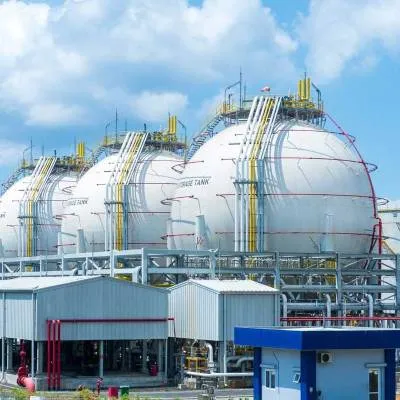
Equirus has warned that India may face higher liquefied natural gas prices from September, a development that could compress margins for downstream players even as demand stays firm amid elevated spot rates. The firm said that LNG imports accounted for 59 per cent of total gas consumption in July 2026, the highest share since July 2021 when it was 65 per cent. The share rose by 15 percentage points from 44 per cent in April 2026 at the height of the war-related trough.

Domestic gas production has remained flat, leaving India highly exposed to elevated spot LNG prices, Equirus added. On a global level, exports of LNG outside the Middle East were expected to rise by around 40 mn t year on year in 2026, driven by new and ramping projects, particularly in the United States. However, geopolitical developments remain pivotal to supply balances.

Under Shell's early third-quarter resolution scenario, a decline of around 45 mn t in Middle Eastern exports would more than offset growth elsewhere, producing a net contraction of about 5 mn t in global LNG exports, the report said. With Middle Eastern flows yet to normalise the window for an early resolution has closed and the outlook has shifted towards a year-long disruption.

Equirus argued that a year-long disruption would overwhelm the new LNG supply wave, with Middle Eastern exports potentially declining by more than 65 mn t compared with roughly 40 mn t of incremental supply from the rest of the world. In that case global LNG trade could contract by roughly 27 mn t, representing a deterioration of about 22 mn t from the early resolution scenario.

The consultancy noted that the anticipated easing in supply conditions could be delayed until 2027 despite additional capacity coming online in North America, and that a prolonged disruption would intensify competition between Europe and Asia for flexible US LNG, keeping spot prices elevated through winter. Near-term adjustment for India may come through higher gas costs and margin compression rather than an immediate sharp decline in volumes.

Equirus has warned that India may face higher liquefied natural gas prices from September, a development that could compress margins for downstream players even as demand stays firm amid elevated spot rates. The firm said that LNG imports accounted for 59 per cent of total gas consumption in July 2026, the highest share since July 2021 when it was 65 per cent. The share rose by 15 percentage points from 44 per cent in April 2026 at the height of the war-related trough. Domestic gas production has remained flat, leaving India highly exposed to elevated spot LNG prices, Equirus added. On a global level, exports of LNG outside the Middle East were expected to rise by around 40 mn t year on year in 2026, driven by new and ramping projects, particularly in the United States. However, geopolitical developments remain pivotal to supply balances. Under Shell's early third-quarter resolution scenario, a decline of around 45 mn t in Middle Eastern exports would more than offset growth elsewhere, producing a net contraction of about 5 mn t in global LNG exports, the report said. With Middle Eastern flows yet to normalise the window for an early resolution has closed and the outlook has shifted towards a year-long disruption. Equirus argued that a year-long disruption would overwhelm the new LNG supply wave, with Middle Eastern exports potentially declining by more than 65 mn t compared with roughly 40 mn t of incremental supply from the rest of the world. In that case global LNG trade could contract by roughly 27 mn t, representing a deterioration of about 22 mn t from the early resolution scenario. The consultancy noted that the anticipated easing in supply conditions could be delayed until 2027 despite additional capacity coming online in North America, and that a prolonged disruption would intensify competition between Europe and Asia for flexible US LNG, keeping spot prices elevated through winter. Near-term adjustment for India may come through higher gas costs and margin compression rather than an immediate sharp decline in volumes.

Related Stories

Gold Stories

Next Story
Infrastructure Urban

Emiza Expands Bhiwandi Fulfilment Capacity by 2.32 Lakh Sq Ft

Emiza, a leading third-party logistics (3PL) provider, has expanded its Mumbai operations with the launch of two new fulfilment facilities in Bhiwandi, adding a combined capacity of 2.32 lakh sq ft to its network.The new facilities, spread across 75,000 sq ft and 1,57,000 sq ft, mark Emiza’s fifth and sixth warehouses in the Mumbai region. The expansion strengthens the company’s fulfilment infrastructure in Western India amid the rapid growth of India’s digital commerce ecosystem.With increasing online consumption, wider product categories and rising customer expectations for faster deli..

Next Story
Infrastructure Urban

Ingersoll Rand Showcases Air Solutions for Semiconductor Sector

Ingersoll Rand will showcase its advanced compressed air solutions for India’s growing semiconductor ecosystem at SEMICON India 2026, scheduled from September 17–19 at Yashobhoomi, New Delhi.The company will display its portfolio of oil-free compressors, centrifugal compression technologies and advanced air treatment systems at Stall No. 1156, Hall No. 1. The solutions are designed to address the stringent air quality, reliability and efficiency requirements of semiconductor manufacturing applications.With India accelerating investments across semiconductor manufacturing, packaging, equipm..

Next Story
Infrastructure Energy

RECPDCL Transfers Musalgaon Transmission SPV to MSETCL

REC Power Development and Consultancy Limited (RECPDCL), a wholly owned subsidiary of REC Limited, has handed over Musalgaon Power Transmission Limited, a project-specific Special Purpose Vehicle (SPV), to Maharashtra State Electricity Transmission Company Limited (MSETCL).MSETCL emerged as the successful bidder through the Tariff-Based Competitive Bidding (TBCB) process conducted by RECPDCL, the Bid Process Coordinator, for developing Maharashtra’s intra-state transmission project on a Build, Own, Operate and Transfer (BOOT) basis.The SPV was handed over by Shri Ratnesh Kumar, General Manag..

Advertisement

Subscribe to Our Newsletter

Get daily newsletters around different themes from Construction world.

STAY CONNECTED

Advertisement

SPECIAL OFFER
QR Code