+
Himachal govt has decided to venture into pumped storage projects
ECONOMY & POLICY

Himachal govt has decided to venture into pumped storage projects

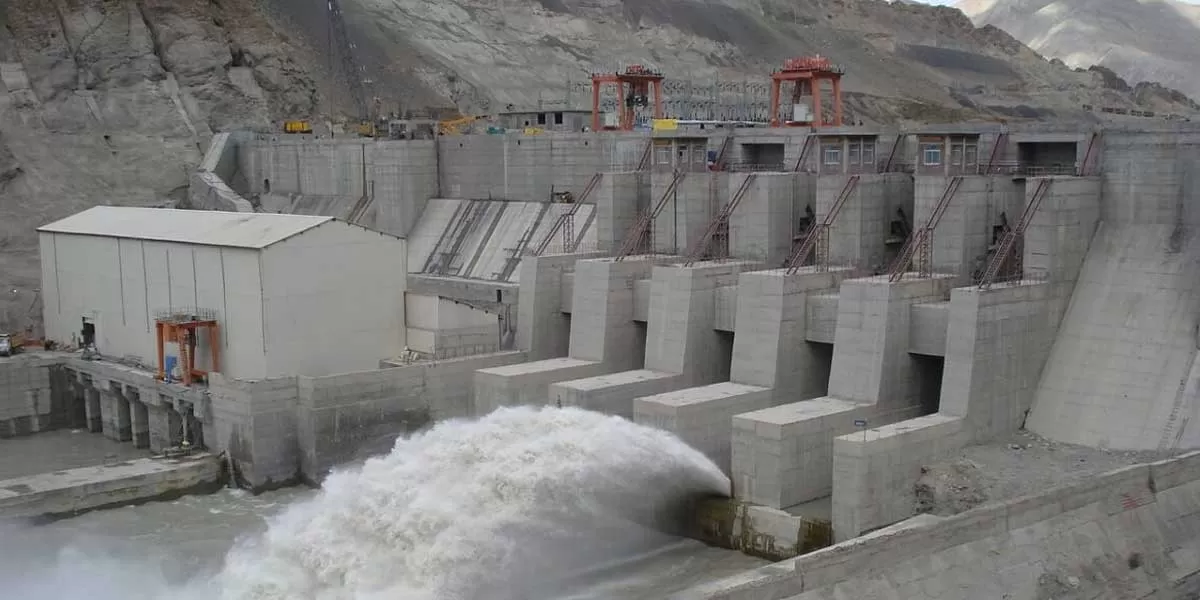
Himachal Pradesh Chief Minister Sukhvinder Sukhu has reportedly announced that the state government has decided to enter the field of Pumped Storage Projects (PSPs), which are considered one of the most reliable methods for balancing power supply from renewable energy sources such as solar and wind.

According to an official statement, the state cabinet recently approved the allocation of the first two such projects to the Himachal Pradesh Power Corporation Ltd. (HPPCL). These include the 1630 MW Renukaji Pumped Storage Project in Sirmaur district and the 270 MW Thana Plaun Pumped Storage Project in the Beas Basin of Mandi district.

Sukhu is said to have emphasised that Himachal Pradesh’s hilly geography makes it ideal for developing PSPs, which are essential for ensuring grid stability by addressing power shortages during periods of high demand. The projects would function by pumping water to a higher elevation using low-cost electricity during off-peak hours and then releasing it back through turbines to generate electricity when demand increases.

Both projects are reportedly already underway, featuring two separate powerhouses – one for regular power generation and another for the PSP system. The Renukaji Hydro Power Project is expected to have a capacity of 40 MW, while the Thana Plaun Hydro Electric Project will generate 191 MW, with additional turbines dedicated to the PSP system.

The Chief Minister is understood to have stated that the development of PSPs is a priority under the Swaran Jayanti Policy 2021, with proposals for new projects and Pre-Feasibility Reports to be invited every six months. These initiatives are in line with the government’s efforts to increase revenue generation through hydro projects and elevate Himachal Pradesh’s prosperity.

Additionally, it was reported that several entities have identified PSP projects across the state. These include SJVNL, which has identified four projects with a combined capacity of 2,570 MW, BBMB with eight projects totalling 13,103 MW, NTPC Limited with two projects of 2,400 MW, the private sector with seven projects totalling 2,074 MW, and HPPCL with two projects having a potential capacity of 1,900 MW.

Himachal Pradesh Chief Minister Sukhvinder Sukhu has reportedly announced that the state government has decided to enter the field of Pumped Storage Projects (PSPs), which are considered one of the most reliable methods for balancing power supply from renewable energy sources such as solar and wind. According to an official statement, the state cabinet recently approved the allocation of the first two such projects to the Himachal Pradesh Power Corporation Ltd. (HPPCL). These include the 1630 MW Renukaji Pumped Storage Project in Sirmaur district and the 270 MW Thana Plaun Pumped Storage Project in the Beas Basin of Mandi district. Sukhu is said to have emphasised that Himachal Pradesh’s hilly geography makes it ideal for developing PSPs, which are essential for ensuring grid stability by addressing power shortages during periods of high demand. The projects would function by pumping water to a higher elevation using low-cost electricity during off-peak hours and then releasing it back through turbines to generate electricity when demand increases. Both projects are reportedly already underway, featuring two separate powerhouses – one for regular power generation and another for the PSP system. The Renukaji Hydro Power Project is expected to have a capacity of 40 MW, while the Thana Plaun Hydro Electric Project will generate 191 MW, with additional turbines dedicated to the PSP system. The Chief Minister is understood to have stated that the development of PSPs is a priority under the Swaran Jayanti Policy 2021, with proposals for new projects and Pre-Feasibility Reports to be invited every six months. These initiatives are in line with the government’s efforts to increase revenue generation through hydro projects and elevate Himachal Pradesh’s prosperity. Additionally, it was reported that several entities have identified PSP projects across the state. These include SJVNL, which has identified four projects with a combined capacity of 2,570 MW, BBMB with eight projects totalling 13,103 MW, NTPC Limited with two projects of 2,400 MW, the private sector with seven projects totalling 2,074 MW, and HPPCL with two projects having a potential capacity of 1,900 MW.

Related Stories

Gold Stories

Next Story
Infrastructure Urban

KONE Opens India's First Digital Experience Centre in Pune

KONE, a global elevator and escalator manufacturer, has inaugurated its first Digital Experience Centre (DEC) in India, located in Pune. The facility aims to showcase how artificial intelligence (AI), connectivity and data-driven technologies can enhance customer experiences and improve building operations.The centre was inaugurated by Jussi Herlin, Executive Vice Chair, KONE Corporation; Philippe Delorme, President and CEO, KONE; and Nandan Nilekani, Co-founder and Chairman of the Board, Infosys.Designed as an interactive customer environment, the facility demonstrates digital solutions cover..

Next Story
Infrastructure Urban

CII GreenCo Launches Circularity Guidelines for Indian Industry

The Confederation of Indian Industry (CII) GreenCo Council has launched the CII GreenCo Circularity Guidelines – Pilot Version at the 17th CII GreenCo Waste & Resource Management Summit 2026 in Chennai. The initiative aims to strengthen resource efficiency, waste reduction and circular economy practices across Indian manufacturing and process industries.The guidelines introduce a structured framework with circularity indices covering raw materials, consumables, packaging and other resource inputs. These indicators will help industries assess existing practices, identify opportunities to ..

Next Story
Infrastructure Energy

Global Electronics Association Launches IPC-1783-CO2E Standard

The Global Electronics Association has introduced IPC-1783-CO2E, a new international standard aimed at improving consistency, transparency and comparability in product carbon footprint reporting across the electronics manufacturing industry.The standard, titled International Standard for Data Collection and Reporting of CO2 Equivalent (CO2e) Emissions for the Electronics Manufacturing Supply Chain, provides industry-specific guidance for collecting, estimating and reporting carbon emissions data.With increasing regulatory requirements and customer expectations, electronics manufacturers face c..

Advertisement

Subscribe to Our Newsletter

Get daily newsletters around different themes from Construction world.

STAY CONNECTED

Advertisement

SPECIAL OFFER
QR Code