Himachal Strengthens Preparedness To Meet Climate Challenges
ECONOMY & POLICY

Himachal Strengthens Preparedness To Meet Climate Challenges

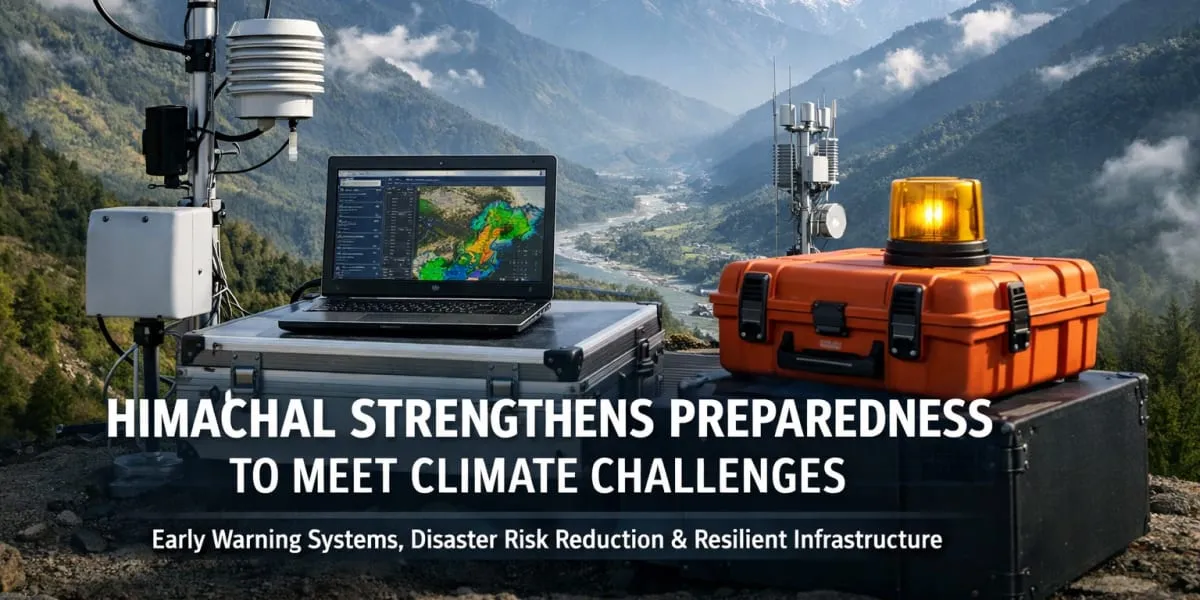
Himachal Pradesh is stepping up preparedness to meet intensifying climate challenges, the chief minister Sukhu said, outlining a comprehensive approach that focuses on early warning systems, disaster risk reduction and resilient infrastructure. The state government has prioritised interdepartmental coordination and enhanced monitoring to anticipate hazards and reduce vulnerability in hilly terrain.

Efforts include strengthening meteorological and hydrological observation networks and improving dissemination of alerts to remote communities. Authorities are emphasising community engagement, local capacity building and training of response teams to ensure timely mobilisation during extreme weather events.

Water conservation and watershed management are central to the adaptation strategy, with measures to enhance groundwater recharge and reduce soil erosion. There is also a focus on protecting and restoring forests as a natural buffer against landslides and floods, while promoting sustainable land use practices.

The government is exploring investments in climate-resilient road and bridge design and in upgrading critical infrastructure to withstand more frequent storms and temperature shifts. Officials have highlighted the need for long-term planning, scientific research and partnerships with academic institutions and national agencies to support evidence-based policies.

Fiscal planning and targeted resource allocation are being aligned with adaptation priorities to ensure continuity of preparedness measures. Sukhu has called for inclusive planning that incorporates the needs of marginal communities and promotes livelihood resilience as the state adapts to a changing climate.

Officials emphasised adoption of technology for real-time risk mapping, data-driven decision-making and improved emergency communication networks that reach remote habitations. There is an emphasis on engaging local governments, civil society and the private sector to scale up disaster risk finance instruments, insurance mechanisms and resilient livelihood programmes. Capacity building for frontline workers and public awareness campaigns are being intensified to improve preparedness at grassroots level.

Himachal Pradesh is stepping up preparedness to meet intensifying climate challenges, the chief minister Sukhu said, outlining a comprehensive approach that focuses on early warning systems, disaster risk reduction and resilient infrastructure. The state government has prioritised interdepartmental coordination and enhanced monitoring to anticipate hazards and reduce vulnerability in hilly terrain. Efforts include strengthening meteorological and hydrological observation networks and improving dissemination of alerts to remote communities. Authorities are emphasising community engagement, local capacity building and training of response teams to ensure timely mobilisation during extreme weather events. Water conservation and watershed management are central to the adaptation strategy, with measures to enhance groundwater recharge and reduce soil erosion. There is also a focus on protecting and restoring forests as a natural buffer against landslides and floods, while promoting sustainable land use practices. The government is exploring investments in climate-resilient road and bridge design and in upgrading critical infrastructure to withstand more frequent storms and temperature shifts. Officials have highlighted the need for long-term planning, scientific research and partnerships with academic institutions and national agencies to support evidence-based policies. Fiscal planning and targeted resource allocation are being aligned with adaptation priorities to ensure continuity of preparedness measures. Sukhu has called for inclusive planning that incorporates the needs of marginal communities and promotes livelihood resilience as the state adapts to a changing climate. Officials emphasised adoption of technology for real-time risk mapping, data-driven decision-making and improved emergency communication networks that reach remote habitations. There is an emphasis on engaging local governments, civil society and the private sector to scale up disaster risk finance instruments, insurance mechanisms and resilient livelihood programmes. Capacity building for frontline workers and public awareness campaigns are being intensified to improve preparedness at grassroots level.

Next Story
Resources

Jyoti Structures Launches Heat Safety Drive Across Sites

Jyoti Structures (JSL) has strengthened heat safety measures across its project sites and manufacturing facilities as temperatures rise across India. The company has implemented a Summer Safety Plan covering all transmission line projects to address risks related to heat stress, dehydration and worker fatigue.The initiative includes rescheduling work away from peak afternoon temperatures, provision of drinking water, ORS and lemon-salt solutions, and installation of rest shelters near work areas. Daily toolbox talks, worker health monitoring, first-aid preparedness, emergency transport arrange..

Next Story
Real Estate

MHADA Declares 82 Buildings Most Dangerous in Central and South Mumbai

The Maharashtra Housing and Area Development Authority (MHADA) has declared 82 buildings as most dangerous across Central and South Mumbai and has appealed to residents to vacate immediately. The list, prepared after structural assessments by the authority, identifies buildings judged to pose imminent risk to occupants and to passersby. Local civic bodies have been asked to coordinate evacuations and to make arrangements for temporary shelter and rehabilitation for displaced households. Officials said the authority prioritised buildings with visible structural distress, severe cracking, tiltin..

Next Story
Infrastructure Transport

Damage Reported At Halwara Airport Terminal After First Rains

Severe damage was reported at the terminal of Halwara Airport during the first major rain spell of the season, prompting immediate concern among aviation and local authorities. Images from the site showed water ingress and visible deterioration of the terminal interior, affecting passenger areas and ancillary services. The airport authority suspended certain operations temporarily to assess structural safety and ensure passenger wellbeing. Preliminary inspections have prioritised electrical systems and roof seals to prevent further water ingress. State aviation officials ordered a formal inqui..

Advertisement

Subscribe to Our Newsletter

Get daily newsletters around different themes from Construction world.

STAY CONNECTED

Advertisement

Advertisement

Advertisement

-->