


IIA Marks 10 Years of UVIT Operations on AstroSat
ECONOMY & POLICY

IIA Marks 10 Years of UVIT Operations on AstroSat

The Indian Institute of Astrophysics (IIA) has recently celebrated 10 years of operation of the UltraViolet Imaging Telescope (UVIT), the primary payload aboard AstroSat, India’s first dedicated space observatory. Launched on 28 September 2015, AstroSat hosts five instruments capable of observing from ultraviolet to soft and hard X-ray wavelengths.

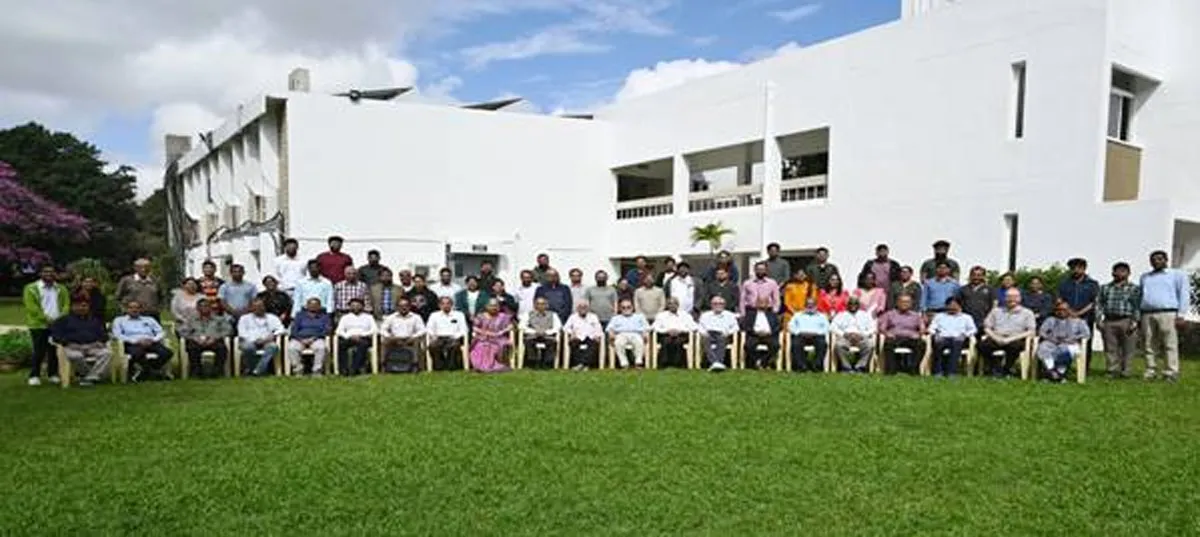
Designed, assembled and tested at IIA’s Hosakote campus, UVIT began science operations on 30 November 2015. To commemorate the milestone and discuss future ultraviolet missions, IIA organised a one-day academic workshop on 4 December 2025. IIA Director Annapurni Subramaniam noted that UVIT is the only operational far-ultraviolet telescope apart from the Hubble Space Telescope, enabling observations otherwise impossible from the ground.

UVIT comprises two telescopes observing in near-ultraviolet, visual and far-ultraviolet bands, offering a large field of view and spatial resolution better than 1.5 arcseconds—surpassing NASA’s GALEX mission. Its development involved a national consortium led by IIA, with contributions from IUCAA, TIFR, several ISRO centres and support from the Canadian Space Agency.

Speakers highlighted UVIT’s scientific contributions, including discoveries of compact companions to Be stars, extended UV disks in dwarf galaxies, novae in Andromeda, young star formation patterns, and emission from distant galaxies at redshift 1.42. Over the decade, UVIT has observed 1,451 targets, contributing to around 300 research papers and 19 PhD theses.

IIA also outlined plans for the next-generation ultraviolet mission INSIST (Indian Spectroscopic and Imaging Space Telescope), building on decades of expertise gained through UVIT.

The Indian Institute of Astrophysics (IIA) has recently celebrated 10 years of operation of the UltraViolet Imaging Telescope (UVIT), the primary payload aboard AstroSat, India’s first dedicated space observatory. Launched on 28 September 2015, AstroSat hosts five instruments capable of observing from ultraviolet to soft and hard X-ray wavelengths. Designed, assembled and tested at IIA’s Hosakote campus, UVIT began science operations on 30 November 2015. To commemorate the milestone and discuss future ultraviolet missions, IIA organised a one-day academic workshop on 4 December 2025. IIA Director Annapurni Subramaniam noted that UVIT is the only operational far-ultraviolet telescope apart from the Hubble Space Telescope, enabling observations otherwise impossible from the ground. UVIT comprises two telescopes observing in near-ultraviolet, visual and far-ultraviolet bands, offering a large field of view and spatial resolution better than 1.5 arcseconds—surpassing NASA’s GALEX mission. Its development involved a national consortium led by IIA, with contributions from IUCAA, TIFR, several ISRO centres and support from the Canadian Space Agency. Speakers highlighted UVIT’s scientific contributions, including discoveries of compact companions to Be stars, extended UV disks in dwarf galaxies, novae in Andromeda, young star formation patterns, and emission from distant galaxies at redshift 1.42. Over the decade, UVIT has observed 1,451 targets, contributing to around 300 research papers and 19 PhD theses. IIA also outlined plans for the next-generation ultraviolet mission INSIST (Indian Spectroscopic and Imaging Space Telescope), building on decades of expertise gained through UVIT.

Next Story
Infrastructure Transport

Tunnelling Begins for Thane, Borivali twin tunnel project

Tunnelling work has commenced for the 11.84-km Thane–Borivali Twin Tunnel, set to be India’s longest urban road tunnel, marking a key milestone in Mumbai’s infrastructure development.As per a post shared by Mumbai Metropolitan Region Development Authority on social media platform X, the tunnel boring machine (TBM) ‘Nayak’—the country’s largest single-shield hard rock TBM for an urban tunnel—was launched by Devendra Fadnavis on Tuesday. The event was attended by Eknath Shinde and Sunetra Pawar, among other dignitaries. A second TBM, ‘Arjuna’, is expected to be launched so..

Next Story
Infrastructure Transport

Large Format Store Planned At M G Road Metro Station

M G Road station in Bengaluru is set to host the city’s first large-format commercial and experience space, with planning led by Bangalore Metro Rail Corporation Limited. BMRCL has invited proposals to develop and operate a central business district destination at the Purple?Pink Line interchange. The plan positions the station as a commercial hub designed to serve a broad commuter base across the city. The proposal is part of a broader effort to activate transit nodes commercially. Tender documents set a minimum monthly rental of Rs 0.944 million (mn), inclusive of GST, for the large-format..

Next Story
Infrastructure Energy

Government Cancels Auction Of Eleven Critical Mineral Blocks

The government has cancelled the auction of 11 critical and strategic mineral blocks after receiving a poor investor response and failing to attract a sufficient number of qualified bidders. The decision represents a setback to plans to ramp up domestic exploration and production of critical minerals amid global supply chain disruptions and rising demand for materials used in clean energy and advanced technologies. The mines ministry issued an annulment notice setting out the reasons for the cancellations. The annulment notice indicated that the auction process for five mineral blocks was canc..

Advertisement

Subscribe to Our Newsletter

Get daily newsletters around different themes from Construction world.

STAY CONNECTED

Advertisement

Advertisement

Advertisement














