IIT Kanpur Finds No Notable Impact On Fuel Efficiency From E20
ECONOMY & POLICY

IIT Kanpur Finds No Notable Impact On Fuel Efficiency From E20

Indian Institute of Technology Kanpur (IIT Kanpur) has reported that E20 petrol has no notable impact on fuel efficiency in both recent and older vehicles, dismissing social media claims that the blend causes engine damage. The study by the institute’s Engine Research Laboratory found that observed reductions in mileage were minor and did not amount to technical harm to engines. The researchers advised motorists to consult vehicle manufacturer manuals and official guidelines rather than unverified online posts.

Dhruv Raj Karana, a project scientist in the department of mechanical engineering, reported that the decrease in fuel efficiency with E20 was less than five per cent and suggested that such differences could arise from factors other than fuel. He indicated that back to back tests using pure petrol yielded comparable variations, and that extensive laboratory evaluation showed no evidence of corrosion or other technical problems attributable to the blend. The laboratory work was led by Professor Avinash Kumar Agarwal.

The Ministry of Petroleum and Natural Gas had earlier acknowledged that E20 may reduce mileage by up to five per cent in some vehicles while emphasising that the environmental and lifecycle benefits offset the modest loss in efficiency. The institute’s findings align broadly with that guidance and seek to place observed performance changes in operational context rather than ascribe them solely to fuel composition. Motorists were urged to follow manufacturer recommendations and ministry advisories when choosing fuels.

The research team also conducted trials with E85, a blend containing 85 per cent ethanol, and noted that such high concentration fuels require specially designed engines and compatible fuel systems. The institute characterised social media reports of widespread engine failure as scientifically unfounded and called for standardised testing protocols to address consumer concerns. Officials indicated that careful diagnostics and adherence to service guidelines would help distinguish genuine mechanical faults from normal variation in test outcomes.

Indian Institute of Technology Kanpur (IIT Kanpur) has reported that E20 petrol has no notable impact on fuel efficiency in both recent and older vehicles, dismissing social media claims that the blend causes engine damage. The study by the institute’s Engine Research Laboratory found that observed reductions in mileage were minor and did not amount to technical harm to engines. The researchers advised motorists to consult vehicle manufacturer manuals and official guidelines rather than unverified online posts. Dhruv Raj Karana, a project scientist in the department of mechanical engineering, reported that the decrease in fuel efficiency with E20 was less than five per cent and suggested that such differences could arise from factors other than fuel. He indicated that back to back tests using pure petrol yielded comparable variations, and that extensive laboratory evaluation showed no evidence of corrosion or other technical problems attributable to the blend. The laboratory work was led by Professor Avinash Kumar Agarwal. The Ministry of Petroleum and Natural Gas had earlier acknowledged that E20 may reduce mileage by up to five per cent in some vehicles while emphasising that the environmental and lifecycle benefits offset the modest loss in efficiency. The institute’s findings align broadly with that guidance and seek to place observed performance changes in operational context rather than ascribe them solely to fuel composition. Motorists were urged to follow manufacturer recommendations and ministry advisories when choosing fuels. The research team also conducted trials with E85, a blend containing 85 per cent ethanol, and noted that such high concentration fuels require specially designed engines and compatible fuel systems. The institute characterised social media reports of widespread engine failure as scientifically unfounded and called for standardised testing protocols to address consumer concerns. Officials indicated that careful diagnostics and adherence to service guidelines would help distinguish genuine mechanical faults from normal variation in test outcomes.

Related Stories

Gold Stories

Next Story
Infrastructure Urban

KONE Opens India's First Digital Experience Centre in Pune

KONE, a global elevator and escalator manufacturer, has inaugurated its first Digital Experience Centre (DEC) in India, located in Pune. The facility aims to showcase how artificial intelligence (AI), connectivity and data-driven technologies can enhance customer experiences and improve building operations.The centre was inaugurated by Jussi Herlin, Executive Vice Chair, KONE Corporation; Philippe Delorme, President and CEO, KONE; and Nandan Nilekani, Co-founder and Chairman of the Board, Infosys.Designed as an interactive customer environment, the facility demonstrates digital solutions cover..

Next Story
Infrastructure Urban

CII GreenCo Launches Circularity Guidelines for Indian Industry

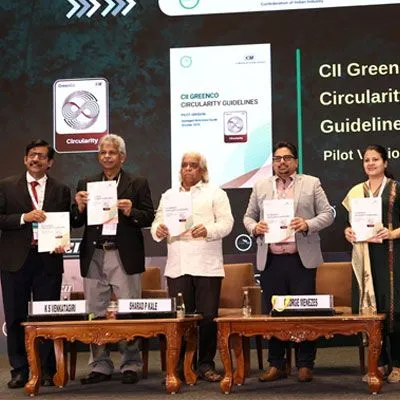
The Confederation of Indian Industry (CII) GreenCo Council has launched the CII GreenCo Circularity Guidelines – Pilot Version at the 17th CII GreenCo Waste & Resource Management Summit 2026 in Chennai. The initiative aims to strengthen resource efficiency, waste reduction and circular economy practices across Indian manufacturing and process industries.The guidelines introduce a structured framework with circularity indices covering raw materials, consumables, packaging and other resource inputs. These indicators will help industries assess existing practices, identify opportunities to ..

Next Story
Infrastructure Energy

Global Electronics Association Launches IPC-1783-CO2E Standard

The Global Electronics Association has introduced IPC-1783-CO2E, a new international standard aimed at improving consistency, transparency and comparability in product carbon footprint reporting across the electronics manufacturing industry.The standard, titled International Standard for Data Collection and Reporting of CO2 Equivalent (CO2e) Emissions for the Electronics Manufacturing Supply Chain, provides industry-specific guidance for collecting, estimating and reporting carbon emissions data.With increasing regulatory requirements and customer expectations, electronics manufacturers face c..

Advertisement

Subscribe to Our Newsletter

Get daily newsletters around different themes from Construction world.

STAY CONNECTED

Advertisement

SPECIAL OFFER
QR Code