+
India And Germany Reaffirm Telecom And Digital Cooperation
ECONOMY & POLICY

India And Germany Reaffirm Telecom And Digital Cooperation

India and Germany reaffirmed cooperation in telecommunications and digital transformation after a bilateral meeting on 18 February 2026 at Sanchar Bhawan in New Delhi between the Union Minister of Communications and Development of the North Eastern Region and the German Federal Minister for Digital Transformation and Government Modernization. The meeting followed the signing of a Joint Declaration of Intent on 10 January 2026 during the India?Germany Summit and was presented as a non?binding framework for structured collaboration.

The Indian minister outlined India’s digital transformation, noting over 1.23 billion (bn) telecom subscribers and nearly a billion (bn) internet users, with 5G coverage in approximately 99.9 per cent of districts. He said data tariffs average around Rs 0.10 per GB and highlighted robust Digital Public Infrastructure that enables affordable connectivity and services. He referred to the Unified Payments Interface (UPI), which has become a model for interoperable digital payments and is processing approximately 250 billion (bn) transactions annually.

The German minister expressed interest in structured cooperation on advanced telecom systems, digital governance and secure networks and emphasised early engagement on six?generation technologies. He noted Germany’s work in quantum encryption and secure information transport, citing a demonstration of quantum communication over a 35 km link for 11 consecutive days, and proposed deeper research links. Institutional collaboration between the Centre for Development of Telematics and the Fraunhofer Heinrich?Hertz Institute was cited as a successful model for joint R&D in Open RAN, artificial intelligence in telecom and next?generation networks.

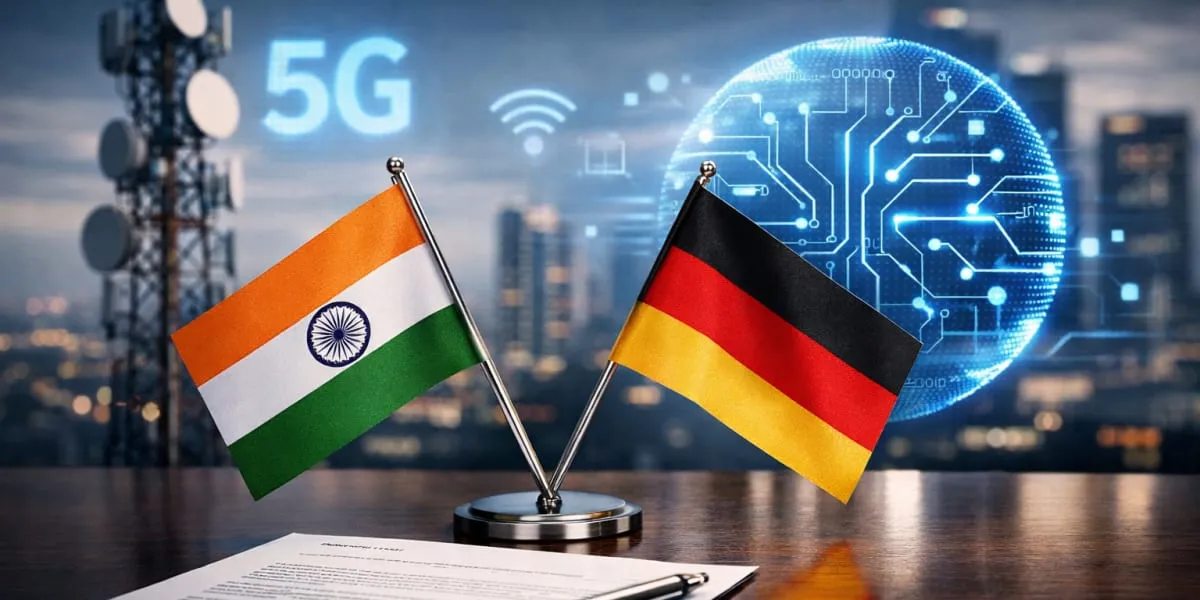
Both sides agreed to convene the first high?level meeting under the Joint Declaration of Intent to finalise an initial two?year work plan, identify priority areas and launch flagship initiatives with clear timelines and stakeholder responsibilities. They reaffirmed commitment to cooperation on 5G and 5G?Advanced, Open RAN, network modernisation, supply chain resilience, industry?grade network slicing and AI at the edge, and to coordinated engagement in international fora such as the International Telecommunication Union. The Indian side sought Germany’s support for India’s candidature to the Radiocommunication Bureau and for hosting the ITU Plenipotentiary Conference in 2030.

India and Germany reaffirmed cooperation in telecommunications and digital transformation after a bilateral meeting on 18 February 2026 at Sanchar Bhawan in New Delhi between the Union Minister of Communications and Development of the North Eastern Region and the German Federal Minister for Digital Transformation and Government Modernization. The meeting followed the signing of a Joint Declaration of Intent on 10 January 2026 during the India?Germany Summit and was presented as a non?binding framework for structured collaboration. The Indian minister outlined India’s digital transformation, noting over 1.23 billion (bn) telecom subscribers and nearly a billion (bn) internet users, with 5G coverage in approximately 99.9 per cent of districts. He said data tariffs average around Rs 0.10 per GB and highlighted robust Digital Public Infrastructure that enables affordable connectivity and services. He referred to the Unified Payments Interface (UPI), which has become a model for interoperable digital payments and is processing approximately 250 billion (bn) transactions annually. The German minister expressed interest in structured cooperation on advanced telecom systems, digital governance and secure networks and emphasised early engagement on six?generation technologies. He noted Germany’s work in quantum encryption and secure information transport, citing a demonstration of quantum communication over a 35 km link for 11 consecutive days, and proposed deeper research links. Institutional collaboration between the Centre for Development of Telematics and the Fraunhofer Heinrich?Hertz Institute was cited as a successful model for joint R&D in Open RAN, artificial intelligence in telecom and next?generation networks. Both sides agreed to convene the first high?level meeting under the Joint Declaration of Intent to finalise an initial two?year work plan, identify priority areas and launch flagship initiatives with clear timelines and stakeholder responsibilities. They reaffirmed commitment to cooperation on 5G and 5G?Advanced, Open RAN, network modernisation, supply chain resilience, industry?grade network slicing and AI at the edge, and to coordinated engagement in international fora such as the International Telecommunication Union. The Indian side sought Germany’s support for India’s candidature to the Radiocommunication Bureau and for hosting the ITU Plenipotentiary Conference in 2030.

Next Story
Infrastructure Urban

Implementation Status of Jal Jeevan Mission

Since August 2019 the Government has implemented Jal Jeevan Mission to provide assured potable water through household tap connections in rural India. At the start of the mission only 32.3 million (mn) rural households, representing 16.7 per cent, were reported to have tap water connections. States and union territories have reported that 125.8 mn additional rural households have since been provided with tap connections. As a result, of about 193.6 mn rural households roughly 158.2 mn, or 81.71 per cent, are reported to have tap water supply at home.\n\nThe State, district and village level st..

Next Story
Infrastructure Urban

Jal Jeevan Mission Reaches Eighty One Per Cent Rural Coverage

The Government reported substantial progress under the Jal Jeevan Mission, launched in August 2019 to provide tap water to every rural household. At launch only 32.3 million (mn) rural households had tap connections and states and Union territories reported provision of 125.8 mn additional households by March 2026. Consequently, out of about 193.6 mn rural households around 158.2 mn, or 81.71 per cent, are reported to have tap water at home. The Finance Minister announced extension of the mission until 2028 in the 2025-26 budget speech. The Swachh Bharat Mission Grameen, launched in October 20..

Next Story
Infrastructure Urban

Empowering Local Governance for Sustainable Rural Water Supply

The Ministry of Jal Shakti has aligned the Jal Jeevan Mission (JJM) with the 73rd Amendment to strengthen village level planning and community ownership of water supply. Gram Panchayats, village water and sanitation committees and Pani Samitis are to plan, implement, manage and maintain piped water systems, with gram sabha processes formalising handover and oversight. Implementation support agencies including non government organisations, community based organisations and self help groups have been empanelled to train local committees and promote women participation. Under JJM, the department ..

Advertisement

Subscribe to Our Newsletter

Get daily newsletters around different themes from Construction world.

STAY CONNECTED

Advertisement

Advertisement

Advertisement