+
India Brazil Sign MoU To Boost MSME Cooperation And Green Transition
ECONOMY & POLICY

India Brazil Sign MoU To Boost MSME Cooperation And Green Transition

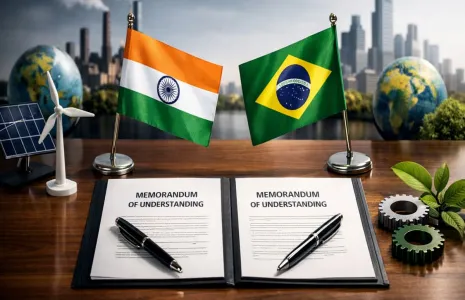
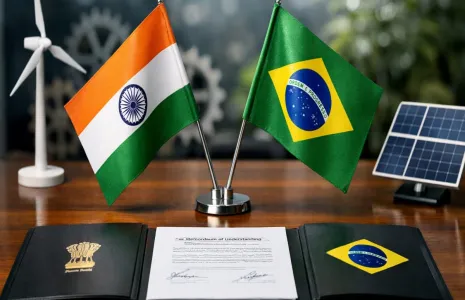
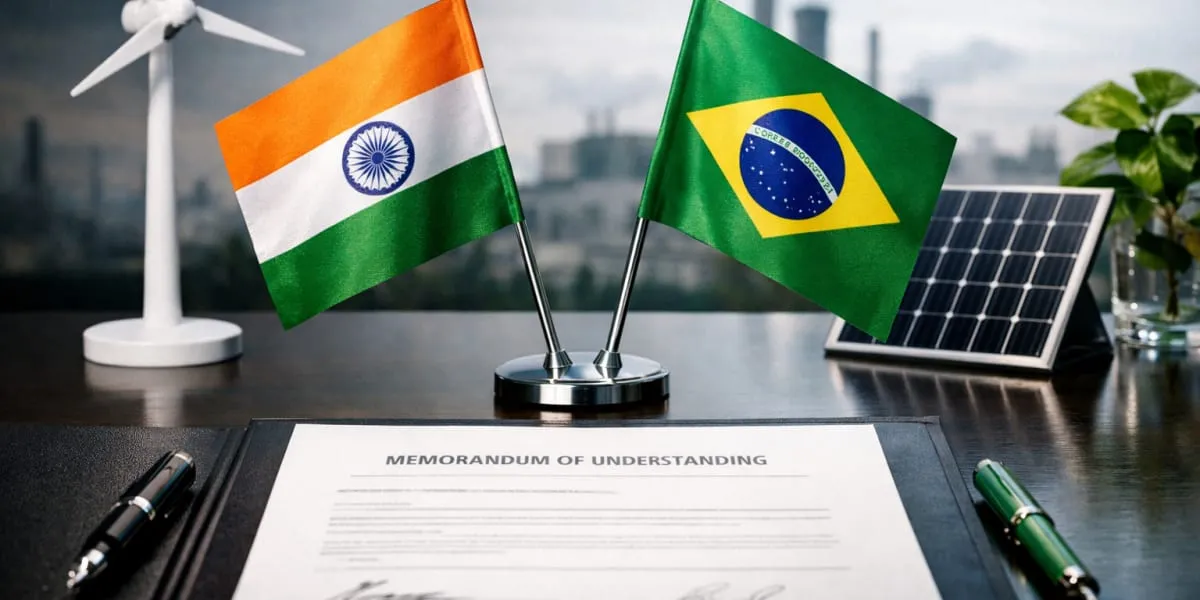
India and Brazil have signed a memorandum of understanding to strengthen cooperation between micro, small and medium enterprises (MSME) and to accelerate a green transition. The agreement establishes a framework for collaboration across trade, technology transfer and capacity building to support sustainable industrial practices. Officials described the pact as a step towards closer economic ties and shared innovation in low carbon solutions. The pact focuses on priority sectors where small enterprises can adopt cleaner processes and resilient supply chain practices.

The memorandum envisages joint initiatives to promote clean technology adoption, improve access to green finance and expand market linkages for small businesses. It also prioritises skill development, incubator support and regulatory cooperation to reduce barriers to cross border commerce. Both sides committed to facilitate investment and to create mechanisms for regular dialogue and progress review. The agreement will seek alignment on technical standards and certification to ease market access for jointly developed products and services.

Implementation will be guided by a working group comprising representatives from relevant ministries, industry associations and research institutions from both countries. The group will identify pilot projects, monitor outcomes and recommend policy measures to scale successful models. Emphasis will be placed on energy efficiency, renewable energy deployment and circular economy practices tailored to the needs of MSME. Capacity building will include advisory services, technology demonstration and exchange of best practices to raise compliance with environmental norms.

The pact is expected to help enterprises adopt sustainable processes, enhance competitiveness and access new markets while contributing to national climate goals. Authorities indicated that the cooperation could catalyse innovation and job creation across segments of the economy that are critical to inclusive growth. Continued engagement will focus on measurable results and on fostering knowledge exchange to sustain long term benefits. Stakeholders will meet periodically to assess progress and adapt initiatives so that gains are sustained over time.

India and Brazil have signed a memorandum of understanding to strengthen cooperation between micro, small and medium enterprises (MSME) and to accelerate a green transition. The agreement establishes a framework for collaboration across trade, technology transfer and capacity building to support sustainable industrial practices. Officials described the pact as a step towards closer economic ties and shared innovation in low carbon solutions. The pact focuses on priority sectors where small enterprises can adopt cleaner processes and resilient supply chain practices. The memorandum envisages joint initiatives to promote clean technology adoption, improve access to green finance and expand market linkages for small businesses. It also prioritises skill development, incubator support and regulatory cooperation to reduce barriers to cross border commerce. Both sides committed to facilitate investment and to create mechanisms for regular dialogue and progress review. The agreement will seek alignment on technical standards and certification to ease market access for jointly developed products and services. Implementation will be guided by a working group comprising representatives from relevant ministries, industry associations and research institutions from both countries. The group will identify pilot projects, monitor outcomes and recommend policy measures to scale successful models. Emphasis will be placed on energy efficiency, renewable energy deployment and circular economy practices tailored to the needs of MSME. Capacity building will include advisory services, technology demonstration and exchange of best practices to raise compliance with environmental norms. The pact is expected to help enterprises adopt sustainable processes, enhance competitiveness and access new markets while contributing to national climate goals. Authorities indicated that the cooperation could catalyse innovation and job creation across segments of the economy that are critical to inclusive growth. Continued engagement will focus on measurable results and on fostering knowledge exchange to sustain long term benefits. Stakeholders will meet periodically to assess progress and adapt initiatives so that gains are sustained over time.

Next Story
Infrastructure Urban

We’ve cut 50,000 tonnes of carbon emmissions since 2019

MatchLog is challenging a decades-old logistics norm and empty container miles by directly matching import flows with export demand. Indeed, the platform is unlocking measurable cost savings, cutting emissions and driving structural change in landside operations. Dhruv Taneja, Founder and Global CEO, outlines the quantified impact, adoption  journey and the evolving future of container reuse in an exclusive interview with Construction World. MatchLog has partnered with carriers such as Maersk, ONE and HMM in India. Could you share quantified outcomes from one specific corri..

Next Story
Infrastructure Transport

Airports: Capacity is Key

A lotus-inspired terminal design in Navi Mumbai International Airport. A terminal in a garden in Bengaluru’s Kempegowda International Airport. A peacock-inspired canopy in Chhatrapati Shivaji Maharaj International Airport. A nature-inspired terminal in Guwahati’s Lokpriya Gopinath Bordoloi International Airport.Truly, “India’s airports are no longer constrained by architectural ambition,” avers Ravikanth Mididhodi, Chief Technical Officer, J&F, a German-based engineering firm with over 25 years of global legacy in delivering advanced engineering and BIM services for air..

Next Story
Real Estate

In 2025, Amaravati attracted ₹ 28,075 crore in investments

In an exclusive interview with Construction World, Kanna Babu, IAS, Commissioner, Andhra Pradesh Capital Region Development Authority (APCRDA), reveals how Amaravati is entering a decisive new phase of capital city development. With 36 MoUs worth ₹ 45,589 crore, a ₹ 58,000 crore tender pipeline, and rising institutional investments, he explains the strategic execution, infrastructure rollout, and governance framework driving Amaravati’s emergence as a structured, investment-ready, and future-focused capital.APCRDA has recently secured major financial tie-ups, including loans from NA..

Advertisement

Subscribe to Our Newsletter

Get daily newsletters around different themes from Construction world.

STAY CONNECTED

Advertisement

Advertisement

Advertisement

Open In App