India Energy Storage Capacity Set To Rise Over Tenfold
ECONOMY & POLICY

India Energy Storage Capacity Set To Rise Over Tenfold

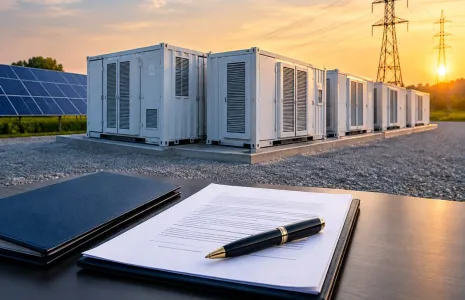
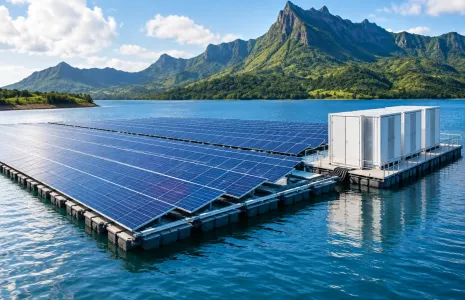
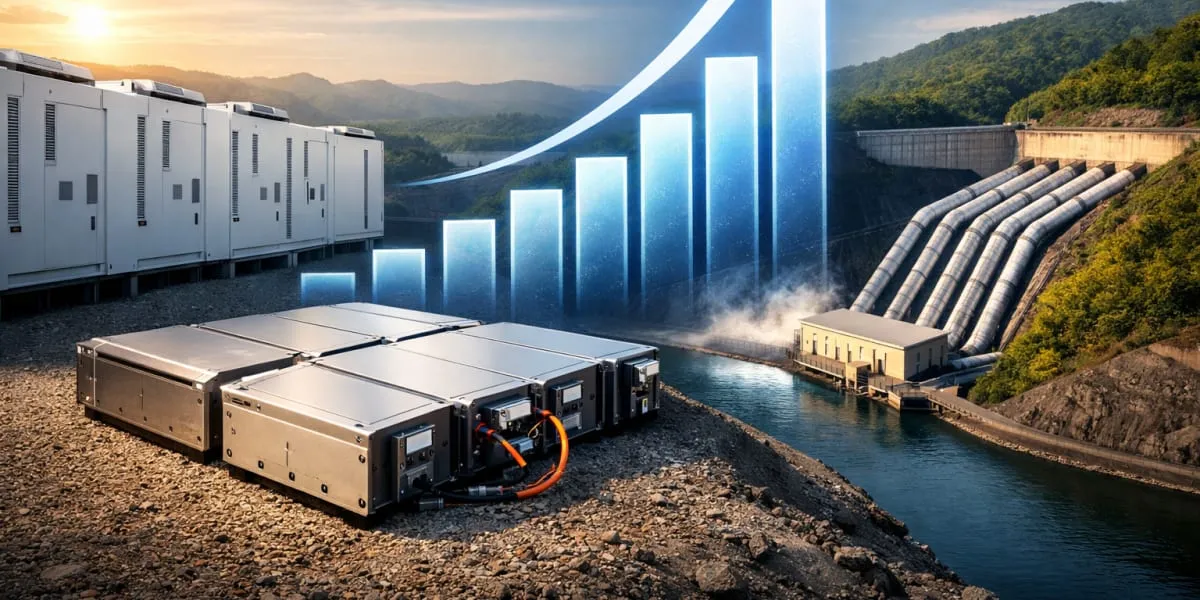
India's energy storage requirement is projected to rise more than tenfold over the coming decade, increasing from 87 GWh in 2027-28 to 888 GWh by 2035-36 as rapid deployment of Battery Energy Storage Systems (BESS) and Pumped Storage Plants (PSP) accelerates. The Ministry of Statistics and Programme Implementation presented these estimates in the latest quarterly update of the Project Assessment, Infrastructure Monitoring and Analytics for Nation-building (PAIMANA) Performance Monitoring Dashboard, framing the growth as integral to the transition towards a renewable energy based power system.

The dashboard projected that installed storage capacity across the two major technologies will continue to rise, with PSP capacity reaching 94 GW and BESS capacity 80 GW by 2035-36. It noted that such capacity additions are intended to strengthen grid reliability, facilitate higher shares of variable renewable generation and provide flexibility for peak shifting and system firming. The ministry characterised the projected expansion as part of strategic infrastructure planning to support energy security and decarbonisation objectives.

PAIMANA monitors performance across six key sectors, including civil aviation, roads, power, ports, telecommunications and railways, and the quarterly release reported an expansion to 165 indicators with the addition of 44 new measures. The update described the enhancement as improving the comprehensiveness of monitoring by enabling interactive visualisation and time series analysis. The platform was presented as providing a unified digital interface to improve accessibility for policymakers, researchers and other stakeholders involved in infrastructure planning.

The update also highlighted continued growth in telecom infrastructure, with mobile towers rising to 0.855 mn, up 3.7 per cent year on year, and Base Transceiver Stations increasing to 3.225 mn, up 7.4 per cent. Tele-density improved to 93.26 per cent in FY2025-26, which the ministry said reflected deeper digital connectivity. Electronic toll collection transactions were reported at Rs 880 mn in FY2026-27 up to May, up 39.7 per cent year on year, indicating wider adoption of cashless tolling.

India's energy storage requirement is projected to rise more than tenfold over the coming decade, increasing from 87 GWh in 2027-28 to 888 GWh by 2035-36 as rapid deployment of Battery Energy Storage Systems (BESS) and Pumped Storage Plants (PSP) accelerates. The Ministry of Statistics and Programme Implementation presented these estimates in the latest quarterly update of the Project Assessment, Infrastructure Monitoring and Analytics for Nation-building (PAIMANA) Performance Monitoring Dashboard, framing the growth as integral to the transition towards a renewable energy based power system. The dashboard projected that installed storage capacity across the two major technologies will continue to rise, with PSP capacity reaching 94 GW and BESS capacity 80 GW by 2035-36. It noted that such capacity additions are intended to strengthen grid reliability, facilitate higher shares of variable renewable generation and provide flexibility for peak shifting and system firming. The ministry characterised the projected expansion as part of strategic infrastructure planning to support energy security and decarbonisation objectives. PAIMANA monitors performance across six key sectors, including civil aviation, roads, power, ports, telecommunications and railways, and the quarterly release reported an expansion to 165 indicators with the addition of 44 new measures. The update described the enhancement as improving the comprehensiveness of monitoring by enabling interactive visualisation and time series analysis. The platform was presented as providing a unified digital interface to improve accessibility for policymakers, researchers and other stakeholders involved in infrastructure planning. The update also highlighted continued growth in telecom infrastructure, with mobile towers rising to 0.855 mn, up 3.7 per cent year on year, and Base Transceiver Stations increasing to 3.225 mn, up 7.4 per cent. Tele-density improved to 93.26 per cent in FY2025-26, which the ministry said reflected deeper digital connectivity. Electronic toll collection transactions were reported at Rs 880 mn in FY2026-27 up to May, up 39.7 per cent year on year, indicating wider adoption of cashless tolling.

Related Stories

Gold Stories

Next Story
Real Estate

A Concrete Statement in Jubilee Hills

The Jubilee Hills residence is an exploration of structure as architecture, where mathematical precision, exposed concrete, and engineering discipline come together to create a bold and enduring built form.Constructed with Blushfarbe, HAACE’s bespoke concrete finish, the project demanded exceptional control, as every visible structural element was also required to perform as the final architectural surface. Deep reinforced concrete roof frames extend into the vertical façade, while precision-cast fluted surfaces, rhythmic vertical fins, circular columns, and a cantilevered staircase create ..

Next Story
Infrastructure Energy

Hindustan Zinc raises renewable power share to 22 per cent

Hindustan Zinc has increased the share of renewable energy in its overall power consumption to 22 per cent, up from around 18 per cent in FY26, as it advances towards sourcing 70 per cent of its power requirements from renewable sources by FY28.During FY26, the company generated 892 million units of green power, up from 632 million units in FY25. It has also expanded its round-the-clock renewable power arrangement with Serentica Renewables from 450 MW to 530 MW to support the transition.Hindustan Zinc is strengthening its renewable energy portfolio through solar, wind and energy storage soluti..

Next Story
Resources

Crompton unveils new brand identity and super-premium platform

Crompton Greaves Consumer Electricals Ltd. has unveiled a new master brand identity as part of its Crompton 2.0 transformation, alongside the launch of its super-premium brand Crompton Rhion and the strengthening of its Energion platform.The refreshed identity introduces Cephyr, a new emblem inspired by sapphire and Zephyrus, the Greek wind, representing Crompton’s evolution towards a design-led, consumer-centric brand. The new brand promise, ‘Amazing, Every Day’, is supported by a new sonic identity that will be rolled out across advertising, digital platforms, products and retail envir..

Advertisement

Subscribe to Our Newsletter

Get daily newsletters around different themes from Construction world.

STAY CONNECTED

Advertisement