India Launches CCUS R&D Roadmap to Support Net Zero Goals
ECONOMY & POLICY

India Launches CCUS R&D Roadmap to Support Net Zero Goals

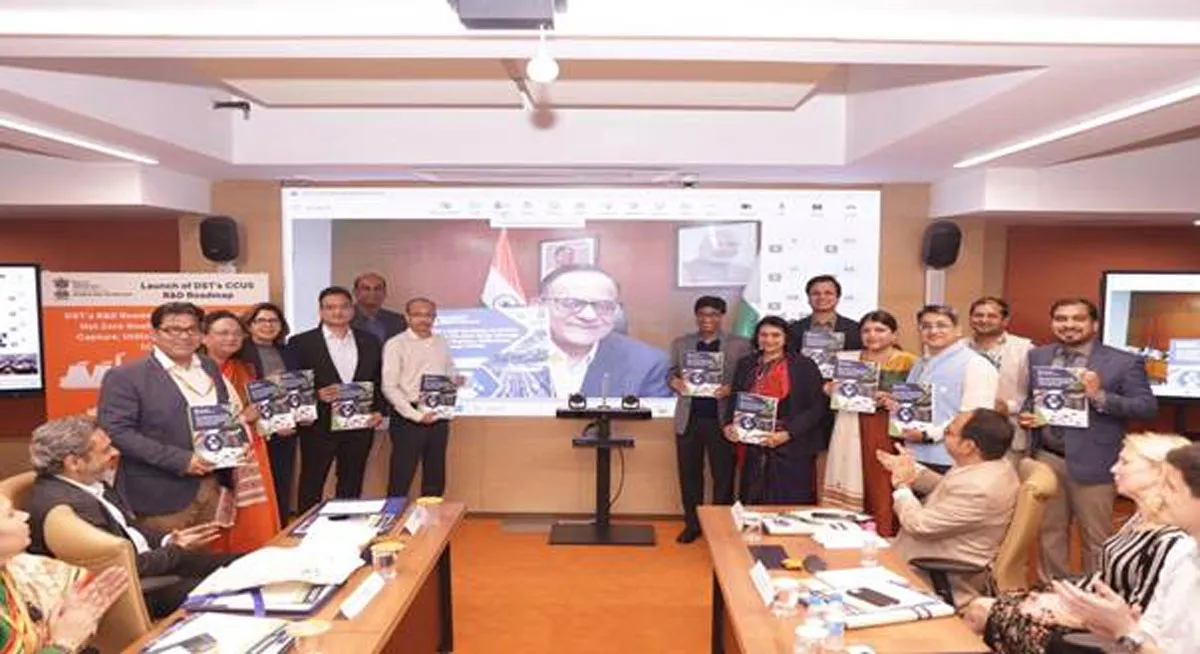
The Government has recently launched the country’s first R&D Roadmap to support India’s Net Zero targets through Carbon Capture, Utilisation and Storage (CCUS). Prepared by the Department of Science and Technology (DST), the roadmap was unveiled on 2 December 2025 by Prof. Ajay Kumar Sood, Principal Scientific Adviser to the Government of India.

Prof. Sood described the roadmap as a key guide for coordinated climate action, helping accelerate technology deployment, reduce carbon emissions and strengthen India’s position as a responsible global partner. He said the framework aligns with national sustainability objectives and the vision of Viksit Bharat@2047.

DST Secretary Prof. Abhay Karandikar highlighted the department’s leadership in advancing CCUS research, noting that the roadmap balances maturing existing technologies for commercial readiness with supporting breakthrough science. He emphasised the need for enabling frameworks such as skilled manpower, regulatory standards and early shared infrastructure. He added that initiatives under the Rs 1 lakh crore Research, Development and Innovation Scheme will bolster private-sector-led innovation in industrial decarbonisation.

CCUS has emerged as a critical pathway for reducing emissions in hard-to-abate sectors such as power, cement and steel. DST has taken a lead role by supporting translational R&D and establishing CCUS test beds in real industrial settings through public–private partnerships.

Drawing on seven years of experience, the roadmap provides strategic guidance on thematic priorities, funding pathways and infrastructure needs. Officials including Dr Ashish Lele, Dr Anita Gupta and Dr Neelima Alam outlined ongoing national, bilateral and multilateral interventions and the establishment of three National Centres of Excellence in CCUS.

The launch event saw participation from academia, industry, policymakers, international partners and representatives from sectors including energy, manufacturing, steel, cement and technology.

The Government has recently launched the country’s first R&D Roadmap to support India’s Net Zero targets through Carbon Capture, Utilisation and Storage (CCUS). Prepared by the Department of Science and Technology (DST), the roadmap was unveiled on 2 December 2025 by Prof. Ajay Kumar Sood, Principal Scientific Adviser to the Government of India. Prof. Sood described the roadmap as a key guide for coordinated climate action, helping accelerate technology deployment, reduce carbon emissions and strengthen India’s position as a responsible global partner. He said the framework aligns with national sustainability objectives and the vision of Viksit Bharat@2047. DST Secretary Prof. Abhay Karandikar highlighted the department’s leadership in advancing CCUS research, noting that the roadmap balances maturing existing technologies for commercial readiness with supporting breakthrough science. He emphasised the need for enabling frameworks such as skilled manpower, regulatory standards and early shared infrastructure. He added that initiatives under the Rs 1 lakh crore Research, Development and Innovation Scheme will bolster private-sector-led innovation in industrial decarbonisation. CCUS has emerged as a critical pathway for reducing emissions in hard-to-abate sectors such as power, cement and steel. DST has taken a lead role by supporting translational R&D and establishing CCUS test beds in real industrial settings through public–private partnerships. Drawing on seven years of experience, the roadmap provides strategic guidance on thematic priorities, funding pathways and infrastructure needs. Officials including Dr Ashish Lele, Dr Anita Gupta and Dr Neelima Alam outlined ongoing national, bilateral and multilateral interventions and the establishment of three National Centres of Excellence in CCUS. The launch event saw participation from academia, industry, policymakers, international partners and representatives from sectors including energy, manufacturing, steel, cement and technology.

Next Story
Infrastructure Urban

India–Indonesia Begin Joint Special Forces Drill in Himachal

The tenth edition of the India–Indonesia Joint Special Forces Exercise GARUDA SHAKTI has recently commenced at the Special Forces Training School in Bakloh, Himachal Pradesh. Scheduled from 3 to 12 December 2025, the exercise brings together elite Special Forces personnel from both nations for an intensive training engagement. India is represented by troops from the Parachute Regiment (Special Forces), while Indonesia has deployed members of its Special Forces contingent. The joint exercise is designed to enhance mutual understanding, operational cooperation and interoperability between the..

Next Story
Infrastructure Urban

Air Marshal Umesh Reviews Operations at Tughlakabad Depot

Air Marshal Yalla Umesh, Air Officer Commanding-in-Chief of Maintenance Command, visited the Base Repair Depot at Tughlakabad on 4 December 2025. He was accompanied by Mrs Sreevalli, President of the Air Force Families Welfare Association (Regional). They were welcomed by Air Commodore DN Sahu, Air Officer Commanding, Air Force Station Tughlakabad, along with Mrs Preeti Sahu, President AFFWA (Local).Upon arrival, the Air Marshal was accorded a Guard of Honour. He then received a detailed briefing on the Depot’s operations, ongoing initiatives, recent achievements and key innovations. During ..

Next Story
Technology

VIAVI and QNu Labs Partner to Advance Quantum-Safe Network Security

Viavi Solutions Inc. (VIAVI) and QNu Labs have entered into a strategic partnership to develop quantum-safe security and advanced network intelligence technologies aimed at protecting critical infrastructure from emerging quantum threats. The partnership marks the first phase toward establishing a global industry consortium to accelerate open collaboration in quantum-secure communications across sectors.With the growth of quantum-safe technologies, ensuring resilience and reliability at the optical layer has become essential as quantum systems integrate with existing physical infrastructure. T..

Advertisement

Subscribe to Our Newsletter

Get daily newsletters around different themes from Construction world.

STAY CONNECTED

Advertisement

Advertisement

Advertisement

Advertisement

Get CW App