India Opens Seventh Regional Meteorological Centre In Jammu
ECONOMY & POLICY

India Opens Seventh Regional Meteorological Centre In Jammu

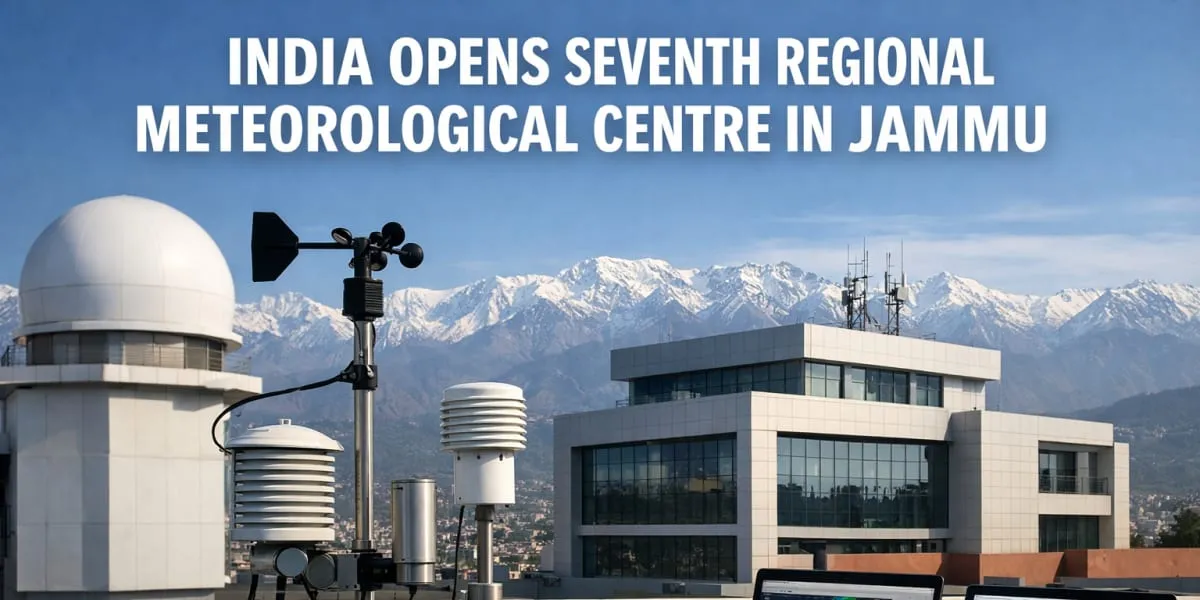
Union Minister for Science and Technology and Earth Sciences inaugurated the Regional Meteorological Centre (RMC) at Jammu and said a similar centre will be established in Lucknow to expand regional forecasting. The Jammu facility becomes the country's seventh RMC and will serve Jammu and Kashmir, Ladakh and Himachal Pradesh, offering specialised weather services and climate support adapted to complex Himalayan terrain.

The centre will provide district level forecasts, mountain forecasts, tourist advisories and city specific weather services, and will issue warnings for flash floods, cloudbursts, avalanches, heavy snowfall, thunderstorms and landslides. The services are expected to benefit pilgrims on the Amarnath and Vaishno Devi yatras, farmers, transport operators, hydropower projects, disaster management agencies and security forces.

The Minister noted the region had no Doppler weather radars in 2014 and that four are now operational at Jammu, Srinagar, Leh and Banihal Top. Under Mission Mausam five additional Doppler radars have been proposed for Anantnag, Rajouri, Baramulla, Kishtwar and Doda. The observational network now comprises 56 observatories, including 15 manual observatories, 25 Automatic Weather Stations (AWSs) and 16 Automatic Rain Gauges (ARGs).

Recently AWSs have been installed at Kargil, Ukhral in Ramban district and Mata Vaishno Devi Bhawan, and nearly eight more AWSs and five ARGs are expected during the current financial year. The number of stations under the Daily Rainfall Monitoring Scheme has risen from 30 in 2014 to 85 at present, improving rainfall monitoring and forecasting capabilities. The establishment of RMC Jammu marks a restructuring of the India Meteorological Department (IMD) regional operations.

Delhi will cede direct coordination for Jammu and Kashmir, Ladakh and Himachal Pradesh, while the proposed Lucknow centre is intended to cover Uttar Pradesh and Uttarakhand. The Meteorological Centre at Srinagar has signed collaborations with regional universities and the High Altitude Cloud Physics Laboratory at Patnitop has been set up with Swiss partners. The seismological network has been modernised and the Srinagar observatory recognised by the World Meteorological Organization as a Centennial Observing Station.

Union Minister for Science and Technology and Earth Sciences inaugurated the Regional Meteorological Centre (RMC) at Jammu and said a similar centre will be established in Lucknow to expand regional forecasting. The Jammu facility becomes the country's seventh RMC and will serve Jammu and Kashmir, Ladakh and Himachal Pradesh, offering specialised weather services and climate support adapted to complex Himalayan terrain. The centre will provide district level forecasts, mountain forecasts, tourist advisories and city specific weather services, and will issue warnings for flash floods, cloudbursts, avalanches, heavy snowfall, thunderstorms and landslides. The services are expected to benefit pilgrims on the Amarnath and Vaishno Devi yatras, farmers, transport operators, hydropower projects, disaster management agencies and security forces. The Minister noted the region had no Doppler weather radars in 2014 and that four are now operational at Jammu, Srinagar, Leh and Banihal Top. Under Mission Mausam five additional Doppler radars have been proposed for Anantnag, Rajouri, Baramulla, Kishtwar and Doda. The observational network now comprises 56 observatories, including 15 manual observatories, 25 Automatic Weather Stations (AWSs) and 16 Automatic Rain Gauges (ARGs). Recently AWSs have been installed at Kargil, Ukhral in Ramban district and Mata Vaishno Devi Bhawan, and nearly eight more AWSs and five ARGs are expected during the current financial year. The number of stations under the Daily Rainfall Monitoring Scheme has risen from 30 in 2014 to 85 at present, improving rainfall monitoring and forecasting capabilities. The establishment of RMC Jammu marks a restructuring of the India Meteorological Department (IMD) regional operations. Delhi will cede direct coordination for Jammu and Kashmir, Ladakh and Himachal Pradesh, while the proposed Lucknow centre is intended to cover Uttar Pradesh and Uttarakhand. The Meteorological Centre at Srinagar has signed collaborations with regional universities and the High Altitude Cloud Physics Laboratory at Patnitop has been set up with Swiss partners. The seismological network has been modernised and the Srinagar observatory recognised by the World Meteorological Organization as a Centennial Observing Station.

Next Story
Infrastructure Transport

Pathankot–Jogindernagar Rail Service Resumes After Four Years

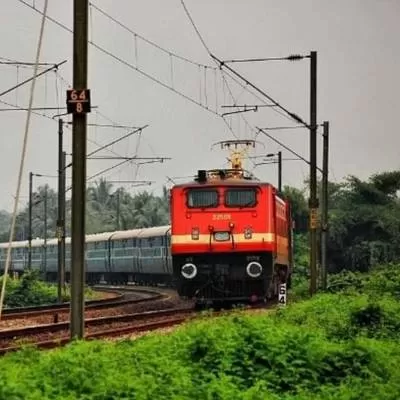
The Pathankot–Jogindernagar rail service resumed on Tuesday, 9 June 2026, restoring a direct link between Pathankot in Punjab and Jogindernagar in Himachal Pradesh after four years. The service had been suspended following infrastructure work and rehabilitation, and the resumption marks the restoration of regular connectivity along the hill route. Railway officials said the reopening followed a phased programme of repairs and targeted maintenance across vulnerable sections of the line. Officials said the restarted services will cater to commuters, local traders and tourists who rely on rail ..

Next Story
Infrastructure Transport

Railways Approves Rs 2.38 Billion Safety Upgrade on Jammu Katra Route

The Railway Board approved a Rs 2.38 billion (bn) safety upgrade for the Jammu Katra rail section. The allocation of Rs 2.38 bn will be deployed to strengthen safety infrastructure along the route. The decision follows a review of corridor safety needs and aligns with a wider effort to modernise key regional links. The Jammu Katra corridor serves a high volume of passenger traffic, including pilgrimage travel to the town of Katra which is a gateway to a major shrine. The project is expected to address operational risks and improve reliability for commuters and visitors. Seasonal surges in dema..

Next Story
Infrastructure Transport

Rayagada Railway Division Begins Operations Under ECoR

The newly created Rayagada Railway Division of the East Coast Railway (ECoR) commenced operations on Monday and is led by Indian Railway Service of Electrical Engineers (IRSEE) officer Amitabh Singhal. ECoR said Singhal has been associated during his long railway career with several landmark rolling stock initiatives, including the Vande Bharat Express project, and will lead the division supported by officers and railway staff in strengthening operations, infrastructure development and service delivery across the region. The Ministry of Railways formally notified the creation of the Rayagada D..

Advertisement

Subscribe to Our Newsletter

Get daily newsletters around different themes from Construction world.

STAY CONNECTED

Advertisement

Advertisement

Advertisement