

India Top APAC Data Centre Market Outside China
ECONOMY & POLICY

India Top APAC Data Centre Market Outside China

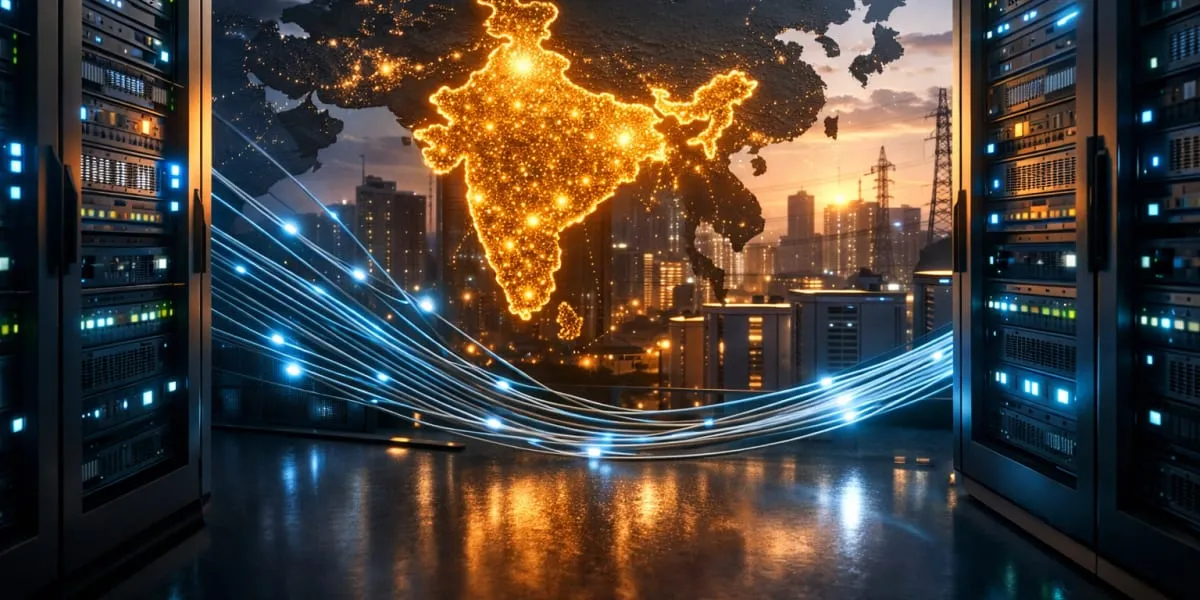
A Bloomberg New Energy Finance report has found that India has emerged as the top data centre market in the Asia-Pacific region outside China after its live IT capacity quadrupled over six years to one point seven gigawatt (GW). The analysis attributed the expansion to strong scores on energy availability and fibre connectivity that support large-scale deployments. The finding positions India as a leading location for hyperscale facilities.

The study identified a robust project pipeline, with one point three gigawatt (GW) under construction and three point two gigawatt (GW) of schemes that have secured land, power and permits. Maharashtra remains the dominant state, accounting for 55 per cent of the country’s live IT capacity and hosting the largest approved pipeline. The report highlighted Andhra Pradesh, Gujarat, Karnataka, Tamil Nadu, Telangana and Uttar Pradesh as likely contributors to the next phase of development.

The analysis noted that domestic conglomerates have committed 210 billion (bn) dollars, representing 45 per cent of all announced investment, while global hyperscalers led by Google, Amazon and Microsoft have announced 84 bn dollars. About 95 per cent of announced investment is targeting large hyperscale artificial intelligence campuses, underlining the capital intensity and scale of planned developments. This mix has shaped project priorities and regional concentration.

BloombergNEF expects India’s data centre electricity demand to grow more than eightfold to 91 terawatt-hours in 2035 from 11 terawatt-hours in 2025 as under-construction hyperscale capacities come online. The report said power usage will pick up over the next three to 10 years and that many hyperscalers’ net-zero targets for 2030 mean the share of renewable electricity used by campuses is expected to rise. These dynamics point to a surge in grid requirements alongside a focus on procuring clean power.

The study added that India’s installed electricity generation capacity has expanded at a seven point one per cent compound annual rate since 2021 to keep pace with rising demand. The findings imply a sustained build cycle for hyperscale AI campuses that will shape energy and infrastructure planning.

A Bloomberg New Energy Finance report has found that India has emerged as the top data centre market in the Asia-Pacific region outside China after its live IT capacity quadrupled over six years to one point seven gigawatt (GW). The analysis attributed the expansion to strong scores on energy availability and fibre connectivity that support large-scale deployments. The finding positions India as a leading location for hyperscale facilities. The study identified a robust project pipeline, with one point three gigawatt (GW) under construction and three point two gigawatt (GW) of schemes that have secured land, power and permits. Maharashtra remains the dominant state, accounting for 55 per cent of the country’s live IT capacity and hosting the largest approved pipeline. The report highlighted Andhra Pradesh, Gujarat, Karnataka, Tamil Nadu, Telangana and Uttar Pradesh as likely contributors to the next phase of development. The analysis noted that domestic conglomerates have committed 210 billion (bn) dollars, representing 45 per cent of all announced investment, while global hyperscalers led by Google, Amazon and Microsoft have announced 84 bn dollars. About 95 per cent of announced investment is targeting large hyperscale artificial intelligence campuses, underlining the capital intensity and scale of planned developments. This mix has shaped project priorities and regional concentration. BloombergNEF expects India’s data centre electricity demand to grow more than eightfold to 91 terawatt-hours in 2035 from 11 terawatt-hours in 2025 as under-construction hyperscale capacities come online. The report said power usage will pick up over the next three to 10 years and that many hyperscalers’ net-zero targets for 2030 mean the share of renewable electricity used by campuses is expected to rise. These dynamics point to a surge in grid requirements alongside a focus on procuring clean power. The study added that India’s installed electricity generation capacity has expanded at a seven point one per cent compound annual rate since 2021 to keep pace with rising demand. The findings imply a sustained build cycle for hyperscale AI campuses that will shape energy and infrastructure planning.

Related Stories

Gold Stories

Next Story
Real Estate

Gradiant expands Coimbatore engineering centre

Gradiant has expanded its Global Engineering Center (GEC) in Coimbatore, more than doubling its engineering workforce from approximately 100 to over 200 professionals as it strengthens its global project execution capabilities.The expanded centre will bring together multidisciplinary expertise across process engineering, detailed design and project engineering, enabling the India team to take on greater responsibility for the engineering and design of Gradiant’s international projects.According to Govind Alagappan, COO, Gradiant, Coimbatore’s engineering talent and industrial heritage make..

Next Story
Infrastructure Urban

Domestic Firms Choose Locally Designed Reactors to Cut Delays

Domestic companies in the nuclear sector are choosing locally designed reactors to avoid time consuming approvals and supply chain bottlenecks that can delay project execution. The shift reflects an emphasis on reducing dependence on foreign designs and accelerating construction schedules by aligning design, manufacturing and regulatory processes within national frameworks. Industry participants expect that locally designed systems will allow closer coordination with regulators and vendors, shortening lead times for certification and component delivery. Localisation is projected to stimulate t..

Next Story
Infrastructure Urban

Kadiyam Kavya Seeks Separate Railway Division For Kazipet

Warangal Member of Parliament Kadiyam Kavya has urged the establishment of a separate railway division based at Kazipet and submitted a representation to the South Central Railway (SCR) general manager at the headquarters in Secunderabad. She highlighted Kazipet's role as a major railway hub and argued that the junction has not seen development commensurate with its strategic importance. The representative action aimed to press for administrative reorganisation to address local operational and developmental needs. She noted that creation of an independent Kazipet division has been a long stand..

Advertisement

Subscribe to Our Newsletter

Get daily newsletters around different themes from Construction world.

STAY CONNECTED

Advertisement