India's Net-Zero Aim by 2070 Offers USD 22.7 tn Opportunity
ECONOMY & POLICY

India's Net-Zero Aim by 2070 Offers USD 22.7 tn Opportunity

India’s ambition to achieve net-zero emissions by 2070 could create an estimated USD 22.7 tn investment opportunity across renewable energy, electricity grids, storage and emerging clean technologies, according to a report by Australian economist Nicki Hutley. The report says the scale of India’s energy needs means its transition will have consequences beyond the country’s borders.

The estimated requirement is too large to be financed through domestic resources alone. India could fund just over 70 per cent of the total domestically, leaving a gap of about USD 6.5 tn for foreign investors, development finance institutions and international financial markets to address.

The opportunity spans renewable power generation, electricity transmission and distribution, battery storage, green hydrogen, transport electrification and industrial decarbonisation. Hutley, who is associated with Australia’s Climate Council and has more than three decades of experience in financial markets and economic consulting, presents the transition as both a climate obligation and a major market for businesses and financial institutions.

India is the world’s third-largest greenhouse gas emitter in absolute terms, while its per-capita emissions are estimated at 3.1 t of carbon dioxide equivalent, less than half the global average of 6.6 t. Its gross domestic product per capita is about USD 2,810, highlighting the need for continued economic expansion, infrastructure development and improvements in living standards.

India aims to become a developed economy by 2047, while its expanding population, urbanisation, industrialisation, air-conditioning demand and data centres are expected to increase energy consumption. Non-fossil sources accounted for 54.2 per cent of installed power capacity by June 2026, although renewables supplied only about a quarter of electricity generation.

Turning the potential into capital flows will depend on financing costs, regulatory predictability, grid infrastructure and the financial health of electricity distribution companies. Investors will need to identify commercially viable projects, while India will need to ensure that growth is powered increasingly by clean energy instead of fossil-fuel infrastructure that could lock in emissions for decades.

India’s ambition to achieve net-zero emissions by 2070 could create an estimated USD 22.7 tn investment opportunity across renewable energy, electricity grids, storage and emerging clean technologies, according to a report by Australian economist Nicki Hutley. The report says the scale of India’s energy needs means its transition will have consequences beyond the country’s borders. The estimated requirement is too large to be financed through domestic resources alone. India could fund just over 70 per cent of the total domestically, leaving a gap of about USD 6.5 tn for foreign investors, development finance institutions and international financial markets to address. The opportunity spans renewable power generation, electricity transmission and distribution, battery storage, green hydrogen, transport electrification and industrial decarbonisation. Hutley, who is associated with Australia’s Climate Council and has more than three decades of experience in financial markets and economic consulting, presents the transition as both a climate obligation and a major market for businesses and financial institutions. India is the world’s third-largest greenhouse gas emitter in absolute terms, while its per-capita emissions are estimated at 3.1 t of carbon dioxide equivalent, less than half the global average of 6.6 t. Its gross domestic product per capita is about USD 2,810, highlighting the need for continued economic expansion, infrastructure development and improvements in living standards. India aims to become a developed economy by 2047, while its expanding population, urbanisation, industrialisation, air-conditioning demand and data centres are expected to increase energy consumption. Non-fossil sources accounted for 54.2 per cent of installed power capacity by June 2026, although renewables supplied only about a quarter of electricity generation. Turning the potential into capital flows will depend on financing costs, regulatory predictability, grid infrastructure and the financial health of electricity distribution companies. Investors will need to identify commercially viable projects, while India will need to ensure that growth is powered increasingly by clean energy instead of fossil-fuel infrastructure that could lock in emissions for decades.

Related Stories

Gold Stories

Next Story
Infrastructure Energy

22 Companies Bid for 10 GWh Battery Storage PLI

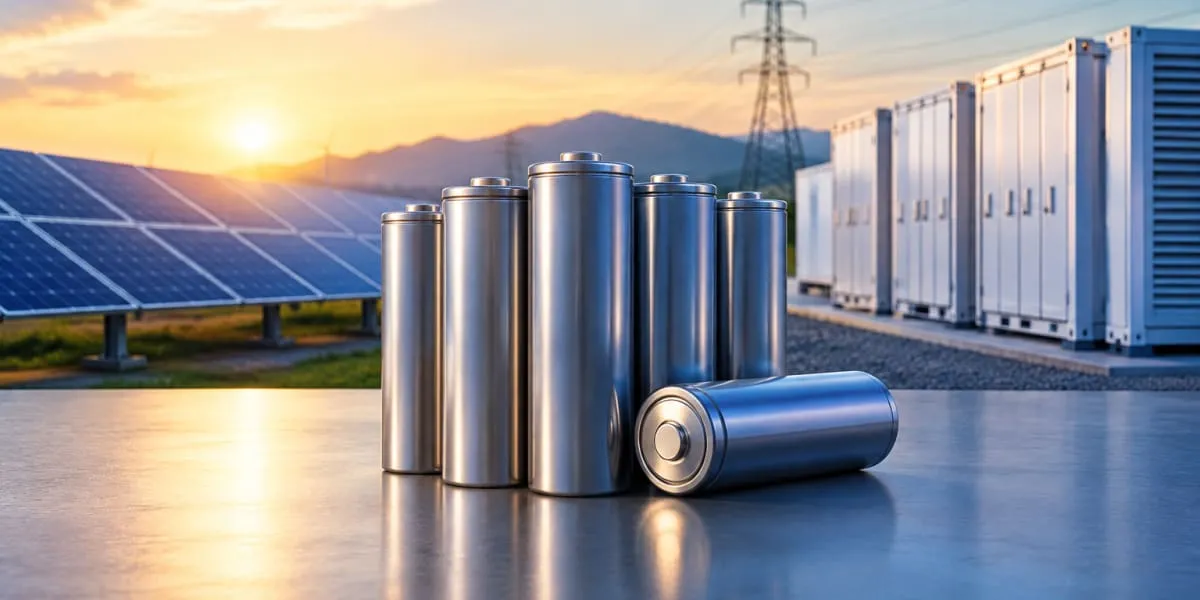
The Ministry of Heavy Industries (MHI) has received 22 bids for 10 GWh of advanced chemistry cell (ACC) manufacturing capacity under the Production Linked Incentive (PLI) scheme. The bidders include Reliance Industries, ACME Solar Holdings, Amara Raja Advanced Cell Technologies, Exide Energy Solutions, JSW Neo Energy and Vikram Solar. The capacity has been earmarked for Grid-Scale Stationary Storage (GSSS) applications. It forms part of the government’s broader target of establishing 50 GWh of ACC manufacturing capacity under the National Programme on Advanced Chemistry Cell Battery Storage...

Next Story
Infrastructure Transport

Modi Says Almost Entire Indian Railway Network Electrified

Prime Minister Narendra Modi has cited the electrification of the Indian Railways as an example of accelerated execution under his administration. Addressing the media at a Diwali Milan programme at the Bharatiya Janata Party headquarters in New Delhi, he compared the pace of infrastructure development and welfare delivery over the past decade with earlier periods. Modi said railway electrification began in the 1930s but had reached only 30 per cent completion by 2014, after about 90 years of work. He said the project would have taken several more decades at the earlier pace, while claiming th..
Next Story
Infrastructure Transport

Jammu Railway Bridge 232 Speed Limit Raised to 45 kmph

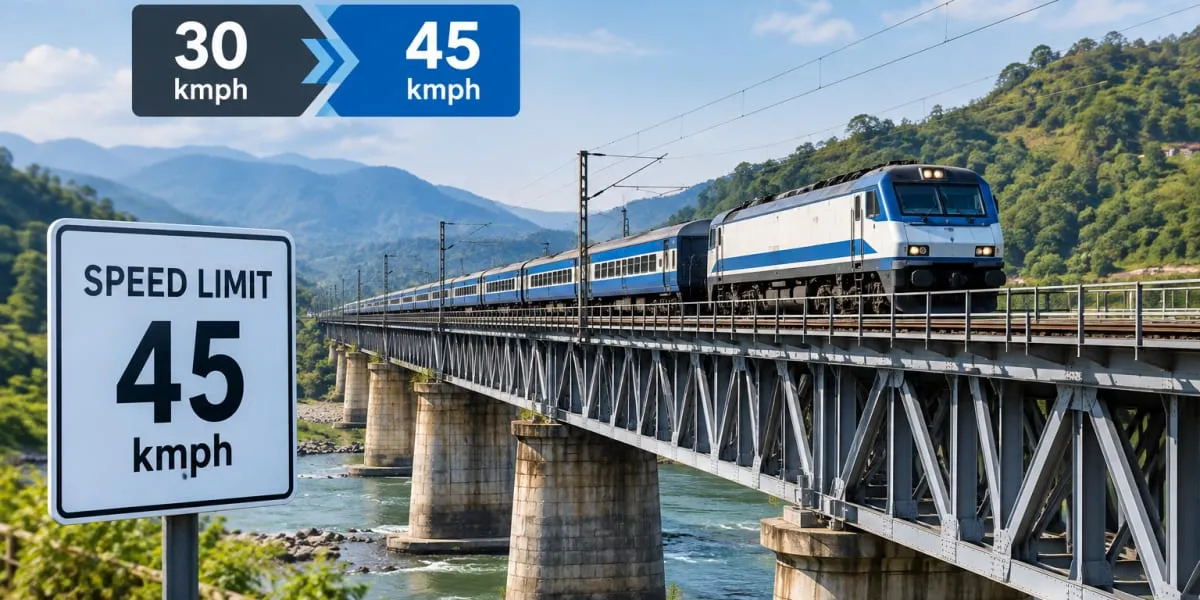
Northern Railway’s Jammu Division has raised the speed limit on Railway Bridge No. 232 in the Kandrori-Pathankot Cantt Block Section from 30 kmph to 45 kmph after extensive restoration and rehabilitation work. The bridge is located in the Bhogpur Sirwal-Pathankot Cantt Section and carries both UP and DN lines. The bridge’s protection walls were damaged during severe floods in 2024, prompting the imposition of a 20 kmph speed restriction from August 1, 2024. During the 2025 floods, the restriction was tightened on safety grounds to Stop Dead and 10 kmph. It was later relaxed in stages to 20..

Advertisement

Subscribe to Our Newsletter

Get daily newsletters around different themes from Construction world.

STAY CONNECTED

Advertisement

SPECIAL OFFER
QR Code