India Plans World’s Highest Railway Station in Ladakh
RAILWAYS & METRO RAIL

India Plans World’s Highest Railway Station in Ladakh

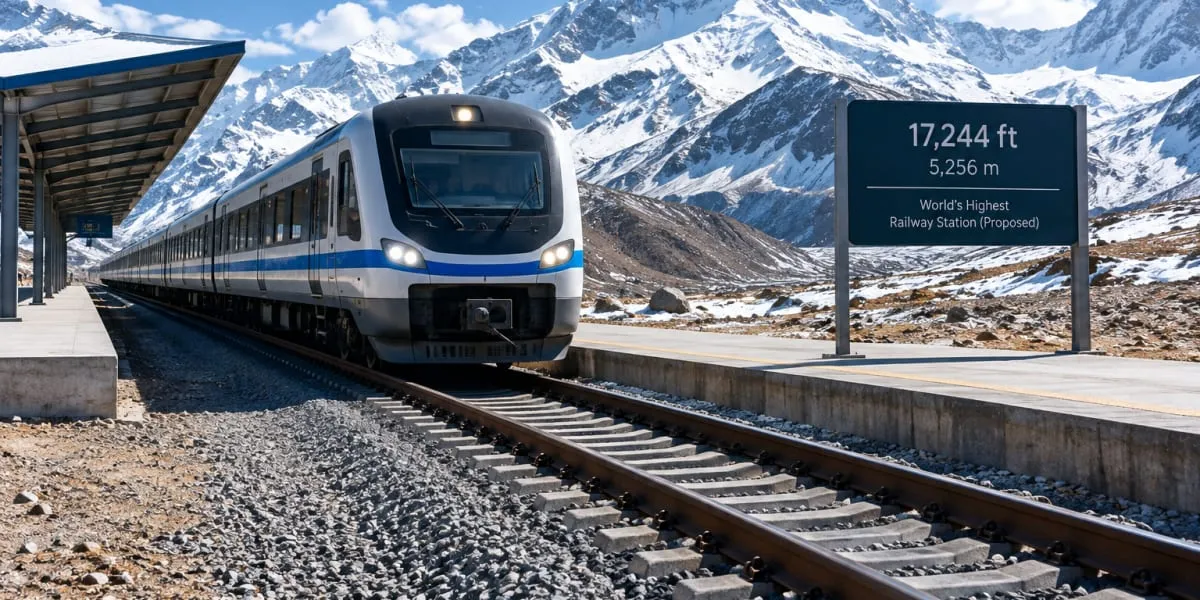
Indian Railways has proposed the 489-km Bilaspur-Manali-Leh rail line at an estimated cost of Rs. 1.31 tn. The project includes a station at about 17,244 feet, or 5,256 metres, below the Tanglang La pass in Ladakh. If constructed at the planned elevation, it would become the world’s highest railway station. China’s Tanggula station on the Qinghai-Tibet Railway currently holds the record at 5,068 metres, placing the proposed Ladakh station about 188 metres higher. Some reports have placed the planned elevation at 5,359 metres.

The broad-gauge line is planned to connect Bilaspur in Himachal Pradesh with Leh. Proposed stations along the route include Sundernagar, Mandi, Manali, Keylong, Sarchu, Pang, Rumtse and Upshi. The alignment would pass through some of the most difficult terrain in the Himalayas and provide a rail connection to the Union territory of Ladakh.

Nearly 270 km of the route would run through tunnels because of steep terrain, seismic risks, avalanches and prolonged sub-zero temperatures. An all-weather rail link could reduce the time and cost involved in transporting troops, fuel, equipment and other supplies to Ladakh, which currently relies heavily on mountain roads. It could also support tourism and economic activity in settlements along the route.

The Railway Ministry has completed the survey and prepared a detailed project report, but construction has not yet been sanctioned. No completion date has been announced. The project will require substantial funding, detailed engineering studies and environmental and other statutory clearances before construction can begin. Development in the ecologically fragile region is expected to require careful assessment of the effects on local landscapes, communities and wildlife.

Indian Railways has proposed the 489-km Bilaspur-Manali-Leh rail line at an estimated cost of Rs. 1.31 tn. The project includes a station at about 17,244 feet, or 5,256 metres, below the Tanglang La pass in Ladakh. If constructed at the planned elevation, it would become the world’s highest railway station. China’s Tanggula station on the Qinghai-Tibet Railway currently holds the record at 5,068 metres, placing the proposed Ladakh station about 188 metres higher. Some reports have placed the planned elevation at 5,359 metres. The broad-gauge line is planned to connect Bilaspur in Himachal Pradesh with Leh. Proposed stations along the route include Sundernagar, Mandi, Manali, Keylong, Sarchu, Pang, Rumtse and Upshi. The alignment would pass through some of the most difficult terrain in the Himalayas and provide a rail connection to the Union territory of Ladakh. Nearly 270 km of the route would run through tunnels because of steep terrain, seismic risks, avalanches and prolonged sub-zero temperatures. An all-weather rail link could reduce the time and cost involved in transporting troops, fuel, equipment and other supplies to Ladakh, which currently relies heavily on mountain roads. It could also support tourism and economic activity in settlements along the route. The Railway Ministry has completed the survey and prepared a detailed project report, but construction has not yet been sanctioned. No completion date has been announced. The project will require substantial funding, detailed engineering studies and environmental and other statutory clearances before construction can begin. Development in the ecologically fragile region is expected to require careful assessment of the effects on local landscapes, communities and wildlife.

Related Stories

Gold Stories
Next Story
Infrastructure Energy

22 Companies Bid for 10 GWh Battery Storage PLI

The Ministry of Heavy Industries (MHI) has received 22 bids for 10 GWh of advanced chemistry cell (ACC) manufacturing capacity under the Production Linked Incentive (PLI) scheme. The bidders include Reliance Industries, ACME Solar Holdings, Amara Raja Advanced Cell Technologies, Exide Energy Solutions, JSW Neo Energy and Vikram Solar. The capacity has been earmarked for Grid-Scale Stationary Storage (GSSS) applications. It forms part of the government’s broader target of establishing 50 GWh of ACC manufacturing capacity under the National Programme on Advanced Chemistry Cell Battery Storage...
Next Story
Infrastructure Transport

Modi Says Almost Entire Indian Railway Network Electrified

Prime Minister Narendra Modi has cited the electrification of the Indian Railways as an example of accelerated execution under his administration. Addressing the media at a Diwali Milan programme at the Bharatiya Janata Party headquarters in New Delhi, he compared the pace of infrastructure development and welfare delivery over the past decade with earlier periods. Modi said railway electrification began in the 1930s but had reached only 30 per cent completion by 2014, after about 90 years of work. He said the project would have taken several more decades at the earlier pace, while claiming th..
Next Story
Infrastructure Transport

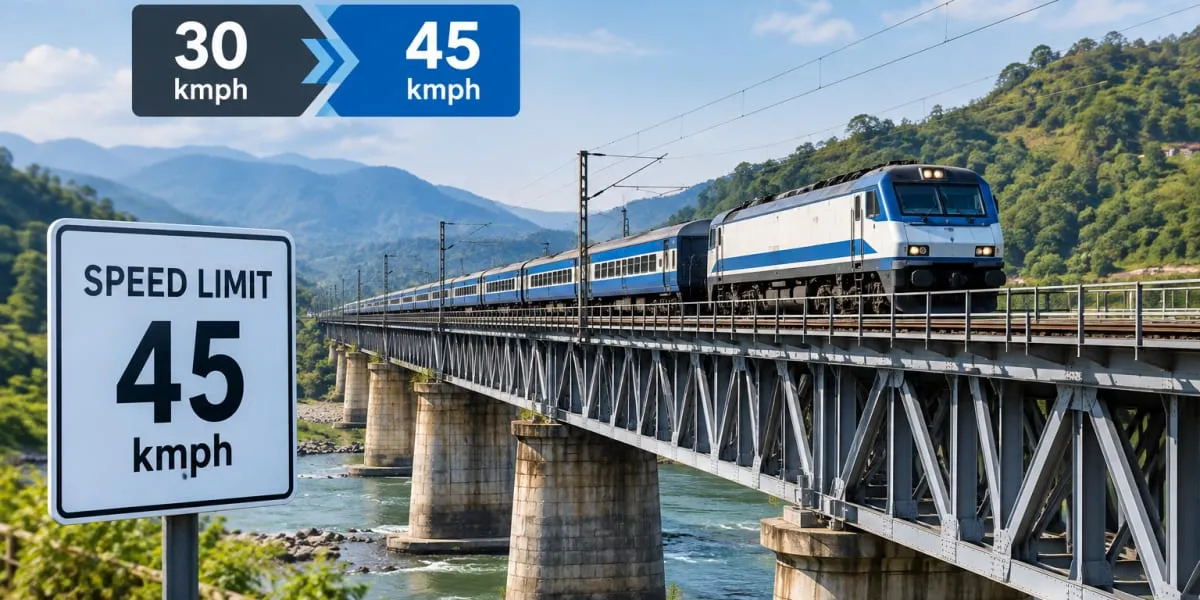
Jammu Railway Bridge 232 Speed Limit Raised to 45 kmph

Northern Railway’s Jammu Division has raised the speed limit on Railway Bridge No. 232 in the Kandrori-Pathankot Cantt Block Section from 30 kmph to 45 kmph after extensive restoration and rehabilitation work. The bridge is located in the Bhogpur Sirwal-Pathankot Cantt Section and carries both UP and DN lines. The bridge’s protection walls were damaged during severe floods in 2024, prompting the imposition of a 20 kmph speed restriction from August 1, 2024. During the 2025 floods, the restriction was tightened on safety grounds to Stop Dead and 10 kmph. It was later relaxed in stages to 20..

Advertisement

Subscribe to Our Newsletter

Get daily newsletters around different themes from Construction world.

STAY CONNECTED

Advertisement

SPECIAL OFFER
QR Code