Kinetic Green Targets $1 Billion EV Business by 2030
ECONOMY & POLICY

Kinetic Green Targets $1 Billion EV Business by 2030

Kinetic Green, a manufacturer of two- and three-wheeler electric vehicles, aims to build a $1 billion electric vehicle business by 2030, said Sulajja Firodia Motwani, founder and CEO of Kinetic Green.

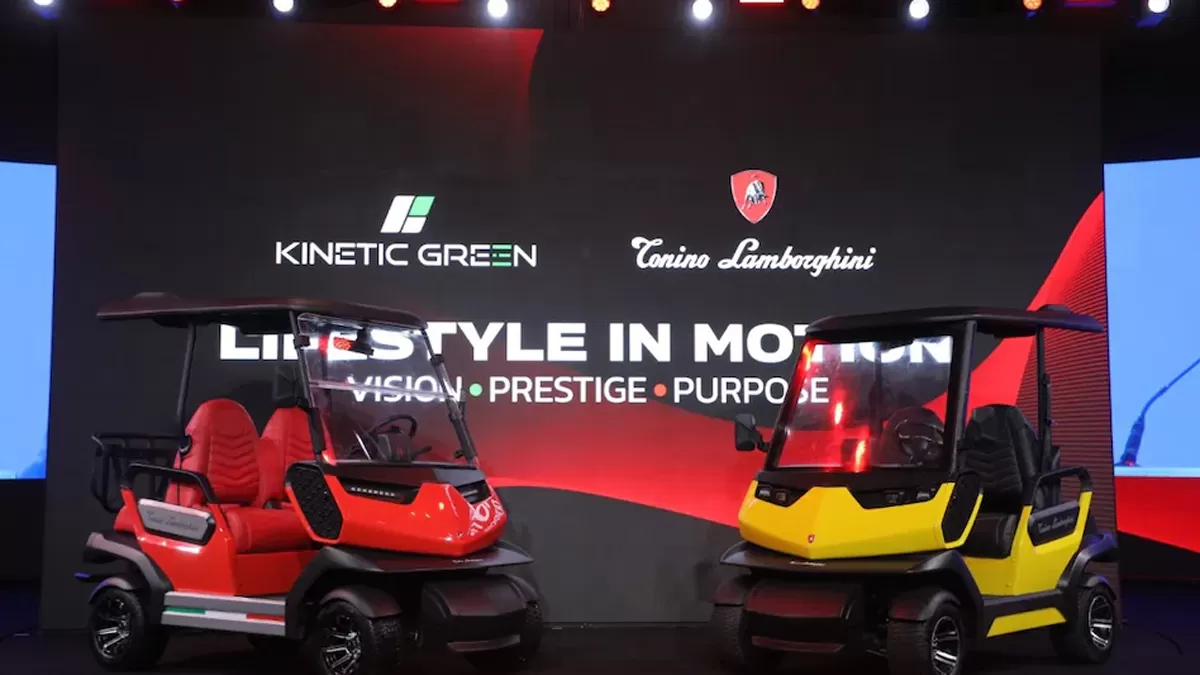
On Thursday, the company unveiled electric luxury and lifestyle golf carts through its joint venture with Tonino Lamborghini SpA, accelerating its global ambitions.

“We are poised to disrupt this segment and strive for global leadership, setting a confident and ambitious new benchmark in markets ready for revolution. For Kinetic Green, this marks the start of our global journey, bringing Made-in-India EVs to the world. Our goal is to build a $1 billion EV business by 2030, with this joint venture playing a key role,” Motwani said.

The golf carts are designed by Lamborghini and manufactured by Kinetic Green.

Motwani noted the global electric golf cart market is worth $5 billion, with annual sales of 500,000 units.

“The market divides into golf and non-golf segments, with roughly 55 per cent golf and 45 per cent non-golf. The largest markets are the USA, Europe, and Asia. This market is expected to grow to $10 billion in the next eight to ten years. Despite its potential, the market remains fragmented. Leading players like E-Z-Go and Yamaha hold around 40–45 per cent market share, while over 50 per cent is fragmented. Many carts come from China or are locally produced. This presents an opportunity for disruption. Although golf carts’ use has evolved, the segment has remained unchanged, giving us a chance to innovate,” Motwani told Business Today.

Kinetic Green plans to enter 25 new countries in the next three years, covering 80 per cent of the golf cart market. “Our aim is to scale to 25,000 golf carts annually within five years, representing about $300 million,” she added. The company has invested nearly $3 million in the electric golf cart project so far.

Production is initially set at 300 units per month at the Pune facility.

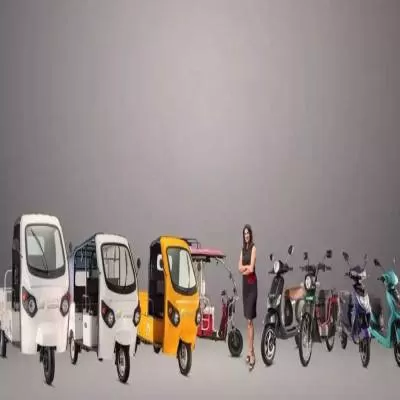
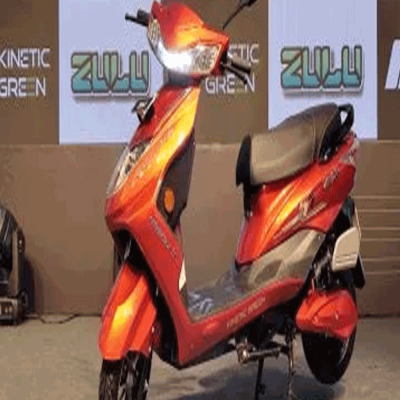
Meanwhile, Kinetic Green targets EBITDA positivity by the September quarter of FY26. In the two-wheeler market, it offers electric scooters e-Luna and Zulu, while in the three-wheeler space it serves the L3 and L5 categories.


Kinetic Green, a manufacturer of two- and three-wheeler electric vehicles, aims to build a $1 billion electric vehicle business by 2030, said Sulajja Firodia Motwani, founder and CEO of Kinetic Green.On Thursday, the company unveiled electric luxury and lifestyle golf carts through its joint venture with Tonino Lamborghini SpA, accelerating its global ambitions.“We are poised to disrupt this segment and strive for global leadership, setting a confident and ambitious new benchmark in markets ready for revolution. For Kinetic Green, this marks the start of our global journey, bringing Made-in-India EVs to the world. Our goal is to build a $1 billion EV business by 2030, with this joint venture playing a key role,” Motwani said.The golf carts are designed by Lamborghini and manufactured by Kinetic Green.Motwani noted the global electric golf cart market is worth $5 billion, with annual sales of 500,000 units.“The market divides into golf and non-golf segments, with roughly 55 per cent golf and 45 per cent non-golf. The largest markets are the USA, Europe, and Asia. This market is expected to grow to $10 billion in the next eight to ten years. Despite its potential, the market remains fragmented. Leading players like E-Z-Go and Yamaha hold around 40–45 per cent market share, while over 50 per cent is fragmented. Many carts come from China or are locally produced. This presents an opportunity for disruption. Although golf carts’ use has evolved, the segment has remained unchanged, giving us a chance to innovate,” Motwani told Business Today.Kinetic Green plans to enter 25 new countries in the next three years, covering 80 per cent of the golf cart market. “Our aim is to scale to 25,000 golf carts annually within five years, representing about $300 million,” she added. The company has invested nearly $3 million in the electric golf cart project so far.Production is initially set at 300 units per month at the Pune facility.Meanwhile, Kinetic Green targets EBITDA positivity by the September quarter of FY26. In the two-wheeler market, it offers electric scooters e-Luna and Zulu, while in the three-wheeler space it serves the L3 and L5 categories. 

Next Story
Building Material

Suraj Estate Wins Euromoney Award for India’s Best Residential Developer

"Suraj Estate Developers Limited has received the Euromoney Real Estate Award 2025 for ‘India’s Best Residential Developer’, positioning the company among globally benchmarked leaders in the sector. The recognition reflects its four-decade legacy in delivering high-quality residential and redevelopment-led projects across South Central Mumbai. The Euromoney Real Estate Awards, presented by the London-based Euromoney magazine, are widely regarded as one of the most credible global assessments of performance in real estate, banking and finance. Winners are selected through surveys of inte..

Next Story
Building Material

Lloyds Metals, Tata Steel Sign MoU to Explore Strategic Collaboration

"Lloyds Metals and Energy Limited has signed a non-binding Memorandum of Understanding with Tata Steel Limited to evaluate potential areas of strategic cooperation across mining, logistics, pelletisation and steelmaking. The MoU was signed by B Prabhakaran, Managing Director of Lloyds Metals, and Mr T V Narendran, CEO and Managing Director of Tata Steel. The partnership framework aims to leverage the natural operational synergies between both companies and assess opportunities in greenfield steel projects, iron ore mining, slurry pipeline infrastructure, pellet manufacturing in iron ore–ric..

Next Story
Building Material

IndiaAI, Gujarat Govt Host Regional Conclave Ahead of 2026 AI Summit

The IndiaAI Mission under the Ministry of Electronics and Information Technology, along with the Government of Gujarat and IIT Gandhinagar, convened a Regional Pre-Summit Event at Mahatma Mandir, Gandhinagar. The initiative is part of the build-up to the India–AI Impact Summit 2026, scheduled for 15–20 February 2026 at Bharat Mandapam, New Delhi. The conclave brought together senior policymakers, technology leaders, researchers and industry practitioners to examine how AI can accelerate economic, digital and social transformation across sectors. The programme focused on the overarching th..

Advertisement

Subscribe to Our Newsletter

Get daily newsletters around different themes from Construction world.

STAY CONNECTED

Advertisement

Advertisement

Advertisement

Advertisement

Open In App