Kolkata Metro installs India's longest circuit breaker panel
ECONOMY & POLICY

Kolkata Metro installs India's longest circuit breaker panel

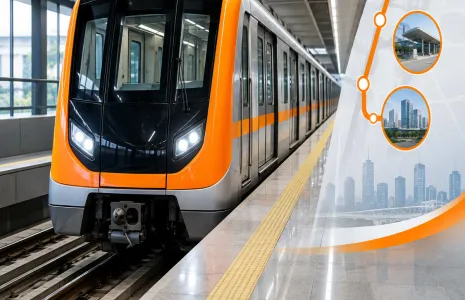
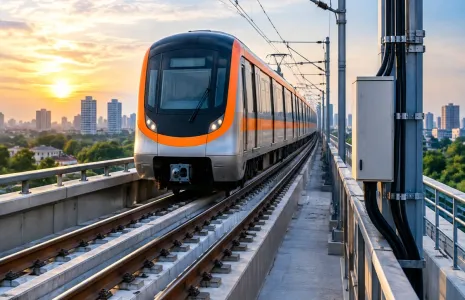
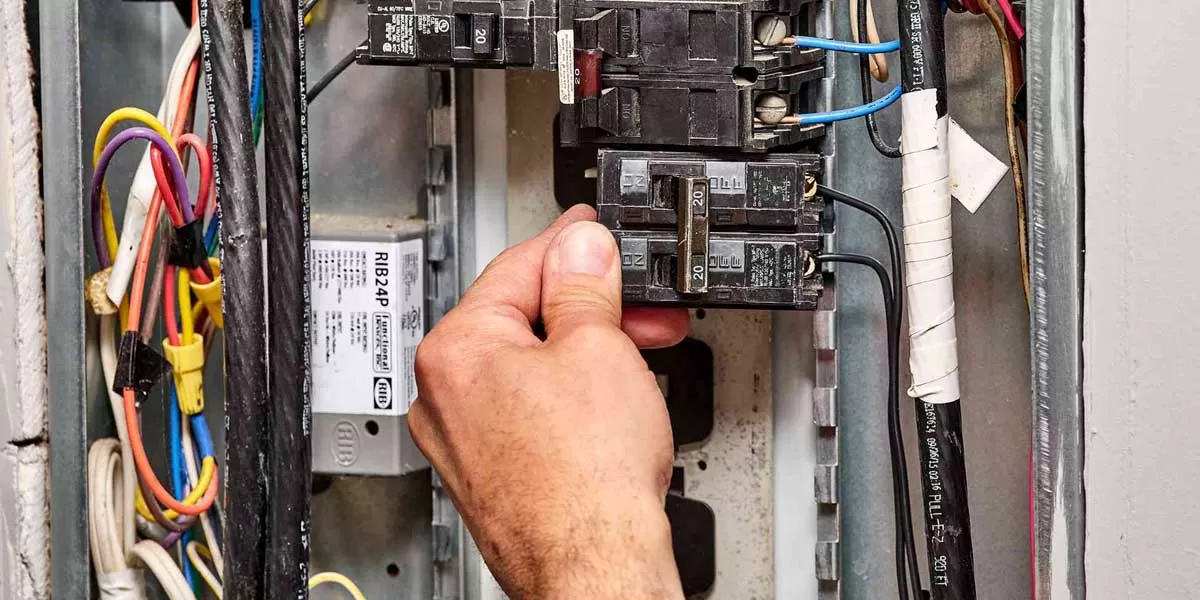
Metro Railway, Kolkata, has upgraded a 40-year-old 11 kV Traction Sub Station (TSS) at Noapara with India's longest High-Speed Circuit Breaker (HSCB) panel.

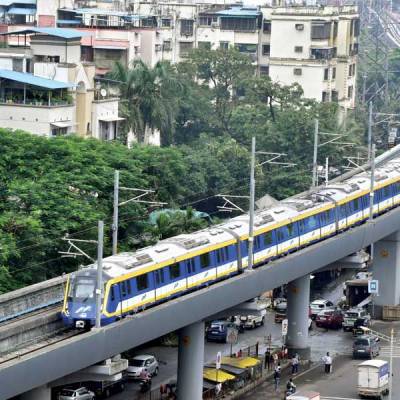
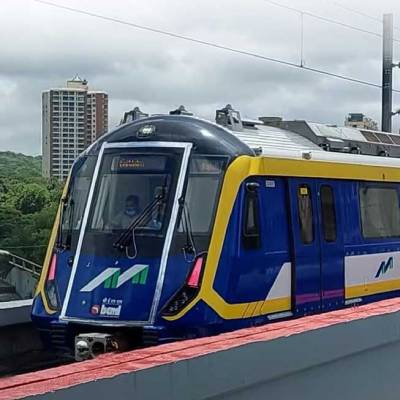
This installation is part of the Blue Line, which links Kavi Subhash (New Garia) in South Kolkata to Dakshineswar in the north, an extension of India's first Metro service that began in 1984.

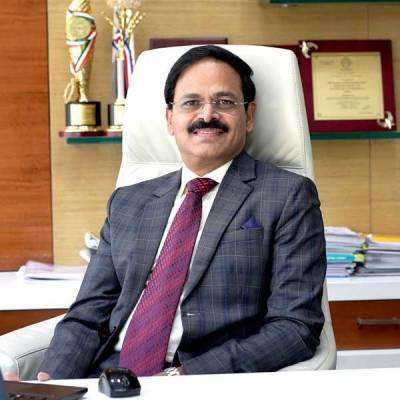
"Metro Railway General Manager P Uday Kumar Reddy activated the 33 kV TSS featuring the Blue Line's first Gas Insulated Switchgear (GIS) panel. This advanced TSS includes the GIS 33 kV high tension panel, the longest HSCB panel in India, an IGBT-based regenerative battery charger, a 33 kV dry-type traction transformer, and a 3 MW twelve pulse rectifier," stated Kausik Mitra, CPRO of Metro Railway.

The previous 11 kV TSS had a six-pulse rectifier and a dry-type traction transformer, while the new system offers a 50% higher capacity. This upgraded model will be used for enhancing all old substations on the Blue Line to improve service.

Mitra noted that the HSCB panel, comprising 17 units, facilitates power blocks for regular maintenance, addressing issues arising from the increased service of 34 rakes on the Blue Line.

"We planned this project in July with a detailed monitoring strategy before finalizing the substation shutdown. Work commenced in August and was completed within two months, with no service disruptions. Final tests were conducted in early October, and the electrical inspector approved the charging of the substation last week," added Mitra.

The transition to a 33 kV network brings several advantages, including improved reliability, reduced costs from the elimination of older switchgear, decreased distribution losses due to higher voltage, and a more environmentally friendly system.

Metro Railway anticipates savings of nearly Rs 350 crore in capital expenditure for equipment upgrades and energy costs across the Blue Line. Upgrades for the traction sub-stations at Belgachia and Dumdum are scheduled for December 2024 and February 2025, respectively.

Metro Railway, Kolkata, has upgraded a 40-year-old 11 kV Traction Sub Station (TSS) at Noapara with India's longest High-Speed Circuit Breaker (HSCB) panel. This installation is part of the Blue Line, which links Kavi Subhash (New Garia) in South Kolkata to Dakshineswar in the north, an extension of India's first Metro service that began in 1984. Metro Railway General Manager P Uday Kumar Reddy activated the 33 kV TSS featuring the Blue Line's first Gas Insulated Switchgear (GIS) panel. This advanced TSS includes the GIS 33 kV high tension panel, the longest HSCB panel in India, an IGBT-based regenerative battery charger, a 33 kV dry-type traction transformer, and a 3 MW twelve pulse rectifier, stated Kausik Mitra, CPRO of Metro Railway. The previous 11 kV TSS had a six-pulse rectifier and a dry-type traction transformer, while the new system offers a 50% higher capacity. This upgraded model will be used for enhancing all old substations on the Blue Line to improve service. Mitra noted that the HSCB panel, comprising 17 units, facilitates power blocks for regular maintenance, addressing issues arising from the increased service of 34 rakes on the Blue Line. We planned this project in July with a detailed monitoring strategy before finalizing the substation shutdown. Work commenced in August and was completed within two months, with no service disruptions. Final tests were conducted in early October, and the electrical inspector approved the charging of the substation last week, added Mitra. The transition to a 33 kV network brings several advantages, including improved reliability, reduced costs from the elimination of older switchgear, decreased distribution losses due to higher voltage, and a more environmentally friendly system. Metro Railway anticipates savings of nearly Rs 350 crore in capital expenditure for equipment upgrades and energy costs across the Blue Line. Upgrades for the traction sub-stations at Belgachia and Dumdum are scheduled for December 2024 and February 2025, respectively.

Next Story
Resources

Jyoti Structures Launches Heat Safety Drive Across Sites

Jyoti Structures (JSL) has strengthened heat safety measures across its project sites and manufacturing facilities as temperatures rise across India. The company has implemented a Summer Safety Plan covering all transmission line projects to address risks related to heat stress, dehydration and worker fatigue.The initiative includes rescheduling work away from peak afternoon temperatures, provision of drinking water, ORS and lemon-salt solutions, and installation of rest shelters near work areas. Daily toolbox talks, worker health monitoring, first-aid preparedness, emergency transport arrange..

Next Story
Real Estate

MHADA Declares 82 Buildings Most Dangerous in Central and South Mumbai

The Maharashtra Housing and Area Development Authority (MHADA) has declared 82 buildings as most dangerous across Central and South Mumbai and has appealed to residents to vacate immediately. The list, prepared after structural assessments by the authority, identifies buildings judged to pose imminent risk to occupants and to passersby. Local civic bodies have been asked to coordinate evacuations and to make arrangements for temporary shelter and rehabilitation for displaced households. Officials said the authority prioritised buildings with visible structural distress, severe cracking, tiltin..

Next Story
Infrastructure Transport

Damage Reported At Halwara Airport Terminal After First Rains

Severe damage was reported at the terminal of Halwara Airport during the first major rain spell of the season, prompting immediate concern among aviation and local authorities. Images from the site showed water ingress and visible deterioration of the terminal interior, affecting passenger areas and ancillary services. The airport authority suspended certain operations temporarily to assess structural safety and ensure passenger wellbeing. Preliminary inspections have prioritised electrical systems and roof seals to prevent further water ingress. State aviation officials ordered a formal inqui..

Advertisement

Subscribe to Our Newsletter

Get daily newsletters around different themes from Construction world.

STAY CONNECTED

Advertisement

Advertisement

Advertisement