Kudankulam Costs Rise 55 Per Cent After Ukraine War Delays
ECONOMY & POLICY

Kudankulam Costs Rise 55 Per Cent After Ukraine War Delays

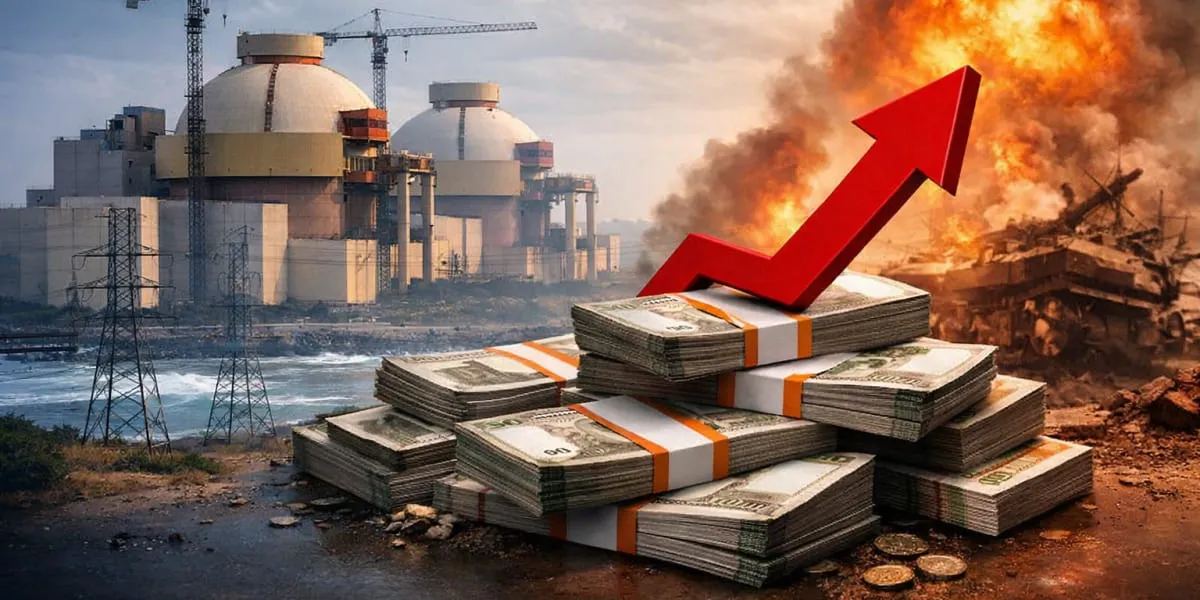
The cost of adding four Russian-designed reactors at the Kudankulam nuclear power plant in southern India has risen by 55 per cent to Rs 1.38 trillion (Rs 1.38 tn) after construction was delayed for almost three years because of the war in Ukraine. The four reactors, each of one gigawatt (GW), were put at that figure in a written reply to parliament by the Atomic Energy Minister Jitendra Singh. The revised estimate represents an escalation compared with the figures published in 2024.\n\nFederal government data show that projected expenditure for two of the new reactors increased by 73 per cent while estimates for the remaining two rose by 40 per cent, raising concerns about the impact on tariff competitiveness. Officials indicated that such cost overruns will make electricity from the units more expensive and could complicate plans to expand nuclear output in a price-sensitive market. The ministry said that costs for building four 700-megawatt (MW) domestic reactors at Kaiga and Gorakhpur are to be revised.\n\nThe sector has faced similar pressures abroad as projects in the United States, the United Kingdom and Bangladesh experienced steep increases after delays, with the Vogtle project in Georgia delivered years late and at more than double its original budget. Analysts noted that while nuclear energy remains important for climate risk mitigation and energy security, containing costs is vital to maintain competitiveness. A senior research executive at a financial firm warned that very high costs could strengthen opposition to projects and dent their commercial case.\n\nIndia has installed two Russian GW reactors at Kudankulam and is constructing four more, with the government stating that the new units will be commissioned through March 2030 and that the first is expected to start operations in June next year. The country currently has 8.8 GW of nuclear capacity, contributing about three per cent of overall power output, and the government has opened the sector to private firms to pursue an eleven-fold expansion target by 2047. Parliament was informed that the timetable had been pushed back from earlier projections.

The cost of adding four Russian-designed reactors at the Kudankulam nuclear power plant in southern India has risen by 55 per cent to Rs 1.38 trillion (Rs 1.38 tn) after construction was delayed for almost three years because of the war in Ukraine. The four reactors, each of one gigawatt (GW), were put at that figure in a written reply to parliament by the Atomic Energy Minister Jitendra Singh. The revised estimate represents an escalation compared with the figures published in 2024.\n\nFederal government data show that projected expenditure for two of the new reactors increased by 73 per cent while estimates for the remaining two rose by 40 per cent, raising concerns about the impact on tariff competitiveness. Officials indicated that such cost overruns will make electricity from the units more expensive and could complicate plans to expand nuclear output in a price-sensitive market. The ministry said that costs for building four 700-megawatt (MW) domestic reactors at Kaiga and Gorakhpur are to be revised.\n\nThe sector has faced similar pressures abroad as projects in the United States, the United Kingdom and Bangladesh experienced steep increases after delays, with the Vogtle project in Georgia delivered years late and at more than double its original budget. Analysts noted that while nuclear energy remains important for climate risk mitigation and energy security, containing costs is vital to maintain competitiveness. A senior research executive at a financial firm warned that very high costs could strengthen opposition to projects and dent their commercial case.\n\nIndia has installed two Russian GW reactors at Kudankulam and is constructing four more, with the government stating that the new units will be commissioned through March 2030 and that the first is expected to start operations in June next year. The country currently has 8.8 GW of nuclear capacity, contributing about three per cent of overall power output, and the government has opened the sector to private firms to pursue an eleven-fold expansion target by 2047. Parliament was informed that the timetable had been pushed back from earlier projections.

Related Stories

Gold Stories

Next Story
Infrastructure Urban

PMC Approves Rs 5.78 bn Waste Processing Contract

The Pune Municipal Corporation approved a Rs 5.7796 billion (bn) fifteen-year contract to process 500 metric tonnes (t) of waste daily at the Devachi Uruli depot and allowed unauthorised overhead cables to remain temporarily for one year subject to a fee. The decision was taken by the civic body to appoint a private operator for an integrated waste facility covering about 12 acres. The approval frames the contract as an operational arrangement with a fixed base rate and annual adjustments. The contract was awarded to Bhoomi Green Energy Envirocare LLP, which quoted Rs 772 per t, compared with ..

Next Story
Infrastructure Urban

Kerala High Court to Inspect Brahmapuram Waste Plant

Two judges of the Kerala High Court, Justice Bechu Kurian Thomas and Justice Gopinath P, will inspect the Brahmapuram waste management plant on 11 September as part of the suo motu proceeding on the plant's maintenance. The inspection was scheduled to allow the bench to assess conditions on site and to verify representations made by municipal and state authorities. The court listed the site visit during a hearing and directed officials to prepare for an on-site review. The bench instructed authorities to file a detailed report on the plant's present functioning ahead of the visit. It said the ..

Next Story
Infrastructure Transport

Ahmedabad Geetamandir Bus Port Terminal Two Ready with Airport Facilities

Ahmedabad’s Geetamandir Bus Port has completed a separate Terminal Two, which is ready to serve passengers travelling to Saurashtra-Kutch and North Gujarat. The facility has been developed with airport like facilities to improve passenger comfort and ease of travel. Deputy Chief Minister Harsh Sanghvi is scheduled to inaugurate the new terminal today. Authorities say the design focuses on smoother boarding and reduced congestion. Terminal Two will become operational from 13 August and is expected to handle 1,091 buses daily servicing routes to Saurashtra-Kutch and North Gujarat. The new arra..

Advertisement

Subscribe to Our Newsletter

Get daily newsletters around different themes from Construction world.

STAY CONNECTED

Advertisement