LANXESS’ MPP BU turnover multiplies almost four times in 10 years
ECONOMY & POLICY

LANXESS’ MPP BU turnover multiplies almost four times in 10 years

Specialty chemicals company, LANXESS, has around 15,100 employees in 33 countries. The Germany-based company’s expertise lies in producing, developing, and marketing chemical intermediates, additives, specialty chemicals and plastics. Incorporated in India in 2004, LANXESS is represented through a...

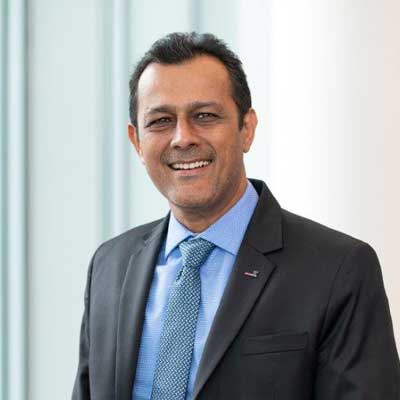
Specialty chemicals company, LANXESS, has around 15,100 employees in 33 countries. The Germany-based company’s expertise lies in producing, developing, and marketing chemical intermediates, additives, specialty chemicals and plastics. Incorporated in India in 2004, LANXESS is represented through all its 11 business units with around 1,000 employees across its operations. Vinod Agnihotri, Vice President-Asia Pacific, BU MPP and Managing Director, LANXESS ASEAN, has been with the company for more than 12 years managing its Materials Protection Products business unit (BU MPP) for Asia Pacific. Based in Singapore, he oversees the MPP business operations across the region. He shares more on the LANXESS India experience, focus and growth in tête-à-tête with SHRIYAL SETHUMADHAVAN. How important is India for the overall business of the group company? Asia contributes significantly towards our global sales. Two countries within Asia where LANXESS has a prominent network is China and India. India contributes significantly to the LANXESS’ ASEAN business. The business unit that we are talking about is Material Protection Products (MPP) for which we have a manufacturing setup in India that largely focuses on the formulation and blending activity of our products. For BU MPP, our business in India is quite significant of what we do in the Asia Pacific region. Organically, I see the business growing in the next three to five years with an average growth rate of around 10 to 15 per cent in the region. Tell us about the evolution that you have seen in the MPP business. Organically, every year we have recorded more than10 per cent growth. However, there is also an addition to this through acquisitions. We have bought businesses worldwide, which have had cascading effects here in Asia as well. Our turnover has multiplied almost four times in the last 10 years. How has the business growth been amid the pandemic years and the geopolitical situation? Despite the challenging times faced during the pandemic, we have ended up on the positive side of the story. In terms of construction, many countries in the APAC region continued with their mega projects, especially, China, where the focus was on the coatings as well as the polymer and construction industry. We have special products for the construction industry like Radicides that are used for green roofing and anti-root applications. In India, we were able to thrive and survive the last two years because the coatings industry did well. We have not yet introduced Radicides to the country because currently there is no demand or regulation driving it. However, we see a growth potential for these products in the coming years. What emphasis does the company lay on innovation and how does that reflect in your offerings to the construction sector? LANXESS has announced to be carbon neutral by 2040. Hence, most of our businesses are inclined in that fashion wherein we create sustainable and environment-friendly products. BU MPP’s business is driven by innovation because we deal in a regulatory environment. We have been innovating in the area of process and technology modification. We try to take environment-friendly chemistries and innovate by providing tailor-made solutions to suit customer requirements from a sustainability approach. Our scientists develop right products for us and these are passed through long test studies for determining and validating efficiency results. We run field trials for several years before launching our products commercially in the market. Investments are made towards product development, process and technology modification. We are also exploring new application segments – for example hygiene coatings – in Asia where biocides can contribute to the betterment of lives. India is known to be a price sensitive market. Your views. India is a price-driven market, yet we find stakeholders who are willing to invest in quality and technology. The market has limited exposure to global regulations. Hence, the visibility with respect to pricing needs to be changed and there has to be a mandatory requirement imposed by the regulators for the same. Are all your offerings for the India market manufactured in India? For LANXESS, India has always been an important market and we want to continue investing and growing our business here. We have a manufacturing setup for our BU MPP in Jhagadia, Gujarat, which was built over 10 years ago. Recently, we have also acquired the microbial control business unit of the US group International Flavors & Fragrances Inc (IFF). With this additional business, we have expanded our product portfolio and will cater to the demand of various new industries and applications. When developing new materials, how does the company work with artificial intelligence? Global sites within BU MPP have been focusing on digitalisation. With AI being implemented in certain production sites, we are trying to get into a predictive maintenance schedule. We have IoT, sensors and are installing big data in our manufacturing sites. We are utilising all the generated data in fine tuning the efficiencies and production abilities of our sites. Secondly, we are now trying to use big data in our R&D and product development. As BU MPP, we are using technology in the manufacturing space and as we succeed, we will extend this to other departments as well. E-commerce is another area under digitalisation where we would like to eventually focus on. What’s in the pipeline for LANXESS’ MPP business in India? ‘Growth’ is the mantra and LANXESS MPP is well-positioned to leverage the several opportunities in the country. As MPP, we are geared up, and our first focus is to integrate our new acquisition, and if that calls for realigning our structure, strategy and strengths, we are always looking forward. We are more upbeat about the construction industry and the positive shift in the country’s infrastructure. We have a good base in India and have set up a state-of-the-art laboratory, which offers customised and flexible range of services and solutions to the customers in accordance with international and industry standards. We are well-positioned and want to multiply our business in the next three to five years. We want to contribute to the construction industry through our diversified portfolio and bring about a positive and sustainable change.

Next Story
Infrastructure Urban

BMC Begins Rs 660-Mn Project to Revive Powai Lake Ecosystem

The Brihanmumbai Municipal Corporation (BMC) has launched a Rs 660-million restoration initiative aimed at improving the ecological health of Powai Lake. The project focuses on diverting sewage inflow, establishing a modern sewage treatment plant (STP), and expanding the removal of water hyacinth, which has increasingly overwhelmed the lake’s surface in recent months. The civic body has set an 18-month deadline for completing the works.According to officials, the rapid spread of hyacinth is directly linked to untreated sewage entering the lake, providing a nutrient-rich environment for the i..

Next Story
Infrastructure Transport

Foundation Laid for Rs 500 Mn Four-lane Road Project in Nalgonda

Roads & Buildings Minister Komatireddy Venkat Reddy inaugurated a major infrastructure initiative in Nalgonda by laying the foundation stone for a Rs 500 million four-lane road project within the town’s municipal limits. The project aims to enhance mobility and ease congestion along a key stretch of the Mahbubnagar–Nalgonda corridor.The new four-lane road will run from the Nagarjunasagar ‘X’ Roads to the Darveshipuram Yellamma Temple, featuring a central median and integrated central lighting to improve road safety and night-time visibility. According to the minister, construction ..

Next Story
Infrastructure Transport

Maharashtra Clears DPR for 55 Km Uttan–Virar Sea Link Project

The Maharashtra government has approved the Detailed Project Report (DPR) for the Uttan–Virar Sea Link (UVSL), a major infrastructure project that will extend Mumbai’s coastal mobility network and complete the city’s envisioned ring road. Designed as an eight-lane, high-speed corridor, the project will span a total length of 55.12 km, including a 24.35 km sea bridge between Uttan and Virar and close to 31 km of approach roads.According to the DPR, the approach road network will include a 9.32 km connecting stretch at Uttan, a 2.5 km link at Vasai, and an 18.95 km road at Virar. The proje..

Advertisement

Subscribe to Our Newsletter

Get daily newsletters around different themes from Construction world.

STAY CONNECTED

Advertisement

Advertisement

Advertisement

Get CW App