

Enlight Metals Launches Waste Free Steel Procurement Model
Steel

Enlight Metals Launches Waste Free Steel Procurement Model

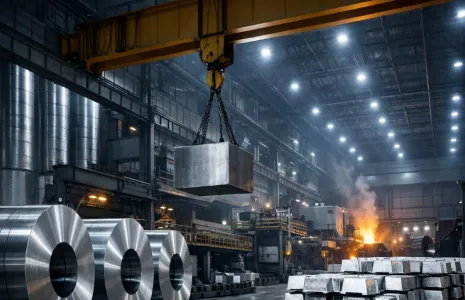
Enlight Metals has introduced its Waste Free Steel (WFS) initiative, aimed at transforming steel procurement through precision-driven sourcing and advanced material planning. The programme seeks to reduce steel wastage by 8–10 per cent in infrastructure and EPC projects by shifting procurement practices from volume-based buying to drawing-based supply aligned with engineering requirements.

The initiative is powered by Enlight Metals’ Agentic AI–enabled metal procurement platform, which enables project teams to submit technical drawings and material specifications for detailed analysis. Based on these inputs, the system maps precise grades, dimensions and component-level requirements before optimising them through advanced nesting and material planning techniques to maximise utilisation and minimise offcuts.

The steel is then processed using precision technologies such as Cut-to-Length (CTL), Cut-to-Size (CTS) and fibre laser cutting. These processes deliver fabrication-ready components that align directly with project specifications, reducing on-site cutting, scrap generation and excess inventory. The approach also supports improved working capital management and faster project execution.

The initiative addresses a key challenge in India’s infrastructure and industrial sectors, where traditional steel procurement remains largely volume-driven. Standard mill sizes often do not match project drawings, resulting in trimming losses, excess scrap and idle inventory. Industry estimates suggest such inefficiencies can reach 12–15 per cent per project.

Enlight Metals processes a wide range of materials including hot rolled (HR), cold rolled (CR) and galvanised plain (GP) sheets, along with structural components such as angles, channels and pipes. By delivering pre-dimensioned steel components aligned with fabrication workflows, the model reduces rework, scrap handling and storage requirements across project sites.

Steel typically accounts for 40–60 per cent of material costs in many infrastructure and industrial developments. Even a modest reduction in wastage can translate into significant financial savings for organisations consuming large volumes of steel annually, while also improving inventory cycles, reducing transport costs and accelerating project timelines.

Beyond operational efficiencies, the Waste Free Steel initiative also contributes to sustainability by reducing unnecessary scrap generation and lowering embedded carbon emissions across the steel value chain.

Founded in 2024 and headquartered in Pune, Enlight Metals operates as a metal aggregation platform connecting industrial buyers with verified suppliers and manufacturers. The company currently serves more than 500 OEMs across sectors including automotive manufacturing, railways, renewable energy, heavy engineering and construction.

Enlight Metals has introduced its Waste Free Steel (WFS) initiative, aimed at transforming steel procurement through precision-driven sourcing and advanced material planning. The programme seeks to reduce steel wastage by 8–10 per cent in infrastructure and EPC projects by shifting procurement practices from volume-based buying to drawing-based supply aligned with engineering requirements.The initiative is powered by Enlight Metals’ Agentic AI–enabled metal procurement platform, which enables project teams to submit technical drawings and material specifications for detailed analysis. Based on these inputs, the system maps precise grades, dimensions and component-level requirements before optimising them through advanced nesting and material planning techniques to maximise utilisation and minimise offcuts.The steel is then processed using precision technologies such as Cut-to-Length (CTL), Cut-to-Size (CTS) and fibre laser cutting. These processes deliver fabrication-ready components that align directly with project specifications, reducing on-site cutting, scrap generation and excess inventory. The approach also supports improved working capital management and faster project execution.The initiative addresses a key challenge in India’s infrastructure and industrial sectors, where traditional steel procurement remains largely volume-driven. Standard mill sizes often do not match project drawings, resulting in trimming losses, excess scrap and idle inventory. Industry estimates suggest such inefficiencies can reach 12–15 per cent per project.Enlight Metals processes a wide range of materials including hot rolled (HR), cold rolled (CR) and galvanised plain (GP) sheets, along with structural components such as angles, channels and pipes. By delivering pre-dimensioned steel components aligned with fabrication workflows, the model reduces rework, scrap handling and storage requirements across project sites.Steel typically accounts for 40–60 per cent of material costs in many infrastructure and industrial developments. Even a modest reduction in wastage can translate into significant financial savings for organisations consuming large volumes of steel annually, while also improving inventory cycles, reducing transport costs and accelerating project timelines.Beyond operational efficiencies, the Waste Free Steel initiative also contributes to sustainability by reducing unnecessary scrap generation and lowering embedded carbon emissions across the steel value chain.Founded in 2024 and headquartered in Pune, Enlight Metals operates as a metal aggregation platform connecting industrial buyers with verified suppliers and manufacturers. The company currently serves more than 500 OEMs across sectors including automotive manufacturing, railways, renewable energy, heavy engineering and construction.

Next Story
Infrastructure Transport

MMRDA advances 250 m on Orange Gate–Marine Drive tunnel

The Mumbai Metropolitan Region Development Authority (MMRDA) has completed 250 m of underground tunnelling for the Orange Gate–Marine Drive Urban Road Tunnel using India’s largest slurry shield tunnel boring machine (TBM) deployed for an urban road project.The project involves twin tunnels extending over 7 km beneath critical transport corridors, including Central Railway, Western Railway and Metro Line 3. The work requires high-precision engineering to navigate densely developed urban infrastructure.Once completed, the tunnel is expected to reduce travel time between Orange Gate and Marin..

Next Story
Infrastructure Urban

Hindustan Zinc Pays Rs 188.46 Billion in FY26

Hindustan Zinc contributed Rs 188.46 billion to the public exchequer in FY 2025-26, according to its 9th Tax Transparency Report. The contribution, equivalent to 46 per cent of the company’s revenue, included direct and indirect taxes, government royalties, dividends to the Government of India, withholding taxes and other statutory levies.The company’s five-year cumulative contribution to the exchequer stood at Rs 915.72 billion. In FY26, Hindustan Zinc reported revenue of Rs 408.44 billion, EBITDA of Rs 221.62 billion and profit after tax of Rs 138.32 billion. It also achieved its highest..

Next Story
Infrastructure Urban

World of Concrete India 2026 Opens in Mumbai

Informa Markets in India will host the 12th edition of World of Concrete India 2026 from 3–5 June 2026 at the Bombay Exhibition Centre, Mumbai. The specialised B2B exhibition will bring together manufacturers, suppliers, contractors, developers, architects, consultants, infrastructure companies, project leaders and government stakeholders.The event is expected to feature over 350 brands and more than 18,000 trade professionals. It will cover concrete and cement, dry mortar, precast technologies, formwork, construction chemicals, industrial and commercial flooring, scaffolding, safety solutio..

Advertisement

Subscribe to Our Newsletter

Get daily newsletters around different themes from Construction world.

STAY CONNECTED

Advertisement

Advertisement

Advertisement