Maharashtra Cabinet revises policy for technology mega projects
ECONOMY & POLICY

Maharashtra Cabinet revises policy for technology mega projects

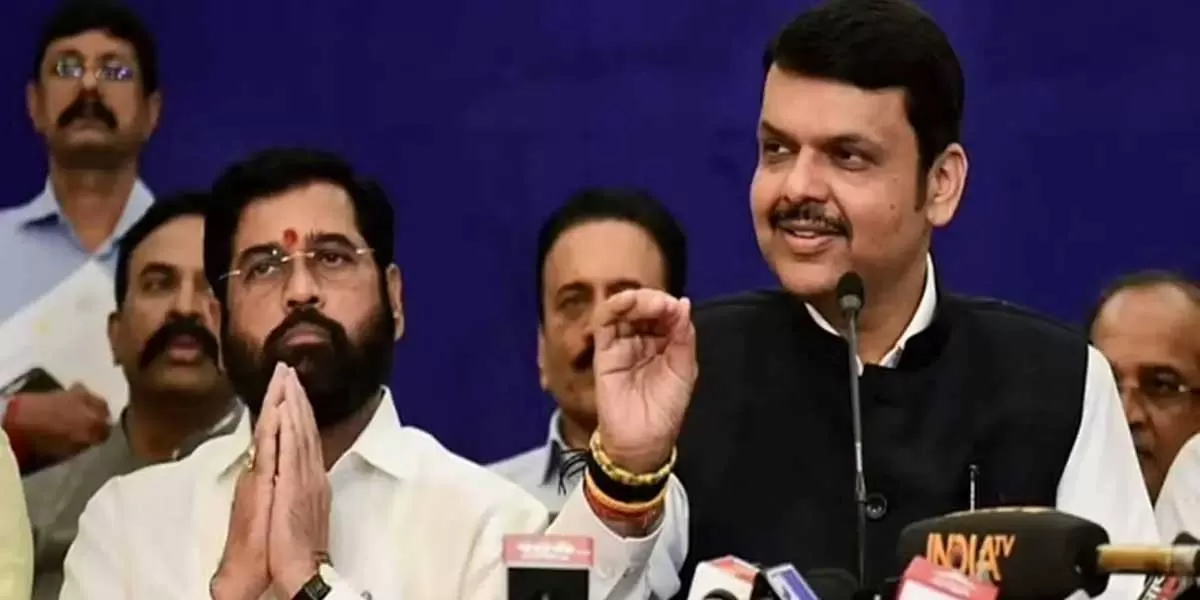
The Maharashtra Cabinet, led by Chief Minister Eknath Shinde, has approved a revised policy aimed at attracting mega projects based on advanced technology, with a focus on boosting investments across the state. Under the new policy, the state government will offer an industrial promotion subsidy for advanced technology projects with an investment of Rs 100 billion or more, irrespective of the sector.

These projects will receive an industrial incentive subsidy equivalent to 100% of the fixed capital investment. For larger projects with an investment of Rs 200 billion, the state will provide an additional subsidy of 11% under the existing collective incentive scheme.

According to the Chief Minister's Office (CMO), five projects have already been approved, with two others under review by the Cabinet Sub-Committee. Three more projects are awaiting approval, which, if cleared, will bring a total investment of Rs 1.79 trillion and generate approximately 60,000 jobs in the state. With three additional projects under consideration, the total expected investment could exceed Rs 2 trillion, creating over 100,000 jobs.

The revised policy includes amendments to streamline decision-making, granting the Chief Minister-led Cabinet Sub-Committee authority to make prompt decisions. Additionally, the policy introduces capital grants specifically for industries in the aerospace and defence sectors. Each manufacturing sector will be limited to a maximum of two projects, with a total of 10 projects eligible for incentives.

The projects will be promoted in areas such as Palghar district, Vidarbha, Marathwada, Ratnagiri, Sindhudurg, Dhule, and Nandurbar. If there are more than ten proposals in a given thrust sector, special incentives will be provided as per the Collective Incentive Scheme, excluding capital subsidies.

Separately, the Cabinet has approved a build, use, and transfer (BOT) policy for developing small hydropower projects and co-located solar power plants through private sector participation. The revised policy aims to accelerate the development of 37 small hydropower projects with a total generation capacity of 101.39 MW, selected through a transparent bidding process. The government has set a threshold premium of Rs 5 million per megawatt for these projects.

Earlier, 42 small hydropower plants with a capacity of 163.65 MW had been developed under the existing policy, which has now been updated to attract further investments in the renewable energy sector. (ET)

The Maharashtra Cabinet, led by Chief Minister Eknath Shinde, has approved a revised policy aimed at attracting mega projects based on advanced technology, with a focus on boosting investments across the state. Under the new policy, the state government will offer an industrial promotion subsidy for advanced technology projects with an investment of Rs 100 billion or more, irrespective of the sector. These projects will receive an industrial incentive subsidy equivalent to 100% of the fixed capital investment. For larger projects with an investment of Rs 200 billion, the state will provide an additional subsidy of 11% under the existing collective incentive scheme. According to the Chief Minister's Office (CMO), five projects have already been approved, with two others under review by the Cabinet Sub-Committee. Three more projects are awaiting approval, which, if cleared, will bring a total investment of Rs 1.79 trillion and generate approximately 60,000 jobs in the state. With three additional projects under consideration, the total expected investment could exceed Rs 2 trillion, creating over 100,000 jobs. The revised policy includes amendments to streamline decision-making, granting the Chief Minister-led Cabinet Sub-Committee authority to make prompt decisions. Additionally, the policy introduces capital grants specifically for industries in the aerospace and defence sectors. Each manufacturing sector will be limited to a maximum of two projects, with a total of 10 projects eligible for incentives. The projects will be promoted in areas such as Palghar district, Vidarbha, Marathwada, Ratnagiri, Sindhudurg, Dhule, and Nandurbar. If there are more than ten proposals in a given thrust sector, special incentives will be provided as per the Collective Incentive Scheme, excluding capital subsidies. Separately, the Cabinet has approved a build, use, and transfer (BOT) policy for developing small hydropower projects and co-located solar power plants through private sector participation. The revised policy aims to accelerate the development of 37 small hydropower projects with a total generation capacity of 101.39 MW, selected through a transparent bidding process. The government has set a threshold premium of Rs 5 million per megawatt for these projects. Earlier, 42 small hydropower plants with a capacity of 163.65 MW had been developed under the existing policy, which has now been updated to attract further investments in the renewable energy sector. (ET)

Next Story
Infrastructure Transport

Pune To Build Nine Km Link Road Between Highways

The Pune Municipal Corporation (PMC) has decided to appoint an expert to plan the development of a nine km long, 60 metre wide road from Khadi Machine chowk to Wadki chowk as an extension to the Katraj-Kondhwa road to link the Mumbai-Satara and Pune-Solapur national highways. The scheme is intended to divert heavy vehicle traffic away from the city and improve access between the two arterial routes. The project has been prioritised by the PMC and forms part of a larger set of schemes in which 19 roads have been identified for development at a combined cost of Rs 9.82 billion (bn) to address c..

Next Story
Infrastructure Transport

Barabanki Bahraich Six Lane Highway Approved in Uttar Pradesh

The Uttar Pradesh government has approved construction of a new six-lane highway linking Barabanki and Bahraich as part of National Highway 927, and the cabinet has cleared the project. The alignment will pass through Mustafabad and Kaiserganj and extend for about 101.5 km, creating a key corridor for local and long-distance movement. The National Highways Authority of India will oversee the work and has signalled the scheme is intended to strengthen regional connectivity and cross-border access to Nepal. The project carries an estimated total cost of Rs 69,690 million, equivalent to Rs 69.69..

Next Story
Infrastructure Transport

Toll At Kharegaon Likely As Highway Upgrade Nears Completion

A section of the highway at Kharegaon has undergone an upgrade and is approaching completion, and authorities have indicated plans for a toll to be introduced once works finish. The project has focused on strengthening the carriageway, improving drainage and upgrading intersections to enhance safety and capacity. Officials have said the toll will be used to recover construction costs and fund ongoing maintenance. The upgrade included resurfacing of the pavement, widening of certain stretches and installation of modern signage and lighting to reduce accident risk. Contractors completed most ma..

Advertisement

Subscribe to Our Newsletter

Get daily newsletters around different themes from Construction world.

STAY CONNECTED

Advertisement

Advertisement

Advertisement