Mirana Toys Raises Rs 575 Million To Expand Manufacturing
ECONOMY & POLICY

Mirana Toys Raises Rs 575 Million To Expand Manufacturing

Mirana Toys, a vertically integrated toy-tech start-up, has raised Rs 575 million in Series A funding led by Arkam Ventures, with participation from Accel, Info Edge and Riverwalk Holdings. The capital will be used to establish a new factory equipped with injection-moulding and die-casting machines, along with in-house packaging lines, enabling the company to scale monthly output for rising domestic and export demand. Mirana will also expand its design and sales teams to support international growth.

With global brands diversifying supply chains under the China-plus-one strategy, India is rapidly emerging as a major manufacturing hub. Mirana said it is well positioned to lead this shift through its Make in India ecosystem, which integrates design, electronics, tooling and assembly under one roof to produce smart and educational toys for global customers. The funding also arrives at a time when India’s toy industry is entering a strong growth phase.

“India is at the cusp of becoming a global toy manufacturing hub. At Mirana, we are proud to show that Indian original equipment manufacturers can match global benchmarks on cost, quality and compliance while offering greater flexibility and customisation,” said Devansh Sharma, co-founder and chief executive of Mirana Toys. “With this funding, we will scale our infrastructure and technology to meet growing global demand.”

Founded in March 2021 by Devansh Sharma and Ravi Yadav, Mirana Toys designs and manufactures a wide range of smart toys, including AI-enabled robots, augmented-reality remote-controlled cars, hobby-grade RC vehicles, STEM kits such as Block Rider and Build Your Own RC, and educational toys like Moonwalker and Talking Kitty. Its end-to-end capabilities span 3D design, prototyping, tooling, moulding, printed circuit board assembly, electronics integration and final assembly, with in-house quality control across every production stage.

Over the next two years, Mirana expects its business-to-business segment to become its largest revenue driver, supported by rising demand in India and overseas. It has secured partnerships with Indian automobile brands for licensed toys and has a strong pipeline of orders from the US and Europe. Exports to the US alone account for around 40 per cent of demand, and the company is in advanced talks with distributors in the Middle East and Africa to broaden its export network.

“Mirana is uniquely positioned to leverage major structural shifts in global toy supply chains,” said Bala Srinivasa, managing director of Arkam Ventures. Unlike typical contract manufacturers, Mirana controls every key stage — from design and tooling to electronics and assembly — enabling faster iteration, tighter sourcing control and shorter lead times, driving high-quality, large-volume shipments.

India’s tech-toys market, valued at USD 2.14 billion in 2024, is projected to grow to USD 6.95 billion by 2034 at a compound annual growth rate of 12.5 per cent, reflecting the sector’s strong momentum.

Mirana’s products are available in more than 3,000 stores across India, including Hamleys, Toys “R” Us and Lulu Mall, and on platforms such as Amazon India, Amazon US, Flipkart, Swiggy Instamart and Blinkit. Over one million children worldwide now play with Mirana Toys.

Mirana Toys, a vertically integrated toy-tech start-up, has raised Rs 575 million in Series A funding led by Arkam Ventures, with participation from Accel, Info Edge and Riverwalk Holdings. The capital will be used to establish a new factory equipped with injection-moulding and die-casting machines, along with in-house packaging lines, enabling the company to scale monthly output for rising domestic and export demand. Mirana will also expand its design and sales teams to support international growth. With global brands diversifying supply chains under the China-plus-one strategy, India is rapidly emerging as a major manufacturing hub. Mirana said it is well positioned to lead this shift through its Make in India ecosystem, which integrates design, electronics, tooling and assembly under one roof to produce smart and educational toys for global customers. The funding also arrives at a time when India’s toy industry is entering a strong growth phase. “India is at the cusp of becoming a global toy manufacturing hub. At Mirana, we are proud to show that Indian original equipment manufacturers can match global benchmarks on cost, quality and compliance while offering greater flexibility and customisation,” said Devansh Sharma, co-founder and chief executive of Mirana Toys. “With this funding, we will scale our infrastructure and technology to meet growing global demand.” Founded in March 2021 by Devansh Sharma and Ravi Yadav, Mirana Toys designs and manufactures a wide range of smart toys, including AI-enabled robots, augmented-reality remote-controlled cars, hobby-grade RC vehicles, STEM kits such as Block Rider and Build Your Own RC, and educational toys like Moonwalker and Talking Kitty. Its end-to-end capabilities span 3D design, prototyping, tooling, moulding, printed circuit board assembly, electronics integration and final assembly, with in-house quality control across every production stage. Over the next two years, Mirana expects its business-to-business segment to become its largest revenue driver, supported by rising demand in India and overseas. It has secured partnerships with Indian automobile brands for licensed toys and has a strong pipeline of orders from the US and Europe. Exports to the US alone account for around 40 per cent of demand, and the company is in advanced talks with distributors in the Middle East and Africa to broaden its export network. “Mirana is uniquely positioned to leverage major structural shifts in global toy supply chains,” said Bala Srinivasa, managing director of Arkam Ventures. Unlike typical contract manufacturers, Mirana controls every key stage — from design and tooling to electronics and assembly — enabling faster iteration, tighter sourcing control and shorter lead times, driving high-quality, large-volume shipments. India’s tech-toys market, valued at USD 2.14 billion in 2024, is projected to grow to USD 6.95 billion by 2034 at a compound annual growth rate of 12.5 per cent, reflecting the sector’s strong momentum. Mirana’s products are available in more than 3,000 stores across India, including Hamleys, Toys “R” Us and Lulu Mall, and on platforms such as Amazon India, Amazon US, Flipkart, Swiggy Instamart and Blinkit. Over one million children worldwide now play with Mirana Toys.

Related Stories

Gold Stories

Next Story
Infrastructure Urban

KONE Opens India's First Digital Experience Centre in Pune

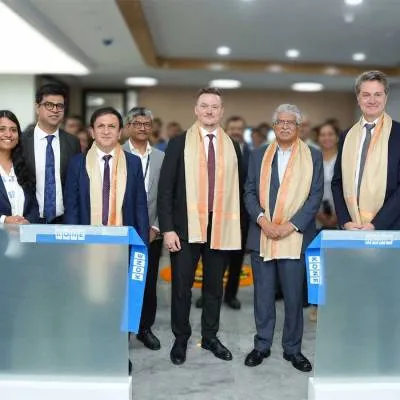
KONE, a global elevator and escalator manufacturer, has inaugurated its first Digital Experience Centre (DEC) in India, located in Pune. The facility aims to showcase how artificial intelligence (AI), connectivity and data-driven technologies can enhance customer experiences and improve building operations.The centre was inaugurated by Jussi Herlin, Executive Vice Chair, KONE Corporation; Philippe Delorme, President and CEO, KONE; and Nandan Nilekani, Co-founder and Chairman of the Board, Infosys.Designed as an interactive customer environment, the facility demonstrates digital solutions cover..

Next Story
Infrastructure Urban

CII GreenCo Launches Circularity Guidelines for Indian Industry

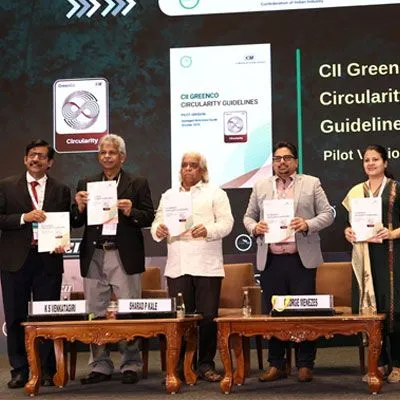
The Confederation of Indian Industry (CII) GreenCo Council has launched the CII GreenCo Circularity Guidelines – Pilot Version at the 17th CII GreenCo Waste & Resource Management Summit 2026 in Chennai. The initiative aims to strengthen resource efficiency, waste reduction and circular economy practices across Indian manufacturing and process industries.The guidelines introduce a structured framework with circularity indices covering raw materials, consumables, packaging and other resource inputs. These indicators will help industries assess existing practices, identify opportunities to ..

Next Story
Infrastructure Energy

Global Electronics Association Launches IPC-1783-CO2E Standard

The Global Electronics Association has introduced IPC-1783-CO2E, a new international standard aimed at improving consistency, transparency and comparability in product carbon footprint reporting across the electronics manufacturing industry.The standard, titled International Standard for Data Collection and Reporting of CO2 Equivalent (CO2e) Emissions for the Electronics Manufacturing Supply Chain, provides industry-specific guidance for collecting, estimating and reporting carbon emissions data.With increasing regulatory requirements and customer expectations, electronics manufacturers face c..

Advertisement

Subscribe to Our Newsletter

Get daily newsletters around different themes from Construction world.

STAY CONNECTED

Advertisement

SPECIAL OFFER
QR Code