+
More Countries Join New Delhi Declaration On AI Impact
ECONOMY & POLICY

More Countries Join New Delhi Declaration On AI Impact

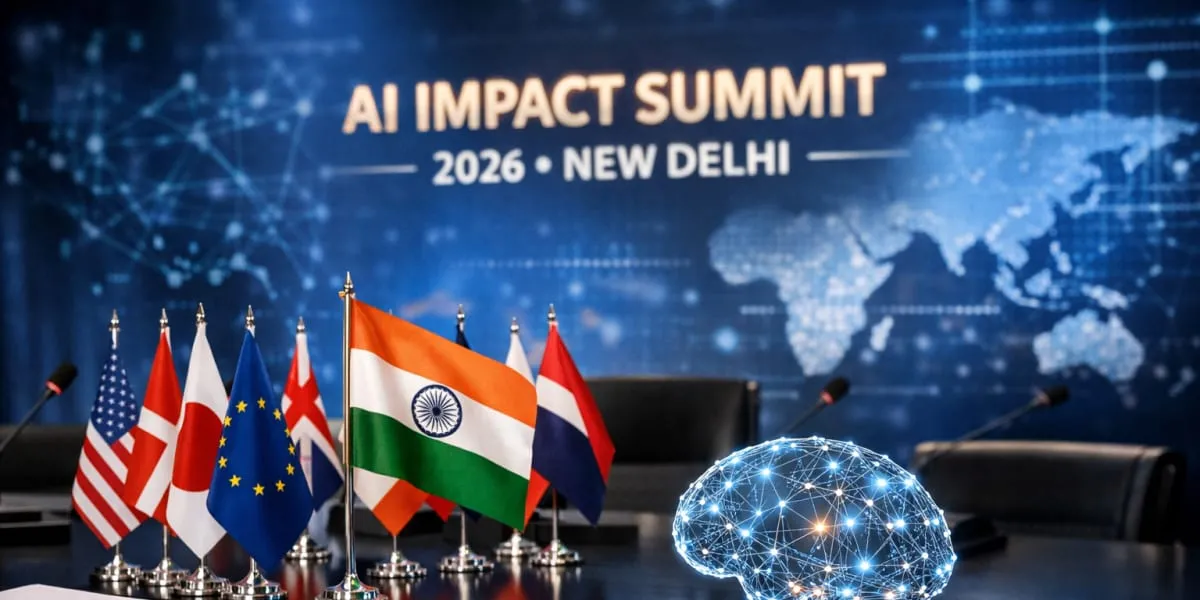
The AI Impact Summit 2026, held in New Delhi on 18–19 February, concluded with the adoption of the New Delhi Declaration on AI Impact and marked a significant milestone in international cooperation on artificial intelligence. The declaration sets out a framework for assessing and addressing the social and economic effects of advanced AI systems and aims to foster collective approaches to mitigation and capacity building. The summit brought together a wide range of countries and international organisations to discuss impact assessment, governance and shared responsibilities.

As on 21 February, 2026, 88 countries and international organisations had endorsed the declaration, and since that date three more countries, Bangladesh, Costa Rica and Guatemala, have joined, taking the total number of signatories to 91 countries and organisations. The addition of these three signatories was recorded in a supplementary notice issued after the summit. The expansion of the signatory list reflects growing interest in collaborative mechanisms to address cross-border implications of AI.

The Press Information Bureau updated the earlier press release dated 21 February, ID 2231208, to reflect the new endorsements and indicated that the declaration is guided by principles including respect for national sovereignty and promotion of responsible innovation. Government officials involved in organising the summit described the outcome as a step towards harmonised approaches to impact evaluation and policy coordination. The New Delhi Declaration is intended to provide an operational reference for countries seeking to balance technological benefits with societal protections.

Observers noted that wider endorsement may strengthen multilateral dialogue and support technical cooperation, capacity building and information sharing among signatory states. The ministry responsible for electronics and information technology said follow-up work will focus on implementation measures and engagement with international partners to translate the declaration into practical steps. The updated release and the list of signatories are expected to inform ongoing discussions on global AI governance.

The AI Impact Summit 2026, held in New Delhi on 18–19 February, concluded with the adoption of the New Delhi Declaration on AI Impact and marked a significant milestone in international cooperation on artificial intelligence. The declaration sets out a framework for assessing and addressing the social and economic effects of advanced AI systems and aims to foster collective approaches to mitigation and capacity building. The summit brought together a wide range of countries and international organisations to discuss impact assessment, governance and shared responsibilities. As on 21 February, 2026, 88 countries and international organisations had endorsed the declaration, and since that date three more countries, Bangladesh, Costa Rica and Guatemala, have joined, taking the total number of signatories to 91 countries and organisations. The addition of these three signatories was recorded in a supplementary notice issued after the summit. The expansion of the signatory list reflects growing interest in collaborative mechanisms to address cross-border implications of AI. The Press Information Bureau updated the earlier press release dated 21 February, ID 2231208, to reflect the new endorsements and indicated that the declaration is guided by principles including respect for national sovereignty and promotion of responsible innovation. Government officials involved in organising the summit described the outcome as a step towards harmonised approaches to impact evaluation and policy coordination. The New Delhi Declaration is intended to provide an operational reference for countries seeking to balance technological benefits with societal protections. Observers noted that wider endorsement may strengthen multilateral dialogue and support technical cooperation, capacity building and information sharing among signatory states. The ministry responsible for electronics and information technology said follow-up work will focus on implementation measures and engagement with international partners to translate the declaration into practical steps. The updated release and the list of signatories are expected to inform ongoing discussions on global AI governance.

Next Story
Infrastructure Urban

We’ve cut 50,000 tonnes of carbon emmissions since 2019

MatchLog is challenging a decades-old logistics norm and empty container miles by directly matching import flows with export demand. Indeed, the platform is unlocking measurable cost savings, cutting emissions and driving structural change in landside operations. Dhruv Taneja, Founder and Global CEO, outlines the quantified impact, adoption  journey and the evolving future of container reuse in an exclusive interview with Construction World. MatchLog has partnered with carriers such as Maersk, ONE and HMM in India. Could you share quantified outcomes from one specific corri..

Next Story
Infrastructure Transport

Airports: Capacity is Key

A lotus-inspired terminal design in Navi Mumbai International Airport. A terminal in a garden in Bengaluru’s Kempegowda International Airport. A peacock-inspired canopy in Chhatrapati Shivaji Maharaj International Airport. A nature-inspired terminal in Guwahati’s Lokpriya Gopinath Bordoloi International Airport.Truly, “India’s airports are no longer constrained by architectural ambition,” avers Ravikanth Mididhodi, Chief Technical Officer, J&F, a German-based engineering firm with over 25 years of global legacy in delivering advanced engineering and BIM services for air..

Next Story
Real Estate

In 2025, Amaravati attracted ₹ 28,075 crore in investments

In an exclusive interview with Construction World, Kanna Babu, IAS, Commissioner, Andhra Pradesh Capital Region Development Authority (APCRDA), reveals how Amaravati is entering a decisive new phase of capital city development. With 36 MoUs worth ₹ 45,589 crore, a ₹ 58,000 crore tender pipeline, and rising institutional investments, he explains the strategic execution, infrastructure rollout, and governance framework driving Amaravati’s emergence as a structured, investment-ready, and future-focused capital.APCRDA has recently secured major financial tie-ups, including loans from NA..

Advertisement

Subscribe to Our Newsletter

Get daily newsletters around different themes from Construction world.

STAY CONNECTED

Advertisement

Advertisement

Advertisement

Open In App