+
Parliamentary Panel Flags Funding Gaps in Heavy Industries
ECONOMY & POLICY

Parliamentary Panel Flags Funding Gaps in Heavy Industries

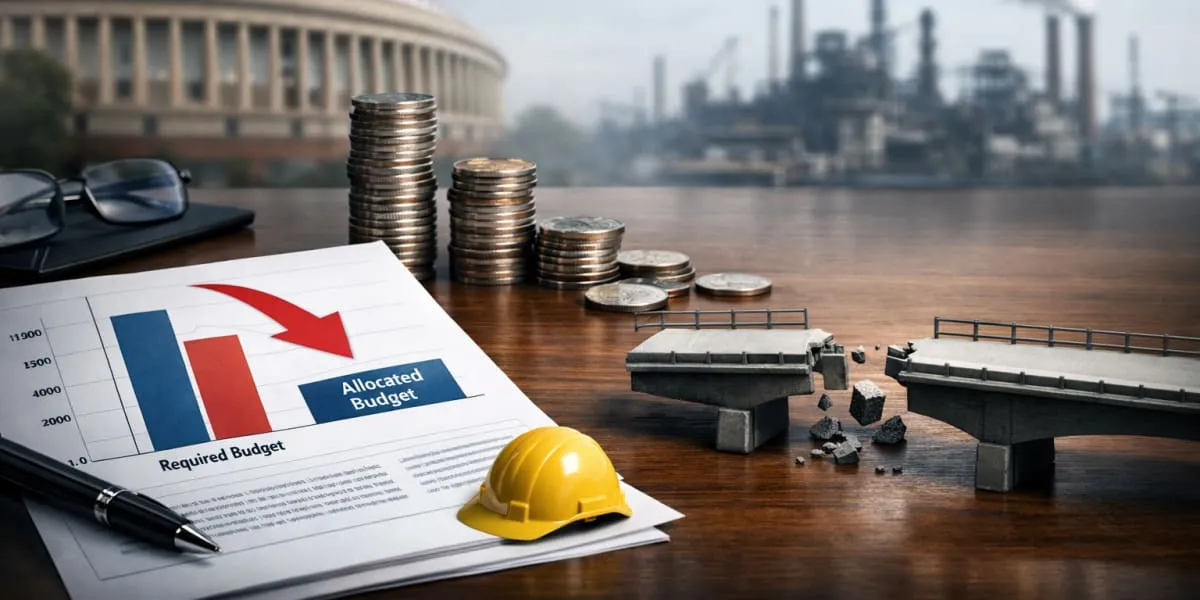
The Department-Related Parliamentary Standing Committee on Industry (Rajya Sabha) presented its 332nd report on the Demands for Grants 2026-27 of the Ministry of Heavy Industries (MHI). Figures converted from crore and lakh are expressed in million (mn). The Budget Estimates 2026-27 for the Ministry stand at Rs 79,399 mn against a projected requirement of Rs 94,843.2 mn, a shortfall of about 16 per cent, with revenue at Rs 79,370.8 mn and capital compressed to Rs 28.2 mn from Rs 5,020 mn.

The committee flagged recurring BE-to-RE compression and declining revised estimate utilisation, and called for realistic budgeting and a restored balance between revenue and capital. It urged augmentation of capital for testing and research and development and recommended scheme-specific smoothing and early consultations with the Ministry of Finance.

PM E-DRIVE has a total outlay of Rs 109,000 mn and received Rs 15,000 mn in BE 2026-27, with incentives delivered for 1,656,335 electric vehicles against a revised target of 2,826,634, roughly 58.6 per cent. Achievements are concentrated in electric two-wheelers and L5 three-wheelers while electric trucks, buses and ambulances recorded zero and the e-rickshaw segment reached 3,602 units against 39,034. The committee asked for incentive extensions to 31 March 2028, restoration of e-rickshaw targets and action on about 0.475 mn unregistered e-rickshaws.

It recommended review of charging subsidies to spur private participation and time-bound rollout plans. Tenders worth about Rs 6,224.5 mn for testing agency upgradation show nil utilisation and 232,588 vehicle claims remain under process, prompting calls for integrated digital verification and time-bound disbursal. The committee also urged tighter monitoring of the Production Linked Incentive (PLI) scheme, noted a total PLI outlay of Rs 259,380 mn with allocations of Rs 59,398.7 mn, and sought an immediate beneficiary-wise review of the Advanced Chemistry Cell (ACC) battery PLI within three months given only one GWh commissioned.

The Department-Related Parliamentary Standing Committee on Industry (Rajya Sabha) presented its 332nd report on the Demands for Grants 2026-27 of the Ministry of Heavy Industries (MHI). Figures converted from crore and lakh are expressed in million (mn). The Budget Estimates 2026-27 for the Ministry stand at Rs 79,399 mn against a projected requirement of Rs 94,843.2 mn, a shortfall of about 16 per cent, with revenue at Rs 79,370.8 mn and capital compressed to Rs 28.2 mn from Rs 5,020 mn. The committee flagged recurring BE-to-RE compression and declining revised estimate utilisation, and called for realistic budgeting and a restored balance between revenue and capital. It urged augmentation of capital for testing and research and development and recommended scheme-specific smoothing and early consultations with the Ministry of Finance. PM E-DRIVE has a total outlay of Rs 109,000 mn and received Rs 15,000 mn in BE 2026-27, with incentives delivered for 1,656,335 electric vehicles against a revised target of 2,826,634, roughly 58.6 per cent. Achievements are concentrated in electric two-wheelers and L5 three-wheelers while electric trucks, buses and ambulances recorded zero and the e-rickshaw segment reached 3,602 units against 39,034. The committee asked for incentive extensions to 31 March 2028, restoration of e-rickshaw targets and action on about 0.475 mn unregistered e-rickshaws. It recommended review of charging subsidies to spur private participation and time-bound rollout plans. Tenders worth about Rs 6,224.5 mn for testing agency upgradation show nil utilisation and 232,588 vehicle claims remain under process, prompting calls for integrated digital verification and time-bound disbursal. The committee also urged tighter monitoring of the Production Linked Incentive (PLI) scheme, noted a total PLI outlay of Rs 259,380 mn with allocations of Rs 59,398.7 mn, and sought an immediate beneficiary-wise review of the Advanced Chemistry Cell (ACC) battery PLI within three months given only one GWh commissioned.

Next Story
Infrastructure Urban

Implementation Status of Jal Jeevan Mission

Since August 2019 the Government has implemented Jal Jeevan Mission to provide assured potable water through household tap connections in rural India. At the start of the mission only 32.3 million (mn) rural households, representing 16.7 per cent, were reported to have tap water connections. States and union territories have reported that 125.8 mn additional rural households have since been provided with tap connections. As a result, of about 193.6 mn rural households roughly 158.2 mn, or 81.71 per cent, are reported to have tap water supply at home.\n\nThe State, district and village level st..

Next Story
Infrastructure Urban

Jal Jeevan Mission Reaches Eighty One Per Cent Rural Coverage

The Government reported substantial progress under the Jal Jeevan Mission, launched in August 2019 to provide tap water to every rural household. At launch only 32.3 million (mn) rural households had tap connections and states and Union territories reported provision of 125.8 mn additional households by March 2026. Consequently, out of about 193.6 mn rural households around 158.2 mn, or 81.71 per cent, are reported to have tap water at home. The Finance Minister announced extension of the mission until 2028 in the 2025-26 budget speech. The Swachh Bharat Mission Grameen, launched in October 20..

Next Story
Infrastructure Urban

Empowering Local Governance for Sustainable Rural Water Supply

The Ministry of Jal Shakti has aligned the Jal Jeevan Mission (JJM) with the 73rd Amendment to strengthen village level planning and community ownership of water supply. Gram Panchayats, village water and sanitation committees and Pani Samitis are to plan, implement, manage and maintain piped water systems, with gram sabha processes formalising handover and oversight. Implementation support agencies including non government organisations, community based organisations and self help groups have been empanelled to train local committees and promote women participation. Under JJM, the department ..

Advertisement

Subscribe to Our Newsletter

Get daily newsletters around different themes from Construction world.

STAY CONNECTED

Advertisement

Advertisement

Advertisement