Pilot Plant for Nd-Fe-B Magnet Manufacture at ARCI Hyderabad
ECONOMY & POLICY

Pilot Plant for Nd-Fe-B Magnet Manufacture at ARCI Hyderabad

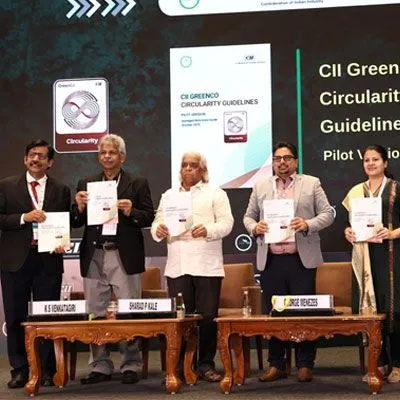
An end-to-end pilot plant for the manufacture of neodymium-iron-boron (Nd-Fe-B) rare earth permanent magnets has been established at the International Advanced Research Centre for Powder Metallurgy and New Materials (ARCI), Hyderabad, an autonomous institution of the Department of Science and Technology (DST). The facility was inaugurated by the Secretary of the Department and commissioned with senior officials from research institutions, industry and national bodies in attendance. The establishment responds to growing domestic demand for magnets used in electric vehicles, renewable energy systems and advanced electronics.

The plant adopts a complete process chain from strip-cast alloy to finished sintered magnets, providing a platform for process validation and product development. Its flexible configuration is intended to support continuous innovation, optimise manufacturing steps and demonstrate scalable technologies for industry uptake. The capability is expected to underpin development of a robust indigenous manufacturing ecosystem for critical materials.

Officials described the pilot plant as a strategic measure to address global supply chain concentration and to strengthen supply security, cost competitiveness and technological leadership domestically. The project aligns with the objective of Atmanirbhar Bharat and the government vision for Viksit Bharat 2047 and seeks to reduce import dependence while enhancing resilience. Industry, startups and academia were invited to partner in translational research and scaling initiatives.

As a pilot-scale demonstration facility the plant will support deep-tech startups, foster industry collaboration and accelerate commercialisation of magnet technologies. ARCI intends to build a mineral-to-market ecosystem that links rare earth extraction, material processing and magnet manufacture to support the growth of electric mobility and advanced materials manufacturing in India. The initiative is expected to accelerate translational research and catalyse private sector participation.

An end-to-end pilot plant for the manufacture of neodymium-iron-boron (Nd-Fe-B) rare earth permanent magnets has been established at the International Advanced Research Centre for Powder Metallurgy and New Materials (ARCI), Hyderabad, an autonomous institution of the Department of Science and Technology (DST). The facility was inaugurated by the Secretary of the Department and commissioned with senior officials from research institutions, industry and national bodies in attendance. The establishment responds to growing domestic demand for magnets used in electric vehicles, renewable energy systems and advanced electronics. The plant adopts a complete process chain from strip-cast alloy to finished sintered magnets, providing a platform for process validation and product development. Its flexible configuration is intended to support continuous innovation, optimise manufacturing steps and demonstrate scalable technologies for industry uptake. The capability is expected to underpin development of a robust indigenous manufacturing ecosystem for critical materials. Officials described the pilot plant as a strategic measure to address global supply chain concentration and to strengthen supply security, cost competitiveness and technological leadership domestically. The project aligns with the objective of Atmanirbhar Bharat and the government vision for Viksit Bharat 2047 and seeks to reduce import dependence while enhancing resilience. Industry, startups and academia were invited to partner in translational research and scaling initiatives. As a pilot-scale demonstration facility the plant will support deep-tech startups, foster industry collaboration and accelerate commercialisation of magnet technologies. ARCI intends to build a mineral-to-market ecosystem that links rare earth extraction, material processing and magnet manufacture to support the growth of electric mobility and advanced materials manufacturing in India. The initiative is expected to accelerate translational research and catalyse private sector participation.

Next Story
Infrastructure Transport

Mumbai–Pune Missing Link boosts realty prospects

The recently opened ‘missing link’ on the Mumbai–Pune Expressway is set to significantly transform connectivity between the two cities by reducing travel time and bypassing the challenging ghat section. The new alignment, featuring tunnels and viaducts, is designed to improve safety, ease congestion and ensure a smoother, faster commute for both passenger and commercial traffic.With improved travel efficiency, the corridor is expected to strengthen intercity movement, encouraging more frequent travel for work, leisure and logistics. This enhanced accessibility is likely to benefit real e..

Next Story
Infrastructure Urban

How Hormuz is Hijacking Indian Highways

At the recently held RAHSTA Round Table on 29th April in Pune, and earlier during our webinars for Cement Expo by Indian Cement Review and by FIRST Construction Council on manufacturing construction equipment for the world, one thread lay common: the industry is being subjected to a cost-push chain reaction moving from crude oil → freight/insurance → steel, cement fuel, bitumen, polymers, packaging, logistics and finally project margins. Indeed, the West Asia crisis caused by the war and the Hormuz Strait blockade, which does not directly concern us, has turned around and hit us. If the wa..

Next Story
Real Estate

Nila Spaces Lists VIDA on Alt DRX, Enables Fractional Ownership

Nila Spaces has listed its GIFT City residential project VIDA on Alt DRX, marking the first tokenised asset under the platform’s “Gujarat Tri-City Investment Opportunity.” The move enables retail investors to participate in premium real estate across Ahmedabad, Gandhinagar and GIFT City starting from the equivalent of 1 sq ft ownership.The initiative aims to address traditional barriers in residential real estate investment, including high entry costs, low liquidity and lengthy transaction cycles. By enabling fractional ownership, the model reduces entry thresholds from Rs 7.5 million–..

Advertisement

Subscribe to Our Newsletter

Get daily newsletters around different themes from Construction world.

STAY CONNECTED

Advertisement

Advertisement

Advertisement