Piyush Goyal Urges Japanese Firms To Double Presence By 2030
ECONOMY & POLICY

Piyush Goyal Urges Japanese Firms To Double Presence By 2030

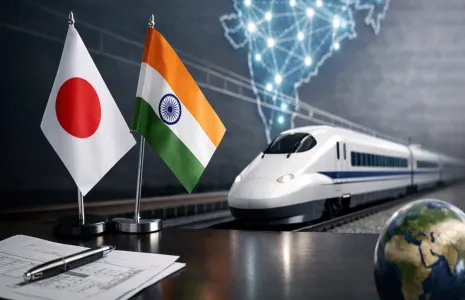
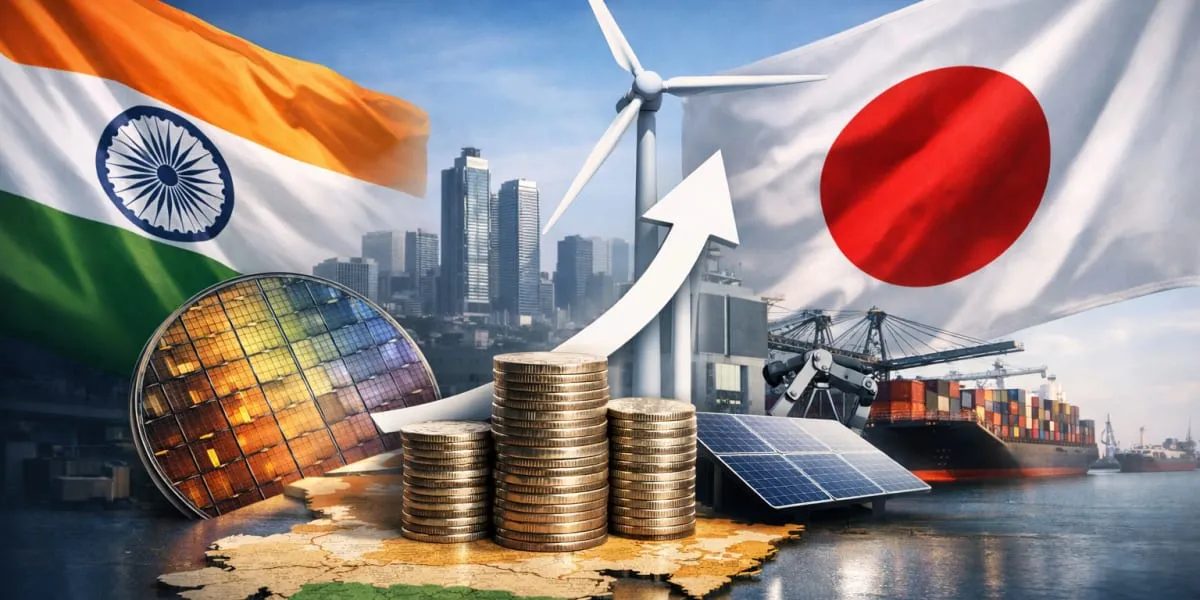
Piyush Goyal led India’s largest-ever business delegation to Japan and urged Japanese firms to double their presence in India by 2030, seeking expanded investments across semiconductors, clean energy and resilient supply chains. He pitched an investment target of Rs 600 billion (bn) over 10 years to boost manufacturing and technology collaborations. The delegation comprised more than 200 representatives from sectors including manufacturing, semiconductors, clean energy, steel, automotive, financial services, healthcare and start-ups.

He addressed a roundtable with Keidanren, Japan’s apex business federation representing more than 1,500 leading companies, and outlined opportunities arising from India’s expanding economy and improving ease of doing business. Goyal described the partnership as extending beyond traditional trade to encompass economic security, defence, technology and people-to-people exchanges, while emphasising supply-chain resilience. The minister encouraged Japanese investors to explore opportunities in areas such as capital goods, machinery and advanced manufacturing.

Semiconductor investment was a central theme and meetings were held with executives from Tokyo Electron and MinebeaMitsumi, with one senior executive overseeing the company’s semiconductor plant project in India. A meeting with the secretary general of Japan’s National Security Secretariat highlighted the strategic dimension of economic cooperation. A roundtable with about 70 businesses focused on strengthening links between Japanese firms and India’s tier-two and tier-three supplier ecosystem and identifying industrial collaboration and technology partnership opportunities for micro, small and medium enterprises.

The four-day visit from 24 to 27 August covered Tokyo, Nagoya and Osaka and aimed to strengthen trade and investment ties under the India-Japan Special Strategic and Global Partnership. The delegation had been constituted jointly by India’s leading industry associations in coordination with the commerce ministry, with nominations from the Federation of Indian Chambers of Commerce and Industry, the Confederation of Indian Industry and the Associated Chambers of Commerce and Industry of India. The minister invited deeper integration with India’s manufacturing ecosystem, promoted participation in the country’s 20 smart cities and highlighted opportunities arising from technological transformation and greater integration with global value chains.

Piyush Goyal led India’s largest-ever business delegation to Japan and urged Japanese firms to double their presence in India by 2030, seeking expanded investments across semiconductors, clean energy and resilient supply chains. He pitched an investment target of Rs 600 billion (bn) over 10 years to boost manufacturing and technology collaborations. The delegation comprised more than 200 representatives from sectors including manufacturing, semiconductors, clean energy, steel, automotive, financial services, healthcare and start-ups. He addressed a roundtable with Keidanren, Japan’s apex business federation representing more than 1,500 leading companies, and outlined opportunities arising from India’s expanding economy and improving ease of doing business. Goyal described the partnership as extending beyond traditional trade to encompass economic security, defence, technology and people-to-people exchanges, while emphasising supply-chain resilience. The minister encouraged Japanese investors to explore opportunities in areas such as capital goods, machinery and advanced manufacturing. Semiconductor investment was a central theme and meetings were held with executives from Tokyo Electron and MinebeaMitsumi, with one senior executive overseeing the company’s semiconductor plant project in India. A meeting with the secretary general of Japan’s National Security Secretariat highlighted the strategic dimension of economic cooperation. A roundtable with about 70 businesses focused on strengthening links between Japanese firms and India’s tier-two and tier-three supplier ecosystem and identifying industrial collaboration and technology partnership opportunities for micro, small and medium enterprises. The four-day visit from 24 to 27 August covered Tokyo, Nagoya and Osaka and aimed to strengthen trade and investment ties under the India-Japan Special Strategic and Global Partnership. The delegation had been constituted jointly by India’s leading industry associations in coordination with the commerce ministry, with nominations from the Federation of Indian Chambers of Commerce and Industry, the Confederation of Indian Industry and the Associated Chambers of Commerce and Industry of India. The minister invited deeper integration with India’s manufacturing ecosystem, promoted participation in the country’s 20 smart cities and highlighted opportunities arising from technological transformation and greater integration with global value chains.

Related Stories

Gold Stories

Next Story
Infrastructure Urban

Modi Urges End-to-End Reforms for Infrastructure Projects

Prime Minister Narendra Modi on Tuesday called for continuous reforms across all stages of infrastructure project execution during the 53rd PRAGATI meeting. He asked ministries and state governments to adopt an end-to-end approach and a proactive work culture to ensure timely delivery. The meeting reviewed six key infrastructure projects in the railway, road and power sectors across nine states with a cumulative investment of Rs 300 billion (Rs 300 bn). Officials assessed projects on timelines, inter-agency coordination and resolution of pending issues. He said infrastructure projects should b..

Next Story
Infrastructure Transport

GMR Airports Plans US$2 bn Expansion In Delhi And Hyderabad

GMR Airports plans a US$2 billion (bn) expansion of facilities at New Delhi and Hyderabad as part of a major modernisation drive. Hyderabad’s upgraded airport will be able to accommodate about 80 million (mn) passengers a year, more than double its current annual volume of 34 mn fliers. The company is India’s largest airport operator by number of fliers annually, while rival Adani Airport Holdings Ltd is the biggest by number of airports and is reported to be looking to invest US$15 bn to boost passenger capacity over the next five years. Executives indicated the build-outs in New Delhi an..

Next Story
Infrastructure Transport

Mumbai Airport to Demolish Part of Terminal One From 15 January

Adani Group-operated Mumbai International Airport (MIAL) will begin partial demolition of the north section of Terminal one-B at Chatrapati Shivaji Maharaj International Airport from 15 January 2027, according to a letter to the civil aviation ministry. The operator has begun redistributing air traffic to Terminal two and to Navi Mumbai International Airport to facilitate the work. The airport, managed by Mumbai International Airport, currently has a capacity of over 50 million (mn) passengers and handles over 950 flight movements daily. Terminal one is nearly 80 years old and parts of it have..

Advertisement

Subscribe to Our Newsletter

Get daily newsletters around different themes from Construction world.

STAY CONNECTED

Advertisement