PM Launches Rs 4,200 Crore Development Projects in Uttarakhand
ECONOMY & POLICY

PM Launches Rs 4,200 Crore Development Projects in Uttarakhand

Prime Minister Narendra Modi recently inaugurated several development projects in Uttarakhand, amounting to a total investment of Rs 4,200 crore. These projects aim to boost the state's infrastructure and contribute to its overall development.

One of the key projects inaugurated by the Prime Minister is the All India Institute of Medical Sciences (AIIMS) at Rishikesh. The state-of-the-art medical institute is expected to provide advanced healthcare services to the people of Uttarakhand, as well as the neighboring states. With cutting-edge facilities and skilled medical professionals, AIIMS Rishikesh is a significant step towards enhancing the region's healthcare infrastructure.

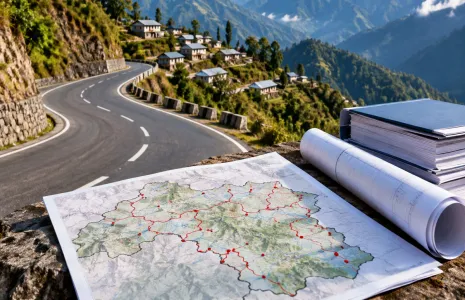
Furthermore, PM Modi also dedicated the 444-kilometer long Char Dham highway project to the nation. This ambitious road project aims to improve connectivity to the famous pilgrimage sites of Badrinath, Kedarnath, Yamunotri, and Gangotri in Uttarakhand. The highway project not only enhances the infrastructure for pilgrims but also boosts tourism in the region, benefiting the local economy.

In addition to these initiatives, the Prime Minister also laid the foundation stone for a new Indian Institute of Technology (IIT) campus in Uttarakhand. The establishment of IITs in various parts of the country has been a priority for the government to promote quality education and scientific research. The IIT in Uttarakhand will provide opportunities for local students to pursue higher education in technical fields and contribute to the development of the state.

Another significant project that was inaugurated is the National Cancer Institute (NCI) at Haridwar. The advanced cancer treatment and research institute will cater to the ever-increasing demand for better cancer care facilities in the region. With state-of-the-art infrastructure and advanced medical technology, NCI Haridwar aims to provide affordable and accessible cancer treatment to patients from Uttarakhand and nearby areas.

Furthermore, the Prime Minister also dedicated several power projects and schemes related to clean drinking water in Uttarakhand. These projects are aimed at ensuring a sustainable and reliable supply of electricity and safe drinking water to the people of the state.

The inauguration of these development projects in Uttarakhand highlights the government's commitment to the overall growth and well-being of the region. These initiatives will not only improve infrastructure but also contribute to the socio-economic development of the state, creating employment opportunities and improving the quality of life for the people.

In conclusion, the inauguration of multiple development projects worth Rs 4,200 crore in Uttarakhand by Prime Minister Narendra Modi paves the way for enhanced healthcare, improved connectivity, quality education, and better living standards for the people of the state.

Prime Minister Narendra Modi recently inaugurated several development projects in Uttarakhand, amounting to a total investment of Rs 4,200 crore. These projects aim to boost the state's infrastructure and contribute to its overall development. One of the key projects inaugurated by the Prime Minister is the All India Institute of Medical Sciences (AIIMS) at Rishikesh. The state-of-the-art medical institute is expected to provide advanced healthcare services to the people of Uttarakhand, as well as the neighboring states. With cutting-edge facilities and skilled medical professionals, AIIMS Rishikesh is a significant step towards enhancing the region's healthcare infrastructure. Furthermore, PM Modi also dedicated the 444-kilometer long Char Dham highway project to the nation. This ambitious road project aims to improve connectivity to the famous pilgrimage sites of Badrinath, Kedarnath, Yamunotri, and Gangotri in Uttarakhand. The highway project not only enhances the infrastructure for pilgrims but also boosts tourism in the region, benefiting the local economy. In addition to these initiatives, the Prime Minister also laid the foundation stone for a new Indian Institute of Technology (IIT) campus in Uttarakhand. The establishment of IITs in various parts of the country has been a priority for the government to promote quality education and scientific research. The IIT in Uttarakhand will provide opportunities for local students to pursue higher education in technical fields and contribute to the development of the state. Another significant project that was inaugurated is the National Cancer Institute (NCI) at Haridwar. The advanced cancer treatment and research institute will cater to the ever-increasing demand for better cancer care facilities in the region. With state-of-the-art infrastructure and advanced medical technology, NCI Haridwar aims to provide affordable and accessible cancer treatment to patients from Uttarakhand and nearby areas. Furthermore, the Prime Minister also dedicated several power projects and schemes related to clean drinking water in Uttarakhand. These projects are aimed at ensuring a sustainable and reliable supply of electricity and safe drinking water to the people of the state. The inauguration of these development projects in Uttarakhand highlights the government's commitment to the overall growth and well-being of the region. These initiatives will not only improve infrastructure but also contribute to the socio-economic development of the state, creating employment opportunities and improving the quality of life for the people. In conclusion, the inauguration of multiple development projects worth Rs 4,200 crore in Uttarakhand by Prime Minister Narendra Modi paves the way for enhanced healthcare, improved connectivity, quality education, and better living standards for the people of the state.

Next Story
Infrastructure Urban

Implementation Status of Jal Jeevan Mission

Since August 2019 the Government has implemented Jal Jeevan Mission to provide assured potable water through household tap connections in rural India. At the start of the mission only 32.3 million (mn) rural households, representing 16.7 per cent, were reported to have tap water connections. States and union territories have reported that 125.8 mn additional rural households have since been provided with tap connections. As a result, of about 193.6 mn rural households roughly 158.2 mn, or 81.71 per cent, are reported to have tap water supply at home.\n\nThe State, district and village level st..

Next Story
Infrastructure Urban

Jal Jeevan Mission Reaches Eighty One Per Cent Rural Coverage

The Government reported substantial progress under the Jal Jeevan Mission, launched in August 2019 to provide tap water to every rural household. At launch only 32.3 million (mn) rural households had tap connections and states and Union territories reported provision of 125.8 mn additional households by March 2026. Consequently, out of about 193.6 mn rural households around 158.2 mn, or 81.71 per cent, are reported to have tap water at home. The Finance Minister announced extension of the mission until 2028 in the 2025-26 budget speech. The Swachh Bharat Mission Grameen, launched in October 20..

Next Story
Infrastructure Urban

Empowering Local Governance for Sustainable Rural Water Supply

The Ministry of Jal Shakti has aligned the Jal Jeevan Mission (JJM) with the 73rd Amendment to strengthen village level planning and community ownership of water supply. Gram Panchayats, village water and sanitation committees and Pani Samitis are to plan, implement, manage and maintain piped water systems, with gram sabha processes formalising handover and oversight. Implementation support agencies including non government organisations, community based organisations and self help groups have been empanelled to train local committees and promote women participation. Under JJM, the department ..

Advertisement

Subscribe to Our Newsletter

Get daily newsletters around different themes from Construction world.

STAY CONNECTED

Advertisement

Advertisement

Advertisement