RBI to Withdraw Rs 1.5 Trillion via 8-Day VRRR Auction
ECONOMY & POLICY

RBI to Withdraw Rs 1.5 Trillion via 8-Day VRRR Auction

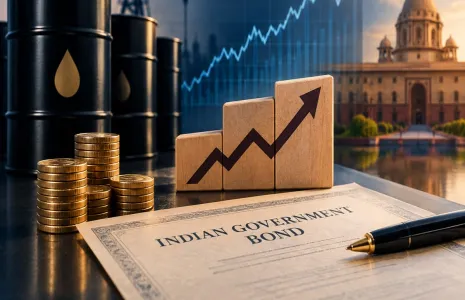
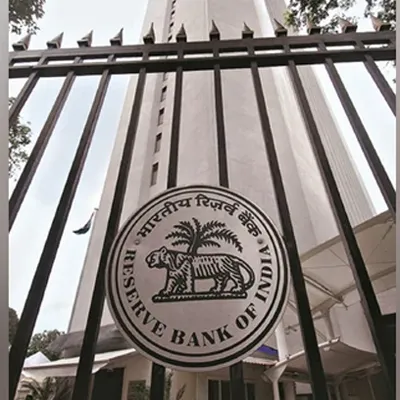
The Reserve Bank of India (RBI) has announced an eight-day Variable Rate Reverse Repo (VRRR) auction to be held on Thursday, with the objective of withdrawing Rs 1.5 trillion from the banking system. This move comes amid a significant liquidity surplus, which stood at Rs 3.03 trillion as of Tuesday, according to the central bank’s latest data.
VRRR operations are a key liquidity management tool used by the RBI to absorb excess cash from the financial system and align short-term interest rates with the policy repo rate. By conducting such auctions, the RBI aims to maintain monetary stability and ensure efficient transmission of policy rates.
In the latest weekly auction of treasury bills, the cut-off yield on 182-day and 364-day T-bills rose by 2 basis points and 3 basis points, respectively. However, the 91-day T-bill held steady at 5.51 per cent, the same as the previous week.
The Weighted Average Call Rate (WACR)—the operating target of the RBI’s monetary policy—stood at 5.35 per cent on Wednesday, slightly lower than the previous close of 5.39 per cent.
This liquidity absorption exercise is seen as part of the RBI’s calibrated strategy to anchor short-term interest rates, manage inflation expectations, and maintain financial stability amid evolving macroeconomic conditions. 

The Reserve Bank of India (RBI) has announced an eight-day Variable Rate Reverse Repo (VRRR) auction to be held on Thursday, with the objective of withdrawing Rs 1.5 trillion from the banking system. This move comes amid a significant liquidity surplus, which stood at Rs 3.03 trillion as of Tuesday, according to the central bank’s latest data.VRRR operations are a key liquidity management tool used by the RBI to absorb excess cash from the financial system and align short-term interest rates with the policy repo rate. By conducting such auctions, the RBI aims to maintain monetary stability and ensure efficient transmission of policy rates.In the latest weekly auction of treasury bills, the cut-off yield on 182-day and 364-day T-bills rose by 2 basis points and 3 basis points, respectively. However, the 91-day T-bill held steady at 5.51 per cent, the same as the previous week.The Weighted Average Call Rate (WACR)—the operating target of the RBI’s monetary policy—stood at 5.35 per cent on Wednesday, slightly lower than the previous close of 5.39 per cent.This liquidity absorption exercise is seen as part of the RBI’s calibrated strategy to anchor short-term interest rates, manage inflation expectations, and maintain financial stability amid evolving macroeconomic conditions. 

Next Story
Infrastructure Transport

India Becomes First to Produce Bio-Bitumen for Roads

India has become the first country in the world to commercially produce bio-bitumen for use in road construction, according to Road, Transport and Highways Minister Nitin Gadkari. Bitumen, a black and viscous hydrocarbon derived from crude oil, is a key binding material in road building, and the bio-based alternative is expected to significantly improve the sector’s environmental footprint.Addressing the CSIR Technology Transfer Ceremony in New Delhi, Mr Gadkari congratulated Council of Scientific and Industrial Research on achieving the milestone, noting that the initiative would help curb ..

Next Story
Infrastructure Urban

HILT Policy Seen Boosting Telangana Revenue Sharply

The Hyderabad Industrial Land Transformation (HILT) Policy is expected to generate around Rs 1.08 billion in revenue for the Telangana state exchequer, according to Deputy Chief Minister Bhatti Vikramarka Mallu. Speaking in the Telangana Legislative Assembly, he said the policy would be implemented within a six-month timeframe in a transparent manner, with uniform rules applicable to all stakeholders. Mr Vikramarka noted that without the HILT Policy, the state would have earned only about Rs 1.2 million per acre. Under the new framework, however, revenue is projected to rise sharply to Rs 70 ..

Next Story
Infrastructure Urban

India Post, MoRD Tie Up to Boost Rural Inclusion

The Department of Posts and the Ministry of Rural Development have signed a Memorandum of Understanding to accelerate rural transformation and expand financial, digital and logistics services for Self-Help Groups (SHGs) and rural households across India. The agreement was signed in the presence of Union Minister of Communications and Development of North Eastern Region Jyotiraditya M. Scindia and Union Minister of Rural Development and Agriculture and Farmers’ Welfare Shivraj Singh Chouhan. The collaboration aligns with the government’s “Dak Sewa, Jan Sewa” vision and seeks to repositi..

Advertisement

Subscribe to Our Newsletter

Get daily newsletters around different themes from Construction world.

STAY CONNECTED

Advertisement

Advertisement

Advertisement

Advertisement

Open In App