+
Schneider Electric Deploys India's First SF6 Free RM AirSeT RMU
ECONOMY & POLICY

Schneider Electric Deploys India's First SF6 Free RM AirSeT RMU

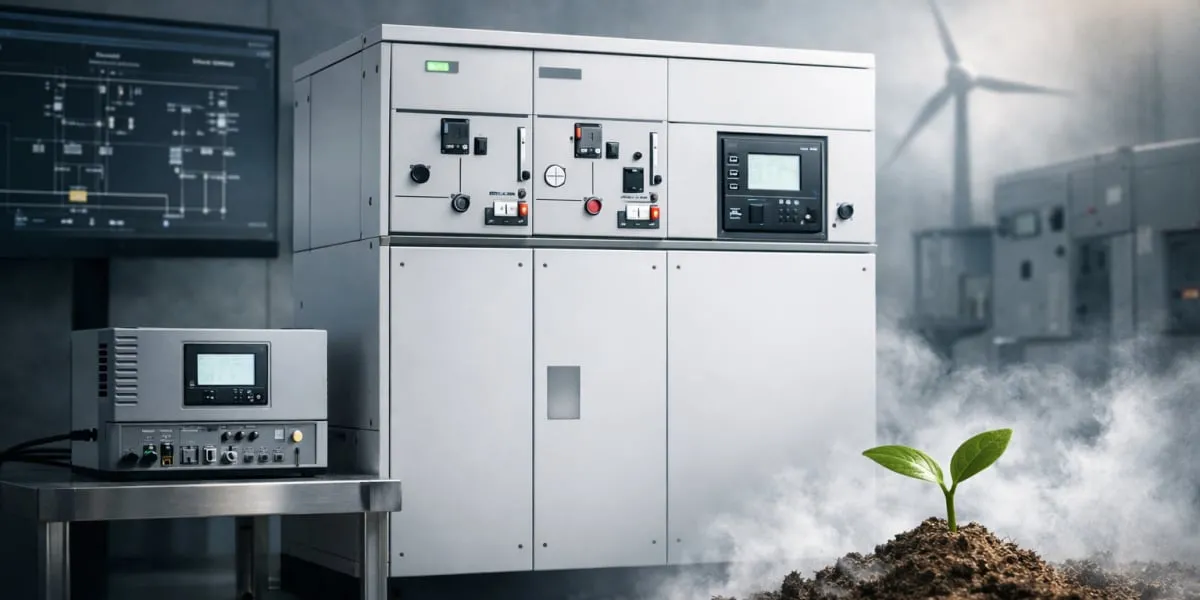
Schneider Electric has partnered with BSES Rajdhani Power to deploy India's first RM AirSeT 12kV indoor ring main unit integrated with the T300 field remote terminal unit, creating a pilot that combines pure air insulation with remote monitoring.

By eliminating the use of SF6 gas and replacing it with pure air the deployment is estimated to reduce nearly 75 t of carbon dioxide equivalent emissions during the capex phase alone, and the initiative is presented as a step toward cleaner and more connected distribution infrastructure.

As Delhi's peak demand is projected to cross 9,000 MW amid rising urbanisation and greater cooling requirements, utilities are focusing on smarter and more sustainable grid infrastructure to ensure reliable supply and to support future energy needs.

BRPL has been evaluating innovative medium voltage switchgear technologies that aim to reduce environmental impact while improving operational reliability and network visibility, and the RM AirSeT 12kV solution was designed using pure air technology as an alternative to conventional gas insulated switchgear.

The deployment was integrated with Schneider Electric's T300 FRTU to enable remote monitoring and control through BRPL's SCADA network, providing enhanced grid visibility and operational control.

RM AirSeT units for the pilot were sourced from the company's SBMV global plant while FRTU integration was carried out at the MVI plant in India to allow for greater customisation against operational requirements, and Schneider Electric also facilitated specialised training at its AMT plant in Hungary to strengthen local expertise in RM AirSeT technology and FRTU integration.

The technology removes concerns around SF6 leakage during operations and eliminates the need for SF6 recovery and recycling at end of life while offering a robust and longer lasting alternative to conventional ring main units.

The pilot is described by the partners as a significant milestone for the utility sector and is expected to serve as a reference for future large scale adoption of SF6 free medium voltage solutions across the Indian market, and the collaboration is framed as a contribution to grid modernisation and the wider energy transition.

Schneider Electric has partnered with BSES Rajdhani Power to deploy India's first RM AirSeT 12kV indoor ring main unit integrated with the T300 field remote terminal unit, creating a pilot that combines pure air insulation with remote monitoring. By eliminating the use of SF6 gas and replacing it with pure air the deployment is estimated to reduce nearly 75 t of carbon dioxide equivalent emissions during the capex phase alone, and the initiative is presented as a step toward cleaner and more connected distribution infrastructure. As Delhi's peak demand is projected to cross 9,000 MW amid rising urbanisation and greater cooling requirements, utilities are focusing on smarter and more sustainable grid infrastructure to ensure reliable supply and to support future energy needs. BRPL has been evaluating innovative medium voltage switchgear technologies that aim to reduce environmental impact while improving operational reliability and network visibility, and the RM AirSeT 12kV solution was designed using pure air technology as an alternative to conventional gas insulated switchgear. The deployment was integrated with Schneider Electric's T300 FRTU to enable remote monitoring and control through BRPL's SCADA network, providing enhanced grid visibility and operational control. RM AirSeT units for the pilot were sourced from the company's SBMV global plant while FRTU integration was carried out at the MVI plant in India to allow for greater customisation against operational requirements, and Schneider Electric also facilitated specialised training at its AMT plant in Hungary to strengthen local expertise in RM AirSeT technology and FRTU integration. The technology removes concerns around SF6 leakage during operations and eliminates the need for SF6 recovery and recycling at end of life while offering a robust and longer lasting alternative to conventional ring main units. The pilot is described by the partners as a significant milestone for the utility sector and is expected to serve as a reference for future large scale adoption of SF6 free medium voltage solutions across the Indian market, and the collaboration is framed as a contribution to grid modernisation and the wider energy transition.

Related Stories

Gold Stories

Next Story
Real Estate

Mindspace REIT earns IGBC Green Landscape Gold Rating

Mindspace Business Parks REIT’s Mindspace Airoli East business park in Navi Mumbai has received the IGBC Green Landscape Gold Rating from the Indian Green Building Council (IGBC). Mindspace REIT said it is the first REIT in India to receive the distinction.The certification evaluates the design, management and ecological performance of landscaped areas, including biodiversity, resource efficiency and sustainability practices.Mindspace Airoli East has more than 60 per cent native and adaptive green cover and more than 30 per cent vegetation supporting local birds and insects. Smart landscape ..

Next Story
Real Estate

Vertical integration gives us control over cost and delivery: Renny Strips

At bauma CONEXPO India 2026, Renny Strips showcased its green steel proposition, with a focus on lower-emission manufacturing, vertical integration and customised structural steel solutions. Managing Director Binny Gupta spoke to Kavita Parab about the company’s sustainability initiatives, including its 22MW solar plant, and its plans to expand capacity and support India’s infrastructure growth.What was Renny Strips’ focus at Bauma CONEXPO India 2026?We focused on showcasing our green steel proposition and explaining its benefits to customers, particularly in European markets. Our steel ..

Next Story
Infrastructure Energy

Beyond Energy-Efficiency

Walk through any major Indian business district today and you will see slick, glass-clad towers shimmering under the tropical sun. Most of these structures proudly display plaque certifications: Platinum, Gold, or 5-Star ratings. They promise lower carbon footprints, reduced electricity bills and a sustainable future.Yet, behind these polished green plaques, the electricity meter tells a different story. Many of these certified structures consume massive amounts of energy to remain operational. This gap, between what a certificate says and what a building actually does, is where this critique ..

Advertisement

Subscribe to Our Newsletter

Get daily newsletters around different themes from Construction world.

STAY CONNECTED

Advertisement

SPECIAL OFFER
QR Code