Seven OPEC+ Countries Keep October Oil Output Policy Unchanged
ECONOMY & POLICY

Seven OPEC+ Countries Keep October Oil Output Policy Unchanged

The seven core OPEC+ countries — Saudi Arabia, Russia, Iraq, Kuwait, Kazakhstan, Algeria and Oman — met virtually on Monday to review global market conditions and decided to keep their oil output policy unchanged for October amid continuing uncertainty. The group said it would maintain current production settings after assessing supply risks and demand signals. The decision reflected a cautious approach as members weighed disrupted exports and volatile regional dynamics.

The meeting followed an increase in production of around 188,000 barrels per day for September, which completed the rollback of a voluntary production cut of around 1.65 million (mn) barrels per day introduced in 2023. Officials framed the September rise as a measured step intended to restore volumes gradually while monitoring market response. The scale of the rollback has altered baseline supplies without prompting immediate sharp price movements.

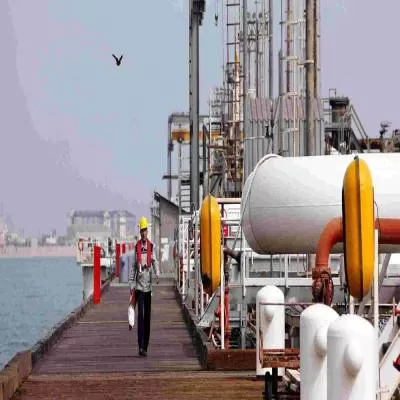
Delegates noted that continuing disruptions to oil exports, including those linked to the conflict involving Iran and disturbances around the Strait of Hormuz, have limited the impact of OPEC+ production adjustments on global supplies and prices. The United Arab Emirates (UAE) left the alliance in May this year, citing national interest and a commitment to contribute effectively to meeting market needs, a development that has reshaped coordination dynamics. Participants underlined the importance of closely tracking shipping routes and regional security factors.

OPEC+ will continue to monitor inventories, demand forecasts and geopolitical risks as it evaluates future steps and is expected to meet again in October to review market conditions and production levels. Analysts will watch whether the alliance adopts further gradual changes or retains a steady posture to avoid adding volatility. Markets are likely to remain sensitive to any new supply disruptions and to shifts in member policy.

The seven core OPEC+ countries — Saudi Arabia, Russia, Iraq, Kuwait, Kazakhstan, Algeria and Oman — met virtually on Monday to review global market conditions and decided to keep their oil output policy unchanged for October amid continuing uncertainty. The group said it would maintain current production settings after assessing supply risks and demand signals. The decision reflected a cautious approach as members weighed disrupted exports and volatile regional dynamics. The meeting followed an increase in production of around 188,000 barrels per day for September, which completed the rollback of a voluntary production cut of around 1.65 million (mn) barrels per day introduced in 2023. Officials framed the September rise as a measured step intended to restore volumes gradually while monitoring market response. The scale of the rollback has altered baseline supplies without prompting immediate sharp price movements. Delegates noted that continuing disruptions to oil exports, including those linked to the conflict involving Iran and disturbances around the Strait of Hormuz, have limited the impact of OPEC+ production adjustments on global supplies and prices. The United Arab Emirates (UAE) left the alliance in May this year, citing national interest and a commitment to contribute effectively to meeting market needs, a development that has reshaped coordination dynamics. Participants underlined the importance of closely tracking shipping routes and regional security factors. OPEC+ will continue to monitor inventories, demand forecasts and geopolitical risks as it evaluates future steps and is expected to meet again in October to review market conditions and production levels. Analysts will watch whether the alliance adopts further gradual changes or retains a steady posture to avoid adding volatility. Markets are likely to remain sensitive to any new supply disruptions and to shifts in member policy.

Related Stories

Gold Stories

Next Story
Real Estate

Japanese companies expand GCC operations in India

More than 100 Japanese companies have established or are expanding Global Capability Centres (GCCs) in India, with a growing focus on artificial intelligence (AI), engineering, digital innovation, product development, cybersecurity and advanced analytics. The shift marks an expansion beyond traditional back-office and operational support functions towards higher-value technology and innovation activities.Japanese companies are increasingly using their Indian GCCs to support digital transformation, address talent shortages and contribute to global business strategies. These centres are taking o..

Next Story
Real Estate

India’s flexible office stock projected to reach 160 million sq ft by 2030

India retained its position as the world's most mature flexible office market, scoring 100 per cent on Cushman & Wakefield's Flexible Office Market Maturity Index, according to the firm's Global Trends in Flexible Office 2026 report.India's flexible office inventory reached 88.7 million sq ft (MSF) in H1 2026, accounting for 10.5 per cent of the country's total office stock. The report projects this to exceed 100 MSF in 2026 and reach approximately 160 MSF by 2030.Flexible office operators leased 8.5 MSF across India's top eight cities in H1 2026, their strongest first-half performance to ..

Next Story
Infrastructure Urban

K2 Infragen appoints Abhishek Sharma as DGM, supply chain

K2 Infragen has appointed Abhishek Sharma as Deputy General Manager, Supply Chain Management. He will oversee procurement planning, vendor partnerships and coordination with project teams.Sharma brings nearly two decades of experience in infrastructure procurement across railways, highways, expressways and hydropower. His experience includes procurement responsibilities associated with the Delhi–Meerut Expressway and the Delhi–Vadodara greenfield corridor. ..

Advertisement

Subscribe to Our Newsletter

Get daily newsletters around different themes from Construction world.

STAY CONNECTED

Advertisement

SPECIAL OFFER
QR Code