+
Shweta Solar Signals Shift Powering India's Next Solar Growth
ECONOMY & POLICY

Shweta Solar Signals Shift Powering India's Next Solar Growth

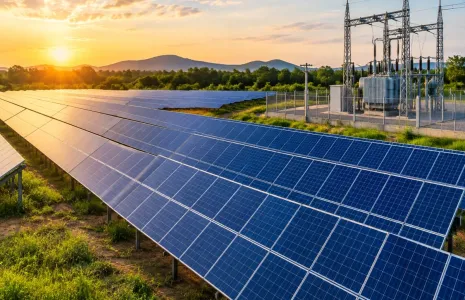
India's solar sector has reached a new scale with installed photovoltaic capacity crossing 140 gigawatt (GW), reflecting steady expansion in utility scale and rooftop segments. The milestone follows sustained policy support, improved execution and rising investor confidence, which have strengthened the country's position among leading global solar markets. Industry participants say the phase is shifting emphasis from adding capacity to ensuring longer term system performance and reliability.

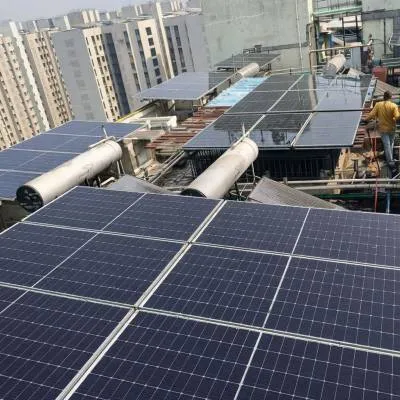
Growth accelerated in 2025 as the renewable sector added 44.5 GW and solar accounted for the bulk of new capacity. Large ground mounted projects continued to lead while rooftop installations contributed close to seven GW. Around 4.9 GW was installed in the first nine months of last year, a rise of 161 per cent, and installers report enquiries from smaller cities and semi urban areas.

Government programmes have broadened access to rooftop systems and market signals now reflect practicality as well as ambition. The PM Surya Ghar Muft Bijli Yojana has improved household access, equipment prices have stabilised from earlier highs and grid tariffs continue to rise in several states, making solar a pragmatic financial choice for many consumers. Shweta Solar has observed buyer conversations shifting from lowest upfront price towards degradation rates and durability in Indian conditions.

Solar generation rose by about 22 per cent in 2025 as projects commissioned in recent years began operating at full capacity and feeding steadily into the grid. In the Union Budget 2026-27 more than Rs 305 billion (bn) was allocated to solar programmes, signalling enhanced policy support for both large projects and decentralised installations. The company says consistent manufacturing practices and field-tested performance data will be crucial for building trust and that future growth will favour companies delivering durable systems and disciplined processes. As India advances towards its 500 GW non-fossil energy target by 2030, long term performance is likely to shape the next phase of expansion.

India's solar sector has reached a new scale with installed photovoltaic capacity crossing 140 gigawatt (GW), reflecting steady expansion in utility scale and rooftop segments. The milestone follows sustained policy support, improved execution and rising investor confidence, which have strengthened the country's position among leading global solar markets. Industry participants say the phase is shifting emphasis from adding capacity to ensuring longer term system performance and reliability. Growth accelerated in 2025 as the renewable sector added 44.5 GW and solar accounted for the bulk of new capacity. Large ground mounted projects continued to lead while rooftop installations contributed close to seven GW. Around 4.9 GW was installed in the first nine months of last year, a rise of 161 per cent, and installers report enquiries from smaller cities and semi urban areas. Government programmes have broadened access to rooftop systems and market signals now reflect practicality as well as ambition. The PM Surya Ghar Muft Bijli Yojana has improved household access, equipment prices have stabilised from earlier highs and grid tariffs continue to rise in several states, making solar a pragmatic financial choice for many consumers. Shweta Solar has observed buyer conversations shifting from lowest upfront price towards degradation rates and durability in Indian conditions. Solar generation rose by about 22 per cent in 2025 as projects commissioned in recent years began operating at full capacity and feeding steadily into the grid. In the Union Budget 2026-27 more than Rs 305 billion (bn) was allocated to solar programmes, signalling enhanced policy support for both large projects and decentralised installations. The company says consistent manufacturing practices and field-tested performance data will be crucial for building trust and that future growth will favour companies delivering durable systems and disciplined processes. As India advances towards its 500 GW non-fossil energy target by 2030, long term performance is likely to shape the next phase of expansion.

Next Story
Equipment

Kabelschlepp India Installs Robotic VMC in Bengaluru

Kabelschlepp India, part of the Tsubaki Group, has installed a state-of-the-art Vertical Machining Center (VMC) integrated with robotic automation at its Bengaluru facility. The inauguration was held in the presence of Henning Preis, President & CEO, Kabelschlepp Group, Jörg Schulz, Vice President – Production, and Srinivas P. Kamisetty, Managing Director, Kabelschlepp India.The high-precision CNC VMC is designed for advanced milling, drilling, tapping and multi-axis machining. Equipped with a vertical spindle orientation, automatic tool changer and intelligent CNC control system, it en..

Next Story
Infrastructure Transport

Highway Delivery Reset!

Project delays and inefficiencies continue to bedevil the progress of India’s National Highways network. A multi-pronged reform agenda is needed to inject greater transparency and accountability at every stage – from planning and procurement to execution, maintenance and oversight. This article offers key recommendations and reform strategies that government stakeholders – from the Ministry of Road Transport & Highways (MoRTH) and the National Highways Authority of India (NHAI) to state agencies and oversight bodies – should pursue to put highway development on a better track.Decen..

Next Story
Infrastructure Transport

MSIDC Executes ₹37,000 Crore Road Programme

With Rs 37,000 crore worth of road projects under execution across Maharashtra, Maharashtra State Infrastructure Development Corporation (MSIDC) is driving one of the state’s largest infrastructure programmes. Dr Brijesh Dixit, Managing Director, discusses the institutional reforms, execution frameworks, financing strategies and technology adoption enabling timely, high-quality delivery, in conversation with PRATAP PADODE, Editor-in-Chief, CW.With over Rs 37,000 crore worth of road projects underway across districts – many under tight timelines – what institutional and executio..

Advertisement

Subscribe to Our Newsletter

Get daily newsletters around different themes from Construction world.

STAY CONNECTED

Advertisement

Advertisement

Advertisement

Open In App