Ujjivan SFB Plans Rs 20 Bn QIP Amid Universal Bank Licence Awaiting
ECONOMY & POLICY

Ujjivan SFB Plans Rs 20 Bn QIP Amid Universal Bank Licence Awaiting

Ujjivan Small Finance Bank (Ujjivan SFB) plans to raise Rs 20 billion through a qualified institutional placement (QIP) over the next 18–24 months, according to its Managing Director and CEO, Sanjeev Nautiyal.

The lender has set a long-term target of achieving a gross loan book of Rs 1 trillion by FY30, supported by an expansion of its branch network from 752 to 1,150. It also aims to increase the secured share of its loan portfolio to 65–70 per cent and raise the share of current account and savings account (CASA) deposits to 35 per cent.

Nautiyal said the fundraising forms part of the bank’s strategic plan, regardless of the Reserve Bank of India’s (RBI) decision on its application for a universal bank licence. The application, filed in February, is expected to receive clarity by December 2025.

As of FY25, Ujjivan SFB reported a capital adequacy ratio of 23.1 per cent and a gross loan book of Rs 321.22 billion. CASA deposits accounted for 25.5 per cent of total deposits.

To strengthen its business, the bank is working to enhance CASA offerings and boost fee-based income through initiatives such as ASBA (application supported by blocked amount) services, mutual fund distribution, retail insurance partnerships, co-branded credit cards, and expansion of its authorised dealer licence.

News source: Business Standard


Ujjivan Small Finance Bank (Ujjivan SFB) plans to raise Rs 20 billion through a qualified institutional placement (QIP) over the next 18–24 months, according to its Managing Director and CEO, Sanjeev Nautiyal.The lender has set a long-term target of achieving a gross loan book of Rs 1 trillion by FY30, supported by an expansion of its branch network from 752 to 1,150. It also aims to increase the secured share of its loan portfolio to 65–70 per cent and raise the share of current account and savings account (CASA) deposits to 35 per cent.Nautiyal said the fundraising forms part of the bank’s strategic plan, regardless of the Reserve Bank of India’s (RBI) decision on its application for a universal bank licence. The application, filed in February, is expected to receive clarity by December 2025.As of FY25, Ujjivan SFB reported a capital adequacy ratio of 23.1 per cent and a gross loan book of Rs 321.22 billion. CASA deposits accounted for 25.5 per cent of total deposits.To strengthen its business, the bank is working to enhance CASA offerings and boost fee-based income through initiatives such as ASBA (application supported by blocked amount) services, mutual fund distribution, retail insurance partnerships, co-branded credit cards, and expansion of its authorised dealer licence.News source: Business Standard

Related Stories

Gold Stories

Next Story
Infrastructure Urban

KONE Opens India's First Digital Experience Centre in Pune

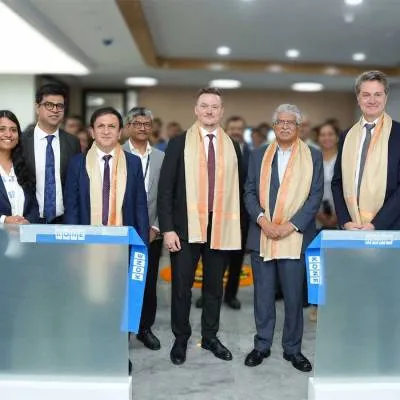
KONE, a global elevator and escalator manufacturer, has inaugurated its first Digital Experience Centre (DEC) in India, located in Pune. The facility aims to showcase how artificial intelligence (AI), connectivity and data-driven technologies can enhance customer experiences and improve building operations.The centre was inaugurated by Jussi Herlin, Executive Vice Chair, KONE Corporation; Philippe Delorme, President and CEO, KONE; and Nandan Nilekani, Co-founder and Chairman of the Board, Infosys.Designed as an interactive customer environment, the facility demonstrates digital solutions cover..

Next Story
Infrastructure Urban

CII GreenCo Launches Circularity Guidelines for Indian Industry

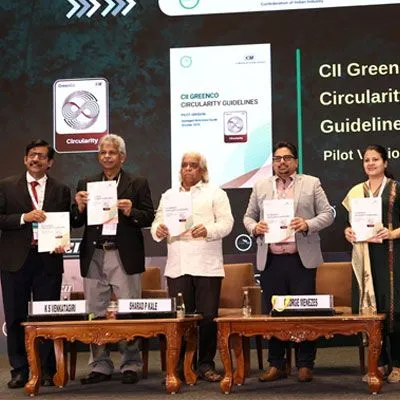
The Confederation of Indian Industry (CII) GreenCo Council has launched the CII GreenCo Circularity Guidelines – Pilot Version at the 17th CII GreenCo Waste & Resource Management Summit 2026 in Chennai. The initiative aims to strengthen resource efficiency, waste reduction and circular economy practices across Indian manufacturing and process industries.The guidelines introduce a structured framework with circularity indices covering raw materials, consumables, packaging and other resource inputs. These indicators will help industries assess existing practices, identify opportunities to ..

Next Story
Infrastructure Energy

Global Electronics Association Launches IPC-1783-CO2E Standard

The Global Electronics Association has introduced IPC-1783-CO2E, a new international standard aimed at improving consistency, transparency and comparability in product carbon footprint reporting across the electronics manufacturing industry.The standard, titled International Standard for Data Collection and Reporting of CO2 Equivalent (CO2e) Emissions for the Electronics Manufacturing Supply Chain, provides industry-specific guidance for collecting, estimating and reporting carbon emissions data.With increasing regulatory requirements and customer expectations, electronics manufacturers face c..

Advertisement

Subscribe to Our Newsletter

Get daily newsletters around different themes from Construction world.

STAY CONNECTED

Advertisement

SPECIAL OFFER
QR Code