Uniqlo’s parent company Fast Retailing expands manufacturing presence
ECONOMY & POLICY

Uniqlo’s parent company Fast Retailing expands manufacturing presence

According to a report, Fast Retailing, the parent company of Uniqlo, has plans to expand its manufacturing presence in India by partnering with 20 production partners. Uniqlo, a highly valuable clothing retailer globally, already has multiple production partners in India and intends to expand this network through a substantial investment.

Uniqlo's current production partners in India include Shahi Exports, Brandix Lanka, Tangerine Design, Maral Overseas, Shingora Textiles, Silver Spark Apparel, SM Lulla Industries Worldwide, and Penguin Apparels.

A source mentioned in the report stated that the investment amount would be significant, as Uniqlo considers India an important market. The production partners that Uniqlo brings to India will be primarily focused on catering to the domestic market.

Tadashi Yanai, CEO of Uniqlo, has expressed his ambition for Uniqlo to become the top-selling retailer in India. Uniqlo entered the Indian market in September 2019, opening its first store. It currently has stores in Delhi, Lucknow, and Chandigarh, with plans to expand into Mumbai and Bangalore.

Uniqlo does not own any factories and outsources the production of almost all its products to factories outside Japan. This strategy allows the brand to maintain a low breakeven point and enhance its return on investment.

As of March 1, 2023, Uniqlo has a total of 227 factories in China, 54 in Vietnam, 33 in Bangladesh, 13 in Indonesia, and 16 factories in India and Japan. India has emerged as an attractive market for apparel brands, with global giants like Zara and H&M establishing themselves as market leaders in the fast fashion segment over the past decade.

Devangshu Dutta, the founder of Third Eyesight, a retail consulting firm, noted, "For global brands, India should be one of the most logical sourcing hubs, given its large vertically integrated manufacturing sector on the one hand and a large, growing domestic market driving demand on the other hand."

Dutta added that historically, India's share in the sourcing baskets of global brands has been relatively low due to various reasons, despite China posing concentrated sourcing risks for brands and retailers over the years.

Uniqlo International reported revenue of $5.25 billion and an operating profit of $852.93 million in the first half of 2023. The company highlighted significant revenue and profit gains in regions like India as they entered a phase of full-fledged growth.

According to a report, Fast Retailing, the parent company of Uniqlo, has plans to expand its manufacturing presence in India by partnering with 20 production partners. Uniqlo, a highly valuable clothing retailer globally, already has multiple production partners in India and intends to expand this network through a substantial investment. Uniqlo's current production partners in India include Shahi Exports, Brandix Lanka, Tangerine Design, Maral Overseas, Shingora Textiles, Silver Spark Apparel, SM Lulla Industries Worldwide, and Penguin Apparels. A source mentioned in the report stated that the investment amount would be significant, as Uniqlo considers India an important market. The production partners that Uniqlo brings to India will be primarily focused on catering to the domestic market. Tadashi Yanai, CEO of Uniqlo, has expressed his ambition for Uniqlo to become the top-selling retailer in India. Uniqlo entered the Indian market in September 2019, opening its first store. It currently has stores in Delhi, Lucknow, and Chandigarh, with plans to expand into Mumbai and Bangalore. Uniqlo does not own any factories and outsources the production of almost all its products to factories outside Japan. This strategy allows the brand to maintain a low breakeven point and enhance its return on investment. As of March 1, 2023, Uniqlo has a total of 227 factories in China, 54 in Vietnam, 33 in Bangladesh, 13 in Indonesia, and 16 factories in India and Japan. India has emerged as an attractive market for apparel brands, with global giants like Zara and H&M establishing themselves as market leaders in the fast fashion segment over the past decade. Devangshu Dutta, the founder of Third Eyesight, a retail consulting firm, noted, For global brands, India should be one of the most logical sourcing hubs, given its large vertically integrated manufacturing sector on the one hand and a large, growing domestic market driving demand on the other hand. Dutta added that historically, India's share in the sourcing baskets of global brands has been relatively low due to various reasons, despite China posing concentrated sourcing risks for brands and retailers over the years. Uniqlo International reported revenue of $5.25 billion and an operating profit of $852.93 million in the first half of 2023. The company highlighted significant revenue and profit gains in regions like India as they entered a phase of full-fledged growth.

Related Stories

Gold Stories

Next Story
Infrastructure Urban

KONE Opens India's First Digital Experience Centre in Pune

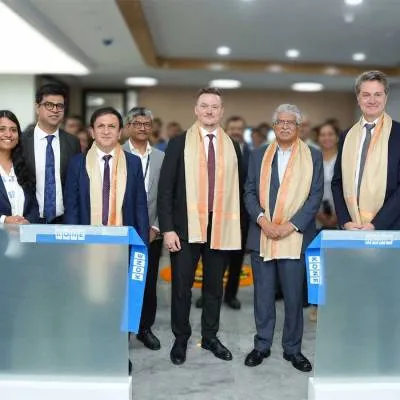
KONE, a global elevator and escalator manufacturer, has inaugurated its first Digital Experience Centre (DEC) in India, located in Pune. The facility aims to showcase how artificial intelligence (AI), connectivity and data-driven technologies can enhance customer experiences and improve building operations.The centre was inaugurated by Jussi Herlin, Executive Vice Chair, KONE Corporation; Philippe Delorme, President and CEO, KONE; and Nandan Nilekani, Co-founder and Chairman of the Board, Infosys.Designed as an interactive customer environment, the facility demonstrates digital solutions cover..

Next Story
Infrastructure Urban

CII GreenCo Launches Circularity Guidelines for Indian Industry

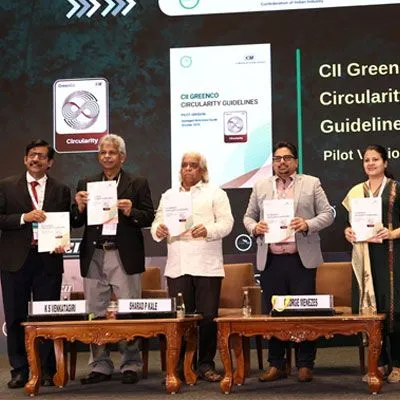
The Confederation of Indian Industry (CII) GreenCo Council has launched the CII GreenCo Circularity Guidelines – Pilot Version at the 17th CII GreenCo Waste & Resource Management Summit 2026 in Chennai. The initiative aims to strengthen resource efficiency, waste reduction and circular economy practices across Indian manufacturing and process industries.The guidelines introduce a structured framework with circularity indices covering raw materials, consumables, packaging and other resource inputs. These indicators will help industries assess existing practices, identify opportunities to ..

Next Story
Infrastructure Energy

Global Electronics Association Launches IPC-1783-CO2E Standard

The Global Electronics Association has introduced IPC-1783-CO2E, a new international standard aimed at improving consistency, transparency and comparability in product carbon footprint reporting across the electronics manufacturing industry.The standard, titled International Standard for Data Collection and Reporting of CO2 Equivalent (CO2e) Emissions for the Electronics Manufacturing Supply Chain, provides industry-specific guidance for collecting, estimating and reporting carbon emissions data.With increasing regulatory requirements and customer expectations, electronics manufacturers face c..

Advertisement

Subscribe to Our Newsletter

Get daily newsletters around different themes from Construction world.

STAY CONNECTED

Advertisement

SPECIAL OFFER
QR Code