+
Waaree Energies Commissions Five Point One Five GWh BESS Facility
ECONOMY & POLICY

Waaree Energies Commissions Five Point One Five GWh BESS Facility

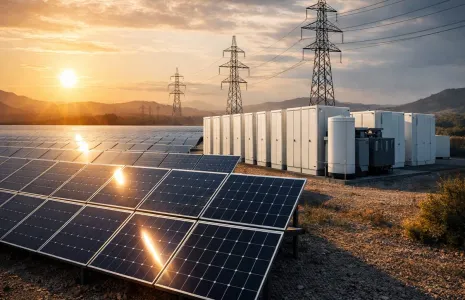
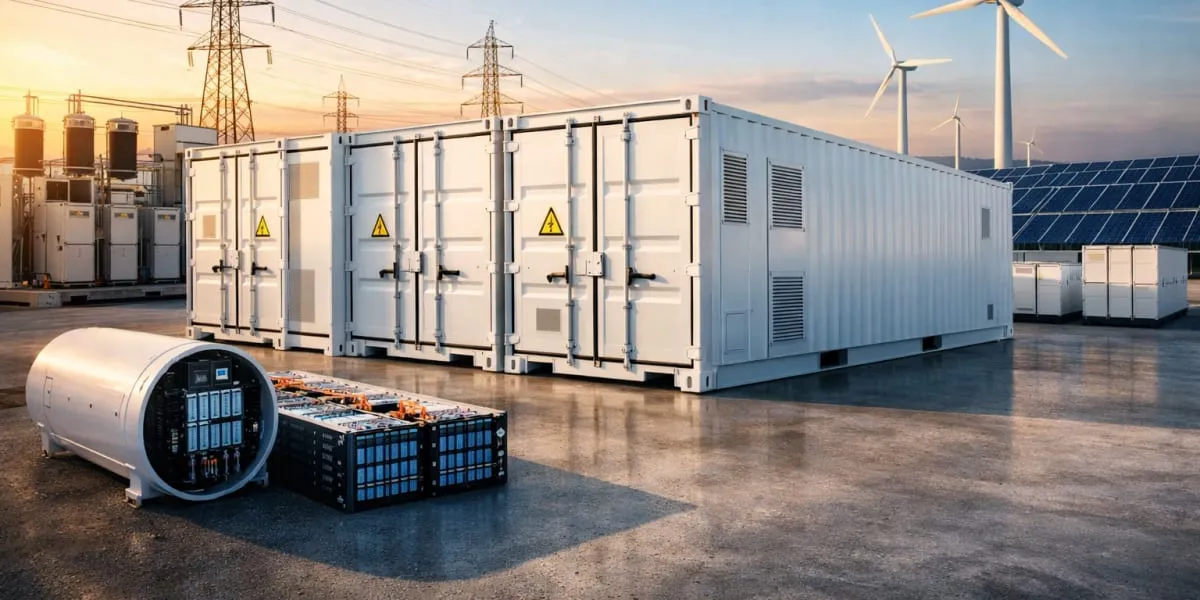
Waaree Energies has commissioned a battery energy storage system (BESS) container manufacturing facility in Gujarat with a capacity of five point one five GWh. The new plant expands the firm's manufacturing footprint and provides a dedicated line for containerised BESS solutions. The development reflects industry emphasis on modular storage as power systems absorb larger shares of renewable generation. The facility is intended to serve projects requiring scalable, transportable storage assets.

The unit is described as a step to strengthen domestic manufacturing for energy storage and to shorten supply chains for developers and original equipment manufacturers. It forms part of broader efforts to support integration of intermittent renewable generation and to assist system operators in managing variability. The plant's output will be used across utility scale projects and behind the meter installations where modular storage offers operational flexibility. The site incorporates manufacturing processes aligned with industry standards for safety and quality assurance.

Scaling manufacturing capacity for containerised BESS units can reduce lead times and promote standardisation in deployment practices. The commissioning will influence procurement strategies for utilities and commercial customers seeking firming solutions for solar and wind assets. The development will also support ancillary services models that rely on rapid response storage placed close to demand centres and transmission nodes. Greater local capacity supports serviceability and quicker commissioning of storage projects across regions.

The containerised approach offers modularity and faster deployment timelines which are important for integrating distributed generation and for enhancing grid resilience. Scaling local production of BESS containers can contribute to cost reductions through economies of scale and support job creation across manufacturing and logistics segments. The commissioning underlines a broader industrial trend towards embedding storage within project supply chains as a core enabler of the energy transition. Stakeholders will monitor performance metrics and lifecycle costs as units enter operation.

Waaree Energies has commissioned a battery energy storage system (BESS) container manufacturing facility in Gujarat with a capacity of five point one five GWh. The new plant expands the firm's manufacturing footprint and provides a dedicated line for containerised BESS solutions. The development reflects industry emphasis on modular storage as power systems absorb larger shares of renewable generation. The facility is intended to serve projects requiring scalable, transportable storage assets. The unit is described as a step to strengthen domestic manufacturing for energy storage and to shorten supply chains for developers and original equipment manufacturers. It forms part of broader efforts to support integration of intermittent renewable generation and to assist system operators in managing variability. The plant's output will be used across utility scale projects and behind the meter installations where modular storage offers operational flexibility. The site incorporates manufacturing processes aligned with industry standards for safety and quality assurance. Scaling manufacturing capacity for containerised BESS units can reduce lead times and promote standardisation in deployment practices. The commissioning will influence procurement strategies for utilities and commercial customers seeking firming solutions for solar and wind assets. The development will also support ancillary services models that rely on rapid response storage placed close to demand centres and transmission nodes. Greater local capacity supports serviceability and quicker commissioning of storage projects across regions. The containerised approach offers modularity and faster deployment timelines which are important for integrating distributed generation and for enhancing grid resilience. Scaling local production of BESS containers can contribute to cost reductions through economies of scale and support job creation across manufacturing and logistics segments. The commissioning underlines a broader industrial trend towards embedding storage within project supply chains as a core enabler of the energy transition. Stakeholders will monitor performance metrics and lifecycle costs as units enter operation.

Related Stories

Gold Stories

Next Story
Infrastructure Urban

KONE Opens India's First Digital Experience Centre in Pune

KONE, a global elevator and escalator manufacturer, has inaugurated its first Digital Experience Centre (DEC) in India, located in Pune. The facility aims to showcase how artificial intelligence (AI), connectivity and data-driven technologies can enhance customer experiences and improve building operations.The centre was inaugurated by Jussi Herlin, Executive Vice Chair, KONE Corporation; Philippe Delorme, President and CEO, KONE; and Nandan Nilekani, Co-founder and Chairman of the Board, Infosys.Designed as an interactive customer environment, the facility demonstrates digital solutions cover..

Next Story
Infrastructure Urban

CII GreenCo Launches Circularity Guidelines for Indian Industry

The Confederation of Indian Industry (CII) GreenCo Council has launched the CII GreenCo Circularity Guidelines – Pilot Version at the 17th CII GreenCo Waste & Resource Management Summit 2026 in Chennai. The initiative aims to strengthen resource efficiency, waste reduction and circular economy practices across Indian manufacturing and process industries.The guidelines introduce a structured framework with circularity indices covering raw materials, consumables, packaging and other resource inputs. These indicators will help industries assess existing practices, identify opportunities to ..

Next Story
Infrastructure Energy

Global Electronics Association Launches IPC-1783-CO2E Standard

The Global Electronics Association has introduced IPC-1783-CO2E, a new international standard aimed at improving consistency, transparency and comparability in product carbon footprint reporting across the electronics manufacturing industry.The standard, titled International Standard for Data Collection and Reporting of CO2 Equivalent (CO2e) Emissions for the Electronics Manufacturing Supply Chain, provides industry-specific guidance for collecting, estimating and reporting carbon emissions data.With increasing regulatory requirements and customer expectations, electronics manufacturers face c..

Advertisement

Subscribe to Our Newsletter

Get daily newsletters around different themes from Construction world.

STAY CONNECTED

Advertisement

SPECIAL OFFER
QR Code