Waterlogging Hits Kota Eight-Lane Tunnel; NHAI Admits Design Flaw
ECONOMY & POLICY

Waterlogging Hits Kota Eight-Lane Tunnel; NHAI Admits Design Flaw

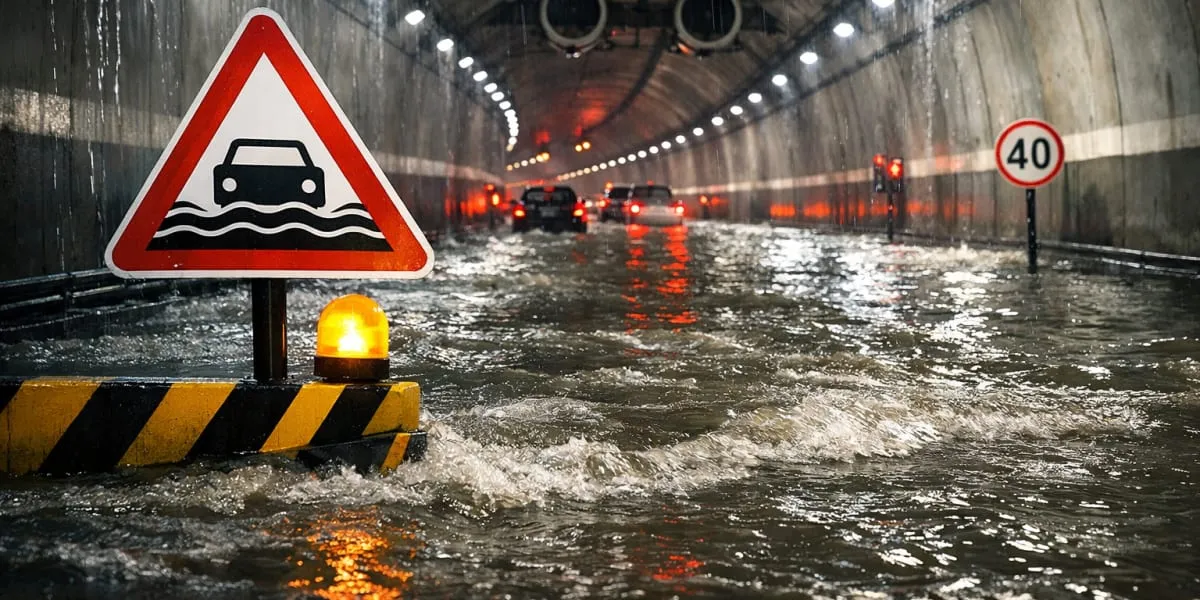
Heavy rainfall over the past two days triggered waterlogging and seepage inside India's first eight-lane road tunnel running beneath the Mukundara Hills Tiger Reserve in Kota, causing traffic congestion and commuter inconvenience, and officials acknowledged shortcomings in the pre-assessment of its design.

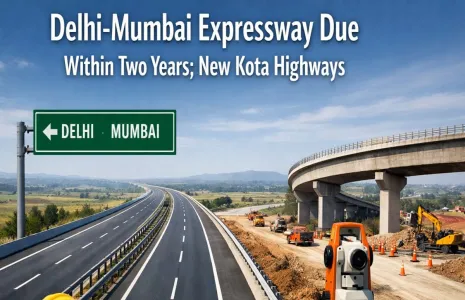
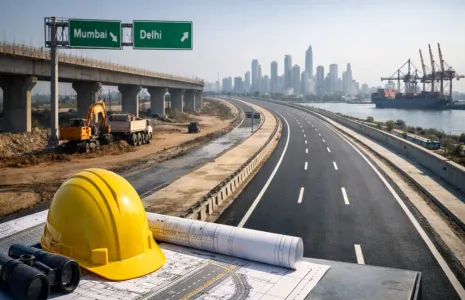
The four point nine-kilometre Mukundara Hills Tunnel forms a crucial link in the 1,386-km Delhi-Mumbai Expressway, which is being built at Rs 950 billion (Rs 950 bn). The tunnel was opened on a trial basis to all vehicles on July 27 and this represents its first rainy season since completion.

The National Highways Authority of India (NHAI) project director in Kota, Sandeep Agrawal, attributed the problem primarily to insufficient pumping capacity and said the quantum of seepage was high and the installed equipment proved inadequate for the conditions. He stated that the current installed capacity across the tunnel is 260 horsepower, with an additional 130 horsepower on standby, and that additional pumps are being deployed to extract accumulated water. Agrawal described the issue as technical in nature and said it would be rectified with higher capacity equipment.

Local police officers said efforts were underway to clear the water and manage traffic, which was severely impacted for one and a half hours, while engineers worked on site to restore normal movement. Officers added that vehicles were being allowed one by one to keep traffic moving and that water had not flooded the entire four point nine-kilometre length but had accumulated to one to two feet heavily along a stretch of over one kilometre in the middle. They said the heavy ongoing rains had increased seepage from the forest above and contributed to the severity of the incident.

According to NHAI officials, the tunnel, costing around Rs 125 million (Rs 125 mn), was constructed beneath the tiger reserve to avoid disturbing wildlife movement and to preserve the forest ecosystem. The design permits animals to move freely above the structure and is cited as a national example of integrating transport infrastructure with environmental conservation.

Heavy rainfall over the past two days triggered waterlogging and seepage inside India's first eight-lane road tunnel running beneath the Mukundara Hills Tiger Reserve in Kota, causing traffic congestion and commuter inconvenience, and officials acknowledged shortcomings in the pre-assessment of its design. The four point nine-kilometre Mukundara Hills Tunnel forms a crucial link in the 1,386-km Delhi-Mumbai Expressway, which is being built at Rs 950 billion (Rs 950 bn). The tunnel was opened on a trial basis to all vehicles on July 27 and this represents its first rainy season since completion. The National Highways Authority of India (NHAI) project director in Kota, Sandeep Agrawal, attributed the problem primarily to insufficient pumping capacity and said the quantum of seepage was high and the installed equipment proved inadequate for the conditions. He stated that the current installed capacity across the tunnel is 260 horsepower, with an additional 130 horsepower on standby, and that additional pumps are being deployed to extract accumulated water. Agrawal described the issue as technical in nature and said it would be rectified with higher capacity equipment. Local police officers said efforts were underway to clear the water and manage traffic, which was severely impacted for one and a half hours, while engineers worked on site to restore normal movement. Officers added that vehicles were being allowed one by one to keep traffic moving and that water had not flooded the entire four point nine-kilometre length but had accumulated to one to two feet heavily along a stretch of over one kilometre in the middle. They said the heavy ongoing rains had increased seepage from the forest above and contributed to the severity of the incident. According to NHAI officials, the tunnel, costing around Rs 125 million (Rs 125 mn), was constructed beneath the tiger reserve to avoid disturbing wildlife movement and to preserve the forest ecosystem. The design permits animals to move freely above the structure and is cited as a national example of integrating transport infrastructure with environmental conservation.

Related Stories

Gold Stories

Next Story
Infrastructure Transport

GMDA to Spend Rs 86 mn on Green Belts Along Seven Gurugram Roads

The Gurugram Metropolitan Development Authority (GMDA) will spend Rs 86 mn to develop, upgrade and maintain green areas along seven key sector-dividing roads in the city after three tenders were floated, officials said. The project is intended to create landscaped stretches that can absorb additional rainwater runoff and reduce waterlogging during the monsoon. Contractors will be given six months to complete development work and 36 months of maintenance obligations. GMDA chief executive officer PC Meena stated that green areas will be established along sector-dividing roads in sectors 47/49, 4..

Next Story
Infrastructure Urban

Modern College Inaugurates Phase Two Campus Road Supported By HiKOKI

Modern College in Kohima formally inaugurated Phase two of its campus road on 12 August 2026 in an event marked by senior officials of HiKOKI Power Tools India Pvt. Ltd. The programme began at 10:30 am with a prayer led by Pezangulie Keyho, pastor of Piphema A Baptist Church, followed by the unveiling of a road monolith and a sapling plantation drive. The ceremony brought together college administrators, company representatives and students to witness completion of the latest stretch of the thoroughfare. The HiKOKI delegation included Rajan Batra, director of sales, Harsha Kumar, assistant gen..

Next Story
Infrastructure Urban

158 Remote Villages in Andhra Pradesh to Get Roads

In a major push to take development to the doorstep of people in remote habitations, 158 villages and hamlets in Andhra Pradesh will receive road connectivity for the first time under the Pradhan Mantri Gram Sadak Yojana. The project carries an administrative sanction of Rs 4.22 billion (bn) and officials said it is expected to transform access to education, healthcare, markets and other essential services for thousands of residents. The scheme covers construction and bridging works across several districts. The plan provides for 146 roads covering 347 km and 19 bridges to be built, with execu..

Advertisement

Subscribe to Our Newsletter

Get daily newsletters around different themes from Construction world.

STAY CONNECTED

Advertisement