

+
Domestic Steel Capacity Utilisation To Stay Above 90 Per Cent
Steel

Domestic Steel Capacity Utilisation To Stay Above 90 Per Cent

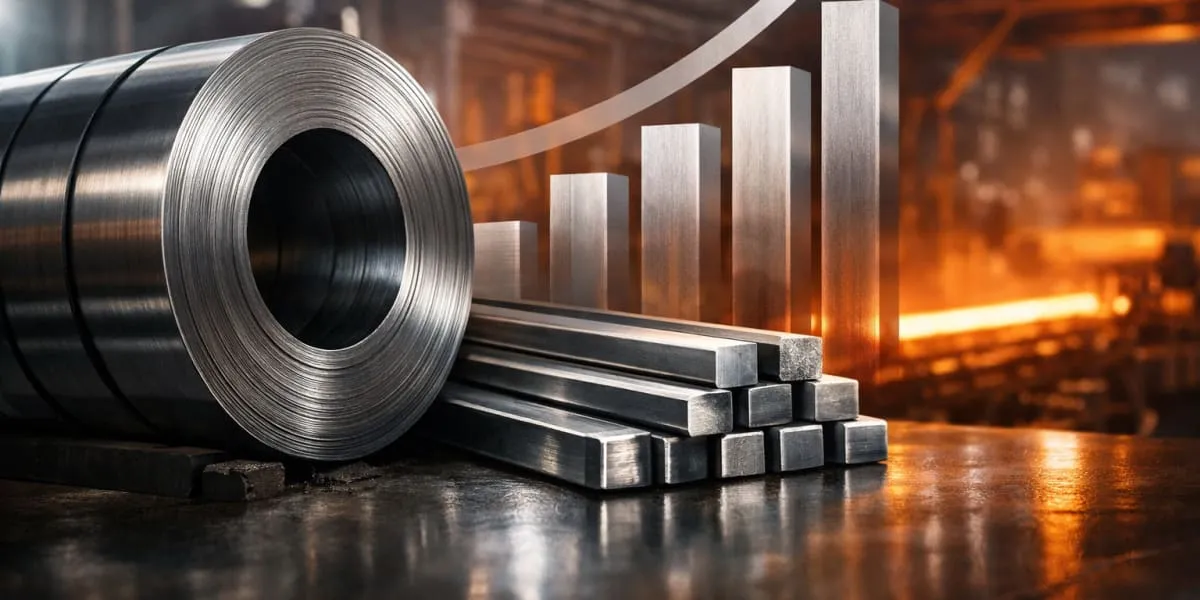
Kotak Institutional Equities (Kotak) reported that domestic steel capacity utilisation is expected to remain above 90 per cent over the medium term as demand growth outpaces capacity additions. The research noted a seven per cent compound annual growth rate (CAGR) over FY2026?29E and highlighted that consumption trends across the country remain stable, supported by healthy industrial and infrastructure activity.

Kotak observed that domestic demand was healthy at seven point eight per cent year?on?year growth in year?to?date FY27 following seven point seven per cent year?on?year growth in FY2026 after four successive years of double?digit growth. On the external trade front, outbound shipments rose sharply off a lower base while inbound shipments recorded higher volumes over the same duration.

Exports increased 35 per cent year?on?year to two point three million (mn) t but were outpaced by imports of two point eight mn t, up 36.7 per cent year?on?year in year?to?date FY27, and trade remedies are under way. Ongoing anti?dumping investigations were expected to keep imports in check.

Long steel prices recovered by 12 per cent over the past month, reversing the sharp correction during June?July 2026, and market tightness together with a receding monsoon was noted as supportive of further price gains. Kotak highlighted that spot primary and secondary rebar prices gained around Rs 5,600 per t, reaching Rs 53,900 per t and Rs 47,900 per t respectively, roughly Rs 6,000 per t below highs recorded in April 2026, while domestic hot rolled coil traded at Rs 58,800 per t at about three per cent discount to import parity.

Input costs displayed divergent trends as coking coal rose around five per cent from first quarter levels due to supply constraints while domestic iron ore fines fell by approximately seven per cent from June exit levels, mirroring softness in seaborne iron ore markets. Kotak expected steel margins to soften sequentially in 2QFY27E but recent price recovery and operating leverage were projected to help margins recover in 2HFY27E, with integrated producers and certain domestic firms positioned to gain.

Kotak Institutional Equities (Kotak) reported that domestic steel capacity utilisation is expected to remain above 90 per cent over the medium term as demand growth outpaces capacity additions. The research noted a seven per cent compound annual growth rate (CAGR) over FY2026?29E and highlighted that consumption trends across the country remain stable, supported by healthy industrial and infrastructure activity. Kotak observed that domestic demand was healthy at seven point eight per cent year?on?year growth in year?to?date FY27 following seven point seven per cent year?on?year growth in FY2026 after four successive years of double?digit growth. On the external trade front, outbound shipments rose sharply off a lower base while inbound shipments recorded higher volumes over the same duration. Exports increased 35 per cent year?on?year to two point three million (mn) t but were outpaced by imports of two point eight mn t, up 36.7 per cent year?on?year in year?to?date FY27, and trade remedies are under way. Ongoing anti?dumping investigations were expected to keep imports in check. Long steel prices recovered by 12 per cent over the past month, reversing the sharp correction during June?July 2026, and market tightness together with a receding monsoon was noted as supportive of further price gains. Kotak highlighted that spot primary and secondary rebar prices gained around Rs 5,600 per t, reaching Rs 53,900 per t and Rs 47,900 per t respectively, roughly Rs 6,000 per t below highs recorded in April 2026, while domestic hot rolled coil traded at Rs 58,800 per t at about three per cent discount to import parity. Input costs displayed divergent trends as coking coal rose around five per cent from first quarter levels due to supply constraints while domestic iron ore fines fell by approximately seven per cent from June exit levels, mirroring softness in seaborne iron ore markets. Kotak expected steel margins to soften sequentially in 2QFY27E but recent price recovery and operating leverage were projected to help margins recover in 2HFY27E, with integrated producers and certain domestic firms positioned to gain.

Related Stories

Gold Stories

Next Story
Infrastructure Urban

KONE Opens India's First Digital Experience Centre in Pune

KONE, a global elevator and escalator manufacturer, has inaugurated its first Digital Experience Centre (DEC) in India, located in Pune. The facility aims to showcase how artificial intelligence (AI), connectivity and data-driven technologies can enhance customer experiences and improve building operations.The centre was inaugurated by Jussi Herlin, Executive Vice Chair, KONE Corporation; Philippe Delorme, President and CEO, KONE; and Nandan Nilekani, Co-founder and Chairman of the Board, Infosys.Designed as an interactive customer environment, the facility demonstrates digital solutions cover..

Next Story
Infrastructure Urban

CII GreenCo Launches Circularity Guidelines for Indian Industry

The Confederation of Indian Industry (CII) GreenCo Council has launched the CII GreenCo Circularity Guidelines – Pilot Version at the 17th CII GreenCo Waste & Resource Management Summit 2026 in Chennai. The initiative aims to strengthen resource efficiency, waste reduction and circular economy practices across Indian manufacturing and process industries.The guidelines introduce a structured framework with circularity indices covering raw materials, consumables, packaging and other resource inputs. These indicators will help industries assess existing practices, identify opportunities to ..

Next Story
Infrastructure Energy

Global Electronics Association Launches IPC-1783-CO2E Standard

The Global Electronics Association has introduced IPC-1783-CO2E, a new international standard aimed at improving consistency, transparency and comparability in product carbon footprint reporting across the electronics manufacturing industry.The standard, titled International Standard for Data Collection and Reporting of CO2 Equivalent (CO2e) Emissions for the Electronics Manufacturing Supply Chain, provides industry-specific guidance for collecting, estimating and reporting carbon emissions data.With increasing regulatory requirements and customer expectations, electronics manufacturers face c..

Advertisement

Subscribe to Our Newsletter

Get daily newsletters around different themes from Construction world.

STAY CONNECTED

Advertisement

SPECIAL OFFER
QR Code