+
Hindustan Zinc Installs STEM Labs in Govt Schools in Two States
Company News

Hindustan Zinc Installs STEM Labs in Govt Schools in Two States

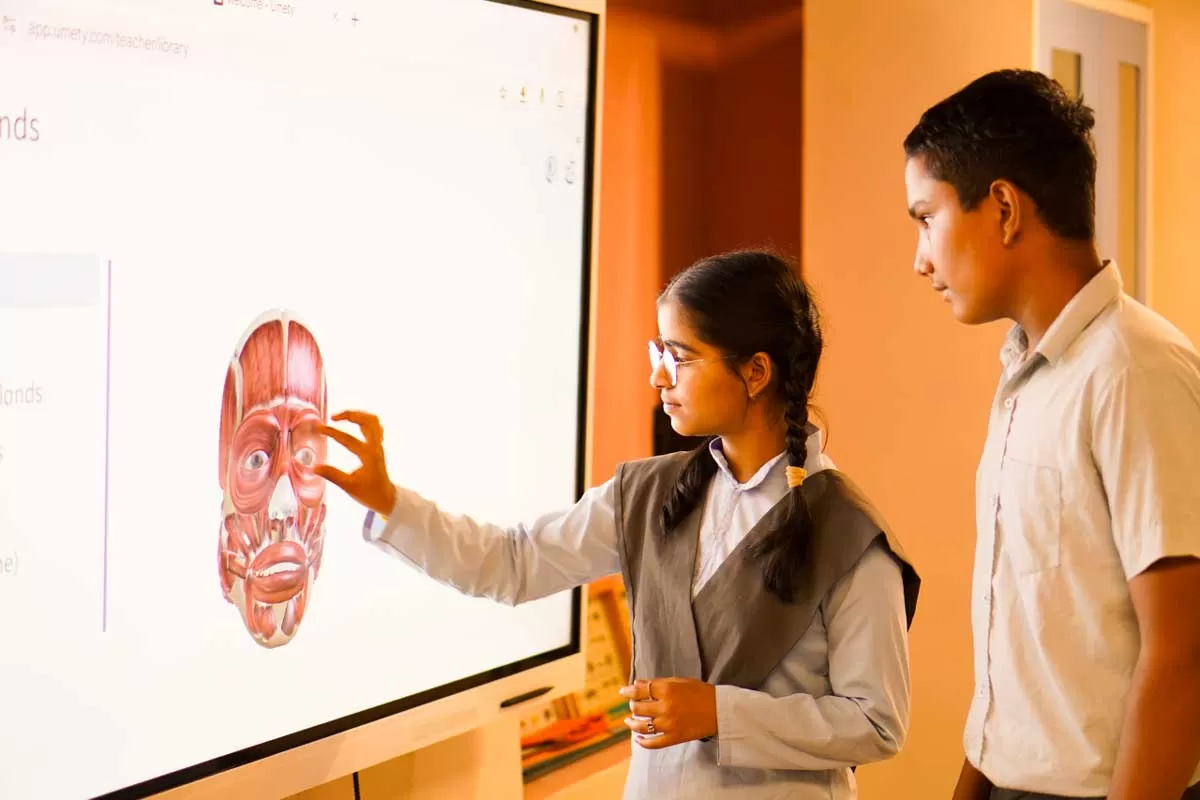
Hindustan Zinc, India’s largest integrated zinc producer, has launched four next-generation STEM (Science, Technology, Engineering, and Mathematics) labs in government schools across Rajasthan and Uttarakhand. The initiative, in collaboration with the Society for All Round Development (SARD), aims to transform learning through immersive, tech-enabled environments. 

Three of the labs are located in Udaipur — at Bichhadi, Dabok, and Zinc Smelter Senior Secondary Schools — while the fourth is at Government Girls Inter College, Pantnagar. Each lab is equipped with AI-enabled flat panels, AR/VR learning tools, and interactive infrastructure based on the Building as Learning Aid (BaLA) concept. 

Nearly 40 education officials, including DEOs and DIET Principals from around 30 districts, visited the sites in Udaipur for a first-hand experience of the facilities. 

Mridula Vyas, Principal, DIET (Mount Abu), said: “It has given us an insight into what science can be and how it can be made interesting without becoming a burden.” 
 Dr Arun Sharma, Professor, RSCERT, added: “Inside these walls, the whole world fits in... we can tour anywhere virtually, learn, and grow.” 

The initiative also includes teacher training, science fairs, and hackathons to promote experiential learning. Hindustan Zinc continues to expand its community outreach, impacting over 23 lakh people across 2,300 villages through education, skill-building, healthcare, and sustainability programmes. 

Hindustan Zinc, India’s largest integrated zinc producer, has launched four next-generation STEM (Science, Technology, Engineering, and Mathematics) labs in government schools across Rajasthan and Uttarakhand. The initiative, in collaboration with the Society for All Round Development (SARD), aims to transform learning through immersive, tech-enabled environments. Three of the labs are located in Udaipur — at Bichhadi, Dabok, and Zinc Smelter Senior Secondary Schools — while the fourth is at Government Girls Inter College, Pantnagar. Each lab is equipped with AI-enabled flat panels, AR/VR learning tools, and interactive infrastructure based on the Building as Learning Aid (BaLA) concept. Nearly 40 education officials, including DEOs and DIET Principals from around 30 districts, visited the sites in Udaipur for a first-hand experience of the facilities. Mridula Vyas, Principal, DIET (Mount Abu), said: “It has given us an insight into what science can be and how it can be made interesting without becoming a burden.”  Dr Arun Sharma, Professor, RSCERT, added: “Inside these walls, the whole world fits in... we can tour anywhere virtually, learn, and grow.” The initiative also includes teacher training, science fairs, and hackathons to promote experiential learning. Hindustan Zinc continues to expand its community outreach, impacting over 23 lakh people across 2,300 villages through education, skill-building, healthcare, and sustainability programmes. 

Next Story
Infrastructure Urban

India Expands Semiconductor Training To 500 Institutions

Under the Chips to Startups programme of the India Semiconductor Mission, the Union minister responsible for Railways, Information and Broadcasting, and Electronics and IT reported notable progress in talent development. He indicated that over the past four years substantial steps have been taken towards a 10-year target of training 85,000 engineers in semiconductor design. World-class EDA tools have been deployed in 315 academic institutions across the country to provide students with practical exposure to chip design. These EDA tools are supported by leading global firms and are accessible t..

Next Story
Infrastructure Urban

Delhi Institutions Support India Semiconductor Mission

The Government of India has prioritised talent development through training, upskilling and workforce development under the Chips to Startups initiative of the India Semiconductor Mission, with officials noting progress in four years towards a 10-year target of training 85,000 engineers in semiconductor design. Electronic design automation tools provided by Synopsys, Cadence, Siemens, Renesas, Ansys and AMD have been deployed in 315 academic institutions, enabling students to gain practical chip design experience. Chips have been fabricated and tested at the Semiconductor Laboratory, Mohali, a..

Next Story
Infrastructure Urban

NHA Announces Winners Of NHCX Hackathon At IIT Hyderabad

The National Health Authority (NHA) has concluded the NHCX Hackathon under the Ayushman Bharat Digital Mission (ABDM) to stimulate innovation around the National Health Claims Exchange (NHCX). The winning teams presented their solutions at the NHCX Innovation Meet held at IIT Hyderabad during a two-day event in March 2026 that also served as the hackathon grand finale. The hackathon itself ran from 22 to 28 February 2026 and aimed to accelerate paperless, transparent claims processing across India. The event was organised with a range of ecosystem partners, including the Insurance Regulatory a..

Advertisement

Subscribe to Our Newsletter

Get daily newsletters around different themes from Construction world.

STAY CONNECTED

Advertisement

Advertisement

Advertisement