Sustainability in focus for tiles, ceramics, sanitaryware
Read full article
CW Gold Benefits
- Weekly Industry Updates
- Industry Feature Stories
- Premium Newsletter Access
- Building Material Prices (weekly) + trends/analysis
- Best Stories from our sister publications - Indian Cement Review, Equipment India, Infrastructure Today
- Sector focused Research Reports
- Sector Wise Updates (infrastructure, cement, equipment & construction) + trend analysis
- Exclusive text & video interviews
- Digital Delivery
- Financial Data for publically listed companies + Analysis
- Preconceptual Projects in the pipeline PAN India
Related Stories



Gold Stories




JSW Motors Signs MoU with ARAI for Vehicle Development
JSW Motors, the passenger vehicle arm of JSW Group, has signed a memorandum of understanding (MoU) with the Automotive Research Association of India (ARAI) for technical collaboration on the design, validation and localisation of new energy vehicles (NEVs). The agreement is intended to create technical foundations for vehicles designed for Indian operating conditions. The companies will work on vehicle engineering and technical baselines, testing, validation and performance assessment, according to JSW Motors. Their programme will also cover advanced driver assistance systems (ADAS), battery s..

Karnataka Offers Support for Toyota Expansion Plans
Karnataka Chief Minister D K Shivakumar assured Toyota Motor Corporation of the state government’s support for expanding its manufacturing operations during a meeting with the company’s senior leadership in Japan. The discussions covered higher production, new mobility solutions and further investment in Karnataka, as Toyota looks to increase vehicle production capacity to 1 mn in the near future. Shivakumar was accompanied by M B Patil, Karnataka’s Minister for Large and Medium Industries and Infrastructure Development. The Toyota delegation was led by Masakazu Yoshimura, the company’..
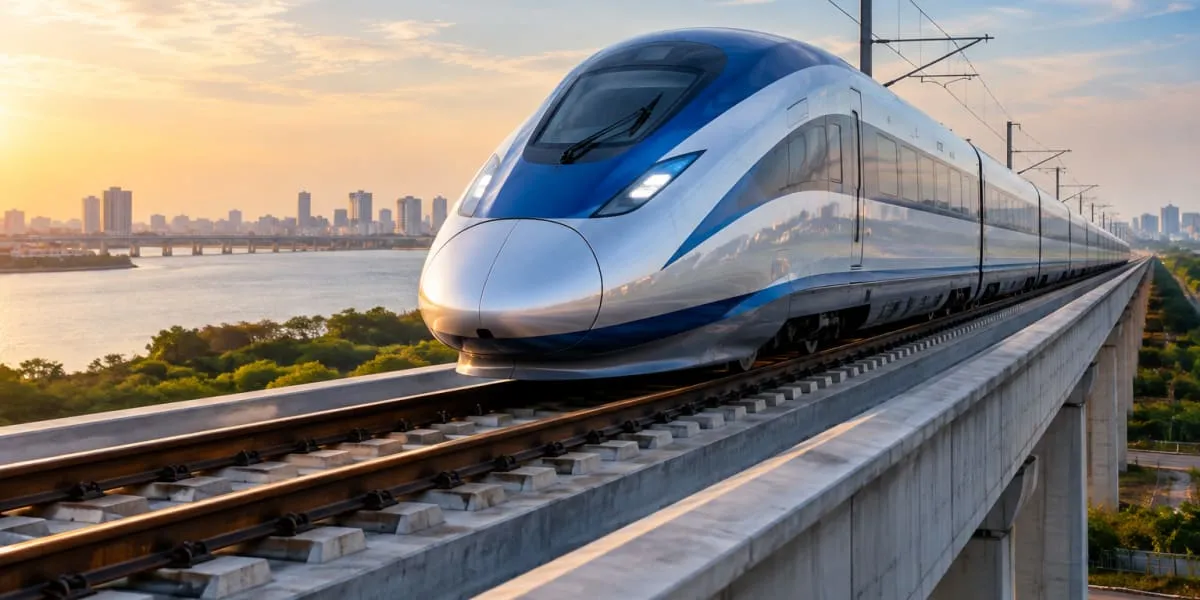
Railways to Begin Bullet Train Trial on Surat-Bilimora Section
Indian Railways will begin a trial run of its bullet train service on the 50 km Surat-Bilimora section by May 2027. The section is part of the Mumbai-Ahmedabad high-speed rail corridor and is expected to provide the first operational segment of the project. The trial will use an indigenous trainset capable of travelling at 280 km per hour. Railway Ministry sources said the first section of the corridor, extending from Surat to Vapi, is scheduled to become operational by the end of 2027. The planned trial marks a step towards introducing high-speed rail services on the corridor, which connects ..
Related Articles
Latest Updates