


Bright prospects for mobile cranes
Equipment

Bright prospects for mobile cranes

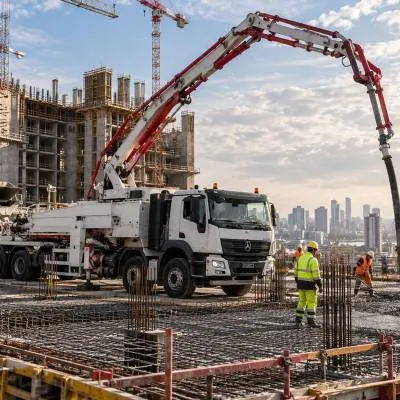
Mobile cranes in India have come a long way since being pioneered by Escorts about 40 years ago. Ajay Mandahr, CEO, Escorts Construction Equipment, reminisces that Escorts was the first to offer the Hydra range of cranes, which are capable of both lifting and carrying a load as against cranes that just lift and do not carry, and later introduced the Hi-PNC (new generation pick-‘n’-carry) crane. On the back of the great success of pick-‘n’-carry cranes, Escorts soon evolved into a leading player of mobile cranes globally.

Today, pick-‘n’-carry cranes and truck cranes are typically considered to make up the mobile cranes segment, which has been buoyant in the past two years, according to Pradeep Sharma, President, Action Construction Equipment. In the last year alone, he notes that mobile crane sales crossed the 11,000 unit mark, the highest ever in terms of volume. Sharma expects the demand for mobile cranes to touch all-time highs in coming years.

Mandahr reckons the annual demand for mobile cranes exceeds 10,000 units and expects this class to grow at a CAGR of 15-18 per cent over the next five to six years. According to him, infrastructure development, spanning roads, railways, etc, is the major driver of the market. “Mobile cranes also find use in the defence, industrial, housing and port-handling sectors. In future, we expect the housing sector to emerge as the next big driver to further propel this segment.”

Urban infrastructure such as metro projects across Tier-I and Tier-II cities; freight corridor, airport expansion and modernisation; Swachh Bharat and smart city projects; elevated roads, advanced rail networks and the upcoming bullet train project; infrastructure development including roads (Bharatmala), flyovers and bridges; and refinery expansion are driving the demand for mobile cranes, says Sharma.

CHARU BAHRI

Mobile cranes in India have come a long way since being pioneered by Escorts about 40 years ago. Ajay Mandahr, CEO, Escorts Construction Equipment, reminisces that Escorts was the first to offer the Hydra range of cranes, which are capable of both lifting and carrying a load as against cranes that just lift and do not carry, and later introduced the Hi-PNC (new generation pick-‘n’-carry) crane. On the back of the great success of pick-‘n’-carry cranes, Escorts soon evolved into a leading player of mobile cranes globally. Today, pick-‘n’-carry cranes and truck cranes are typically considered to make up the mobile cranes segment, which has been buoyant in the past two years, according to Pradeep Sharma, President, Action Construction Equipment. In the last year alone, he notes that mobile crane sales crossed the 11,000 unit mark, the highest ever in terms of volume. Sharma expects the demand for mobile cranes to touch all-time highs in coming years. Mandahr reckons the annual demand for mobile cranes exceeds 10,000 units and expects this class to grow at a CAGR of 15-18 per cent over the next five to six years. According to him, infrastructure development, spanning roads, railways, etc, is the major driver of the market. “Mobile cranes also find use in the defence, industrial, housing and port-handling sectors. In future, we expect the housing sector to emerge as the next big driver to further propel this segment.” Urban infrastructure such as metro projects across Tier-I and Tier-II cities; freight corridor, airport expansion and modernisation; Swachh Bharat and smart city projects; elevated roads, advanced rail networks and the upcoming bullet train project; infrastructure development including roads (Bharatmala), flyovers and bridges; and refinery expansion are driving the demand for mobile cranes, says Sharma. CHARU BAHRI

Next Story
Infrastructure Transport

Kavach 4.0 Commissioned on Delhi–Mumbai and Delhi–Howrah

"Kavach version four has been commissioned on 1,452 route km, covering the high density Delhi–Mumbai and Delhi–Howrah corridors. The rollout included laying 8,570 km of optical fibre, installation of 1,100 telecom towers, deployment of trackside equipment over 6,776 RKm and establishment of 767 station data centres. Trackside implementation has been taken up on 24,427 RKm covering Golden Quadrilateral, Golden Diagonal and High Density Network sections. The programme aims to strengthen signalling and train protection on key routes.Kavach is an indigenously developed automatic train protecti..

Next Story
Infrastructure Transport

Railways Advance Kalyan–Murbad Line And Mumbai Capacity Expansion

"Indian Railways is advancing multiple rail infrastructure projects in Maharashtra, including the sanctioned Kalyan–Murbad new line and sizable investments under the Mumbai Urban Transport Project and the Mumbai–Ahmedabad High Speed Rail project. The Kalyan–Murbad 28 km new line has been sanctioned at Rs 8.36 billion (bn) on a 50:50 cost-sharing basis with the Government of Maharashtra and has been declared a Special Railway Project for land acquisition; proposals covering 214 hectares are at various stages of acquisition. Budgetary outlay for projects falling fully or partly in Maharash..

Next Story
Infrastructure Urban

Parliamentary Panel Flags Funding Gaps in Heavy Industries

"The Department-Related Parliamentary Standing Committee on Industry (Rajya Sabha) presented its 332nd report on the Demands for Grants 2026-27 of the Ministry of Heavy Industries (MHI). Figures converted from crore and lakh are expressed in million (mn). The Budget Estimates 2026-27 for the Ministry stand at Rs 79,399 mn against a projected requirement of Rs 94,843.2 mn, a shortfall of about 16 per cent, with revenue at Rs 79,370.8 mn and capital compressed to Rs 28.2 mn from Rs 5,020 mn.The committee flagged recurring BE-to-RE compression and declining revised estimate utilisation, and calle..

Advertisement

Subscribe to Our Newsletter

Get daily newsletters around different themes from Construction world.

STAY CONNECTED

Advertisement

Advertisement

Advertisement