


Sale of epoxy bars helped the company capture a completely new market

Over 25 mt of steel is produced every year on induction furnaces manufactured by Electrotherm, established in 1982, and supplied in 52 different countries around the world. The company has a state-of-the-art fully integrated steel and pipe plant in Kutch, Gujarat. The integrated steel plant comprises a blast furnace, sinter plant, induction melting furnace, ladle refining furnace, rolling mills and ductile pipe-making facilities. The company is the market leader in Gujarat for its TMT bars and is among the largest ductile iron pipe producers in the country.
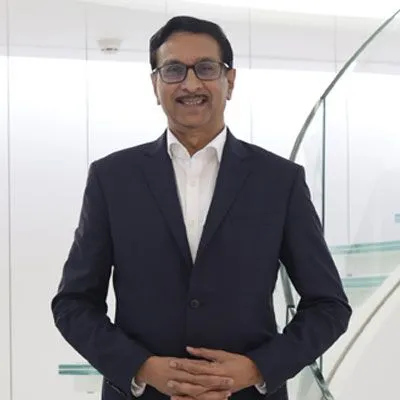
Besides engineering and steel, the company has presence in electric vehicles, transformers, transmission line towers and education. It achieved gross integrated sales of Rs 46.81 billion in FY18-19, registering a growth of 31.66 per cent over the previous year. Over the past 35 years, the company has not only built highly technological and difficult-to-replicate businesses but strong brands and products utilising these technologies. Shailesh Bhandari, Managing Director, Electrotherm India, shares more….
Name one major challenge faced in FY2018-19. How did the company approach the same?
The company increased its steel and TMT manufacturing capacity in FY17-18. However, 18-19 was turning out to be a slow year with respect to steel demand. Also, the demand was shifting from lower-quality grades like Fe500 to more critical grades like Fe500D and Fe550D. More demand was coming from the infrastructure sector where, traditionally, the company did not have a strong presence. The company initiated major sales and marketing efforts to position itself in the infrastructure material supplies space and the team worked hard to put various government approvals in place. This helped the company increase its TMT bars sale from 400,642 tonne to 526,900 tonne, an increase of 31.51 per cent in a slow market.
What is one decision you consider the biggest contributor to the company’s growth in FY2018-19?
The company saw major demand coming from critical infrastructure projects for products like epoxy-coated TMT bars, especially in the Mumbai region (costal belt).There was no integrated producer in the country of these coated bars. The company saw this as a big opportunity and set up its epoxy-coated plant with India’s first BIS certification. The sale of epoxy bars alone contributed to Rs 1.07 billion in FY18-19 and helped the company capture a completely new market where it did not have a presence earlier.
Name one single factor that you avoided, which could otherwise have impacted the company’s topline and bottomline.
The steel market in FY18-19 was extremely volatile and prices were fluctuating widely. The company adopted the policy of not booking larger quantities of raw material and selling larger quantities of finished goods at one go. This ensured that the average realisation of finished goods and average cost of raw material balanced with each other and generated good margins for the company in a difficult market.
Going forward, what are your plans for the company’s growth in FY2019-20?
The company has established a strong presence for its ET TMT bars in the infrastructure space. It is seeing increasing demand coming from this sector, where more and more roads, bridges, tunnels, ports and airports are being built. The company expects and plans to sell over 0.5 million tonne of TMT, epoxy-coated and C&B bars during the year, all produced using the state-of-the-art integrated induction-LRF technology to achieve a sizeable growth in the TMT market.
Read on the CW Top Challengers selection criteria and methodology at https://www.constructionworld.in/articles/beststories/CW-identifies-the-Top-Challengers-of-FY2019/21687
Related Stories
Gold Stories


KONE Opens India's First Digital Experience Centre in Pune
KONE, a global elevator and escalator manufacturer, has inaugurated its first Digital Experience Centre (DEC) in India, located in Pune. The facility aims to showcase how artificial intelligence (AI), connectivity and data-driven technologies can enhance customer experiences and improve building operations.The centre was inaugurated by Jussi Herlin, Executive Vice Chair, KONE Corporation; Philippe Delorme, President and CEO, KONE; and Nandan Nilekani, Co-founder and Chairman of the Board, Infosys.Designed as an interactive customer environment, the facility demonstrates digital solutions cover..

CII GreenCo Launches Circularity Guidelines for Indian Industry
The Confederation of Indian Industry (CII) GreenCo Council has launched the CII GreenCo Circularity Guidelines – Pilot Version at the 17th CII GreenCo Waste & Resource Management Summit 2026 in Chennai. The initiative aims to strengthen resource efficiency, waste reduction and circular economy practices across Indian manufacturing and process industries.The guidelines introduce a structured framework with circularity indices covering raw materials, consumables, packaging and other resource inputs. These indicators will help industries assess existing practices, identify opportunities to ..

Global Electronics Association Launches IPC-1783-CO2E Standard
The Global Electronics Association has introduced IPC-1783-CO2E, a new international standard aimed at improving consistency, transparency and comparability in product carbon footprint reporting across the electronics manufacturing industry.The standard, titled International Standard for Data Collection and Reporting of CO2 Equivalent (CO2e) Emissions for the Electronics Manufacturing Supply Chain, provides industry-specific guidance for collecting, estimating and reporting carbon emissions data.With increasing regulatory requirements and customer expectations, electronics manufacturers face c..
Related Articles
Latest Updates












