Airlines Shun Rs 100 Billion ATF Subsidy As Fuel Prices Fall
AVIATION & AIRPORTS

Airlines Shun Rs 100 Billion ATF Subsidy As Fuel Prices Fall

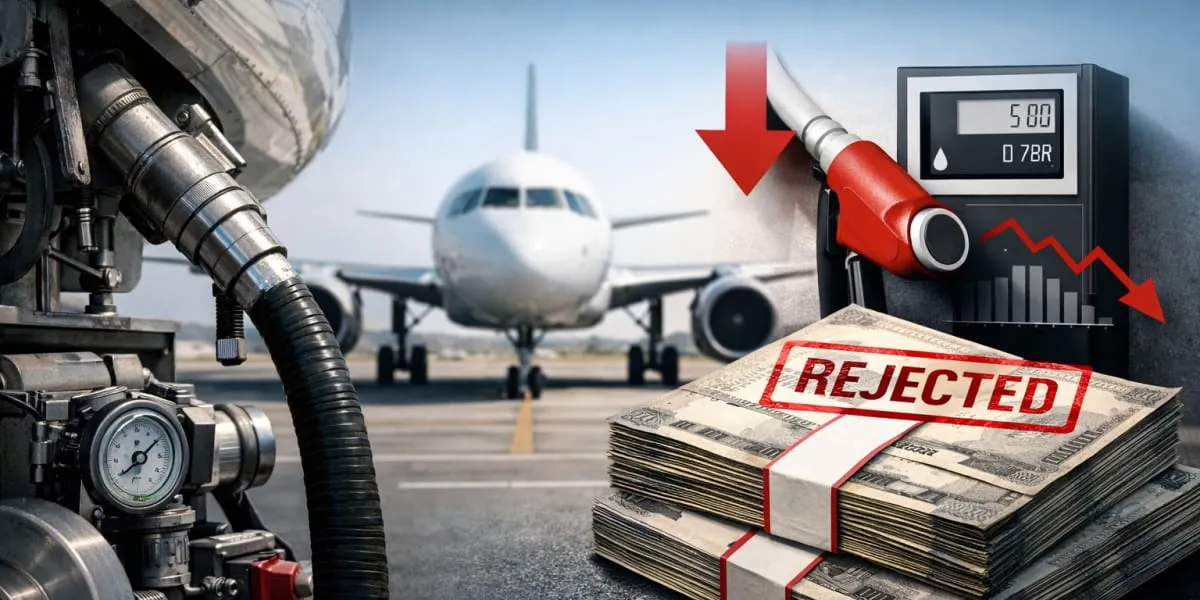
Airlines have declined a Rs 100 billion (bn) aviation turbine fuel (ATF) subsidy after domestic jet fuel prices fell, reducing the need for state aid. The scheme had been unveiled to shield carriers from a sustained period of elevated fuel expenses but the recent easing of input costs led operators to forgo the benefit. The move reflects a shift in industry sentiment as carriers recalibrate cost management strategies in response to market movements.

The subsidy, sized at Rs 100 billion (bn), represented a sizeable fiscal measure that the aviation sector could have drawn on when crude linked prices were high. With jet fuel rates easing, carriers preferred to avoid the administrative burden of claiming relief and to reallocate managerial focus to route planning and capacity deployment. Industry observers said the decision will conserve government resources while testing the resilience of carrier margins to price volatility.

Smaller regional carriers that operate on thinner margins had the option of tapping the scheme but generally opted to manage liquidity through working capital and network adjustments. The absence of heavy take up keeps a larger share of public finances available for alternative interventions across the transport and energy sectors. Market participants indicated that the outcome underscores how rapidly changing commodity cycles can alter policy utility and corporate decision making.

The government will review the budgetary implications and consider whether to reassign unused allocations to other pressing priorities in the logistics and transport space. Aviation companies will continue to monitor international crude benchmarks and domestic retail rates to determine future requests for support. The episode highlighted the interaction between commodity price cycles and state support frameworks as both policymakers and corporate managers seek to balance fiscal prudence with sectoral stability. Stakeholders will assess whether alternative instruments provide timely and proportionate relief for future price cycles.

"Join industry leaders at RAHSTA Expo, India's premier platform for roads, highways and traffic infrastructure. Register now to explore innovations, network with experts and shape the future of mobility."

Airlines have declined a Rs 100 billion (bn) aviation turbine fuel (ATF) subsidy after domestic jet fuel prices fell, reducing the need for state aid. The scheme had been unveiled to shield carriers from a sustained period of elevated fuel expenses but the recent easing of input costs led operators to forgo the benefit. The move reflects a shift in industry sentiment as carriers recalibrate cost management strategies in response to market movements. The subsidy, sized at Rs 100 billion (bn), represented a sizeable fiscal measure that the aviation sector could have drawn on when crude linked prices were high. With jet fuel rates easing, carriers preferred to avoid the administrative burden of claiming relief and to reallocate managerial focus to route planning and capacity deployment. Industry observers said the decision will conserve government resources while testing the resilience of carrier margins to price volatility. Smaller regional carriers that operate on thinner margins had the option of tapping the scheme but generally opted to manage liquidity through working capital and network adjustments. The absence of heavy take up keeps a larger share of public finances available for alternative interventions across the transport and energy sectors. Market participants indicated that the outcome underscores how rapidly changing commodity cycles can alter policy utility and corporate decision making. The government will review the budgetary implications and consider whether to reassign unused allocations to other pressing priorities in the logistics and transport space. Aviation companies will continue to monitor international crude benchmarks and domestic retail rates to determine future requests for support. The episode highlighted the interaction between commodity price cycles and state support frameworks as both policymakers and corporate managers seek to balance fiscal prudence with sectoral stability. Stakeholders will assess whether alternative instruments provide timely and proportionate relief for future price cycles.

Next Story
Real Estate

SNN Estates Expands North Bengaluru Housing Project

SNN Estates has announced an expansion of its SNN Estates Felicity residential project in North Bengaluru following strong buyer demand, with 75 per cent of the first-phase inventory sold within three days of launch.The developer will add 76 apartments in the new phase, taking the project's estimated revenue potential to around Rs 1,000 crore upon completion of Phase 2.Spread across 6.5 acres in Rachenahalli, near Manyata Tech Park, the project comprises 604 apartments in 1.5, 2, 2.5, 3 and 4 BHK configurations. The development includes a 50,000-sq-ft clubhouse with amenities such as sports co..

Next Story
Infrastructure Urban

SCG Drives ASEAN Industrial Transformation Strategy

SCG is strengthening its focus on ASEAN as a key growth region by advancing industrial transformation, enhancing competitiveness and building resilient regional value chains. Thammasak Sethaudom, President and Chief Executive Officer, SCG, highlighted the need for industries to continuously develop capabilities, strengthen resilience and deepen regional cooperation to achieve sustainable long-term growth.SCG views ASEAN as an important growth engine alongside China, supported by favourable demographics, trade connectivity and investment flows. With ASEAN’s GDP projected to grow by around 4.7..

Next Story
Products

EUROBOND Expands NABL Accreditation to 51 Testing Parameters

EUROBOND, the flagship brand of Euro Panel Products, has expanded the National Accreditation Board for Testing and Calibration Laboratories (NABL) accreditation of its in-house laboratory from 16 to 51 mechanical and chemical testing parameters, making it the only Indian aluminium composite panel (ACP) manufacturer with accreditation covering such an extensive testing scope.The expanded accreditation enables the company to independently test coils, coatings, cores, aluminium composite panels (ACP) and metal composite panels (MCP) in accordance with international standards, including IS, ASTM, ..

Advertisement

Subscribe to Our Newsletter

Get daily newsletters around different themes from Construction world.

STAY CONNECTED

Advertisement

Advertisement

Advertisement