+
Noida Airport Direct Namo Bharat RRTS Gets Major Update
AVIATION & AIRPORTS

Noida Airport Direct Namo Bharat RRTS Gets Major Update

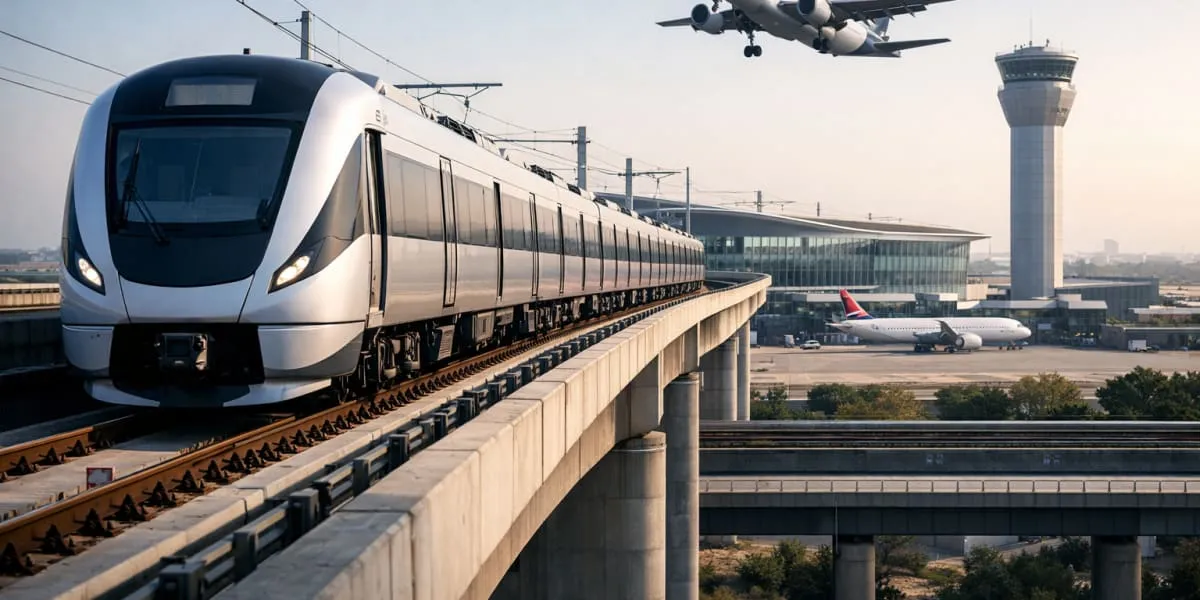
NCRTC has completed the early detailed project report for the Ghaziabad-Jewar Namo Bharat regional rapid transit system (RRTS), which will provide a direct link to Noida International Airport at Jewar. The corridor covers 72.5 km and the project is estimated to cost around Rs 206.4 bn. Authorities had explored a direct route from Sarai Kale Khan in Delhi to Jewar but ultimately shelved that option in favour of the Ghaziabad alignment.

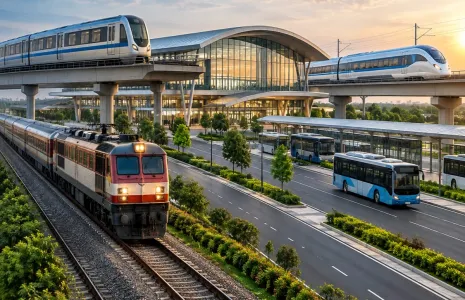
The alignment will include 23 stations in total, beginning at Ghaziabad Namo Bharat station and terminating at Jewar. Of these, 21 stations will be elevated while the airport station will be constructed underground to connect with Terminal-1 and the Ground Transportation Centre. The design aims to facilitate seamless transfer between long distance RRTS services and airport facilities.

The corridor will accommodate both high speed Namo Bharat regional trains and slower local metro trains on the same alignment, enabling differentiated services. Local metro trains will serve 18 stations between Ghaziabad and Ecotech-VI, while Namo Bharat express services will stop at 11 principal stations, with seven locations designated as interchange points for both services. This arrangement is intended to balance rapid airport connectivity with comprehensive local coverage.

The route has been divided into two sections, the first spanning 39.4 km from Ghaziabad to Ecotech-VI via Siddharth Vihar, Greater Noida West and Knowledge Park-V, and the second covering 33.1 km from Ecotech-VI to the airport via Dankaur and YEIDA industrial sectors. Overall 31.8 km of the corridor will be elevated and 1.3 km will be underground near the terminal. Once operational, travel time from Noida International Airport to Ghaziabad is expected to be under 50 minutes, to Sarai Kale Khan under 70 minutes, to Delhi Aerocity under 80 minutes and to Begumpul in Meerut under 85 minutes. Commuters from Delhi and Meerut will be able to interchange at Ghaziabad without leaving the rapid rail network.

NCRTC has completed the early detailed project report for the Ghaziabad-Jewar Namo Bharat regional rapid transit system (RRTS), which will provide a direct link to Noida International Airport at Jewar. The corridor covers 72.5 km and the project is estimated to cost around Rs 206.4 bn. Authorities had explored a direct route from Sarai Kale Khan in Delhi to Jewar but ultimately shelved that option in favour of the Ghaziabad alignment. The alignment will include 23 stations in total, beginning at Ghaziabad Namo Bharat station and terminating at Jewar. Of these, 21 stations will be elevated while the airport station will be constructed underground to connect with Terminal-1 and the Ground Transportation Centre. The design aims to facilitate seamless transfer between long distance RRTS services and airport facilities. The corridor will accommodate both high speed Namo Bharat regional trains and slower local metro trains on the same alignment, enabling differentiated services. Local metro trains will serve 18 stations between Ghaziabad and Ecotech-VI, while Namo Bharat express services will stop at 11 principal stations, with seven locations designated as interchange points for both services. This arrangement is intended to balance rapid airport connectivity with comprehensive local coverage. The route has been divided into two sections, the first spanning 39.4 km from Ghaziabad to Ecotech-VI via Siddharth Vihar, Greater Noida West and Knowledge Park-V, and the second covering 33.1 km from Ecotech-VI to the airport via Dankaur and YEIDA industrial sectors. Overall 31.8 km of the corridor will be elevated and 1.3 km will be underground near the terminal. Once operational, travel time from Noida International Airport to Ghaziabad is expected to be under 50 minutes, to Sarai Kale Khan under 70 minutes, to Delhi Aerocity under 80 minutes and to Begumpul in Meerut under 85 minutes. Commuters from Delhi and Meerut will be able to interchange at Ghaziabad without leaving the rapid rail network.

Related Stories

Gold Stories

Next Story
Real Estate

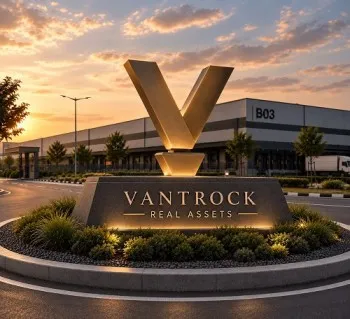
Anshul Singhal launches Vantrock with Rs 42 billion development plan

Real estate professional Anshul Singhal has launched Vantrock Real Assets Private Limited (VRAPL), a Mumbai-headquartered platform focused initially on warehousing, industrial and logistics parks. The company plans to develop approximately 11.5 million sq ft of assets, with an estimated gross development value (GDV) of Rs 42 billion (approximately USD 434 million) on completion.The first phase will cover around 3 million sq ft across the National Capital Region (NCR), Bengaluru and Pune, with an estimated development value of Rs 11 billion (approximately USD 113 million). Construction is sched..
Next Story
Infrastructure Transport

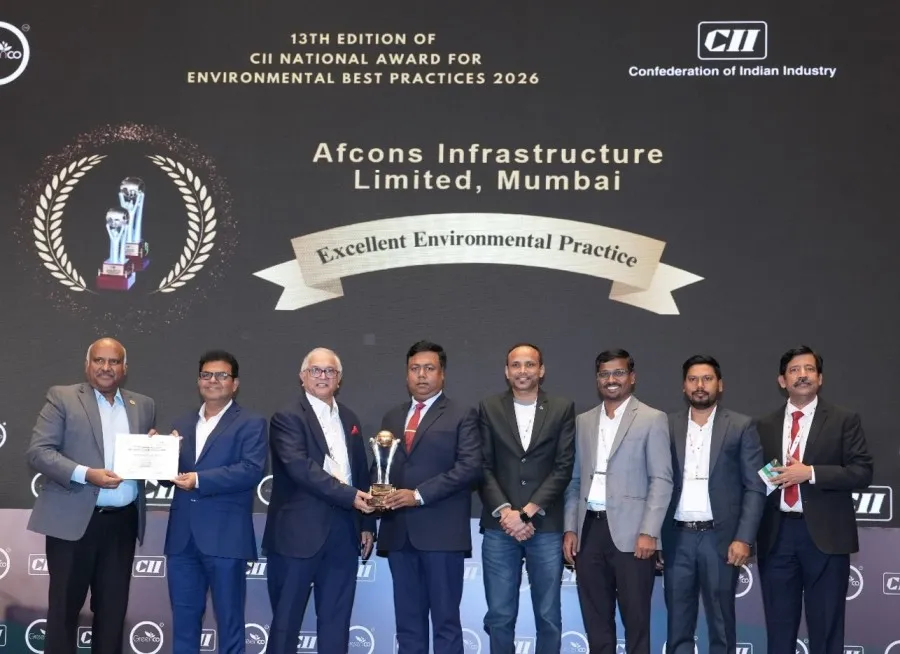
Afcons wins CII award for biodiversity management

Afcons Infrastructure has received the Confederation of Indian Industry (CII) National Award for Environmental Best Practices 2026 in the Biodiversity Management category for its work on the Mumbai-Ahmedabad High Speed Rail Project’s C-2 package.The award was presented at a ceremony in Chennai on 9 October 2026. It was received by Mihir Mishra, Vice-President, CPE, and Sumon Paul, Assistant General Manager, HSE, along with the Afcons team.The project adopted several resource recovery and waste management practices. These included recycling concrete washout waste to recover sand, aggregates a..
Next Story
Technology

Indian businesses lead globally in planned AI investment, says Autodesk

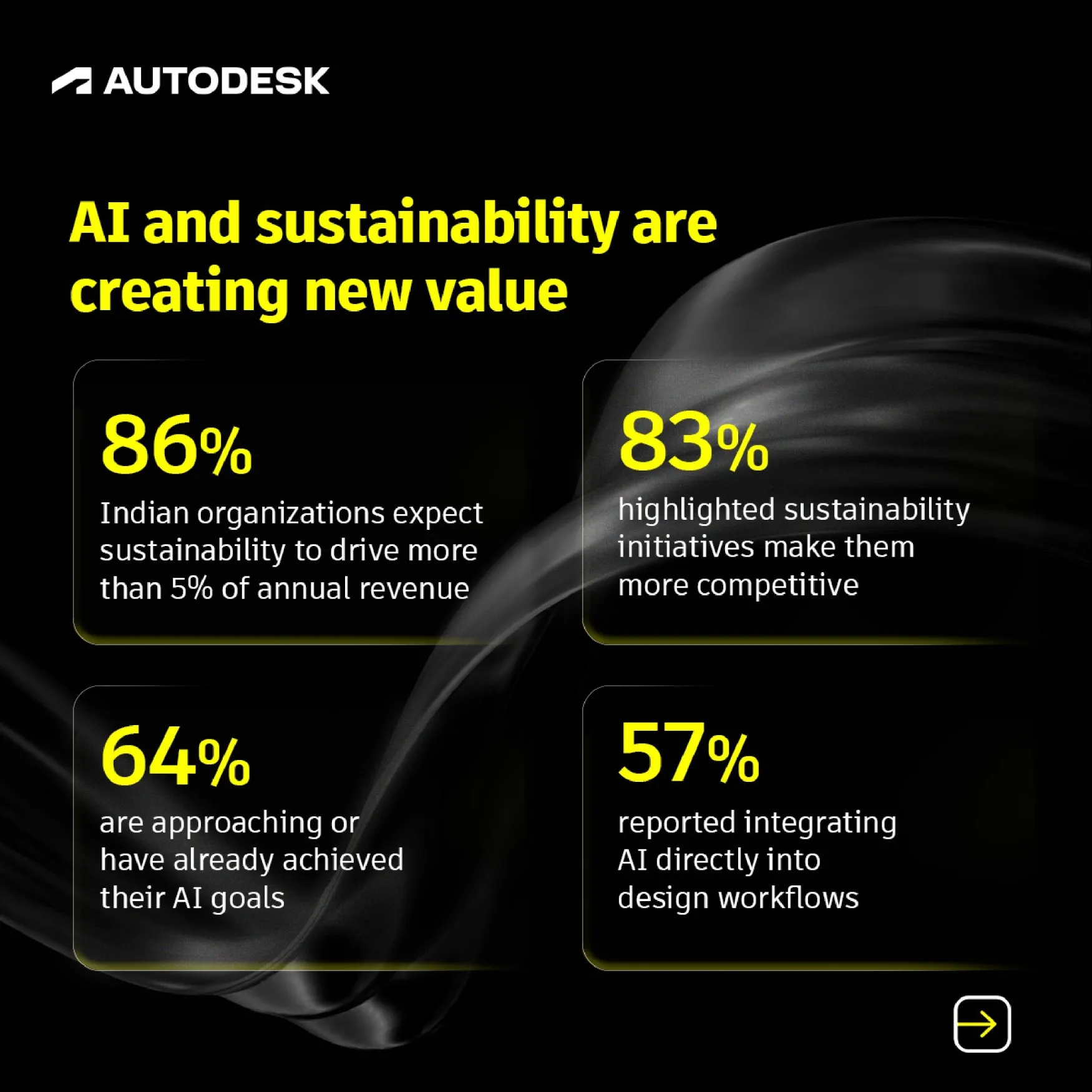
Indian organisations are moving towards deeper integration of artificial intelligence (AI), digital technologies and sustainability into business operations, according to Autodesk’s 2026 State of Design & Make report. The fourth edition of the annual study highlights growing AI adoption, measurable outcomes from digital transformation and the role of sustainability in long-term business growth.The report found that 64 per cent of Indian organisations are approaching or have achieved their current AI goals. While 88 per cent believe AI will enhance their industry, up from 78 per cent in 2..

Advertisement

Subscribe to Our Newsletter

Get daily newsletters around different themes from Construction world.

STAY CONNECTED

Advertisement

SPECIAL OFFER
QR Code