DRDL Achieves Breakthrough in Hypersonic Missile Engine Tests
AVIATION & AIRPORTS

DRDL Achieves Breakthrough in Hypersonic Missile Engine Tests

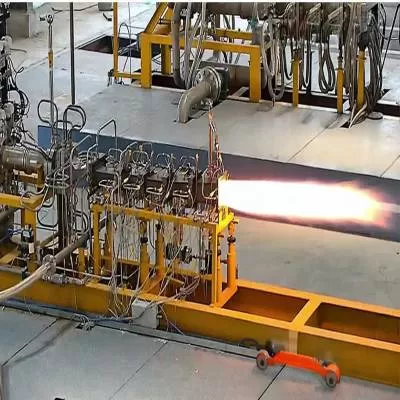
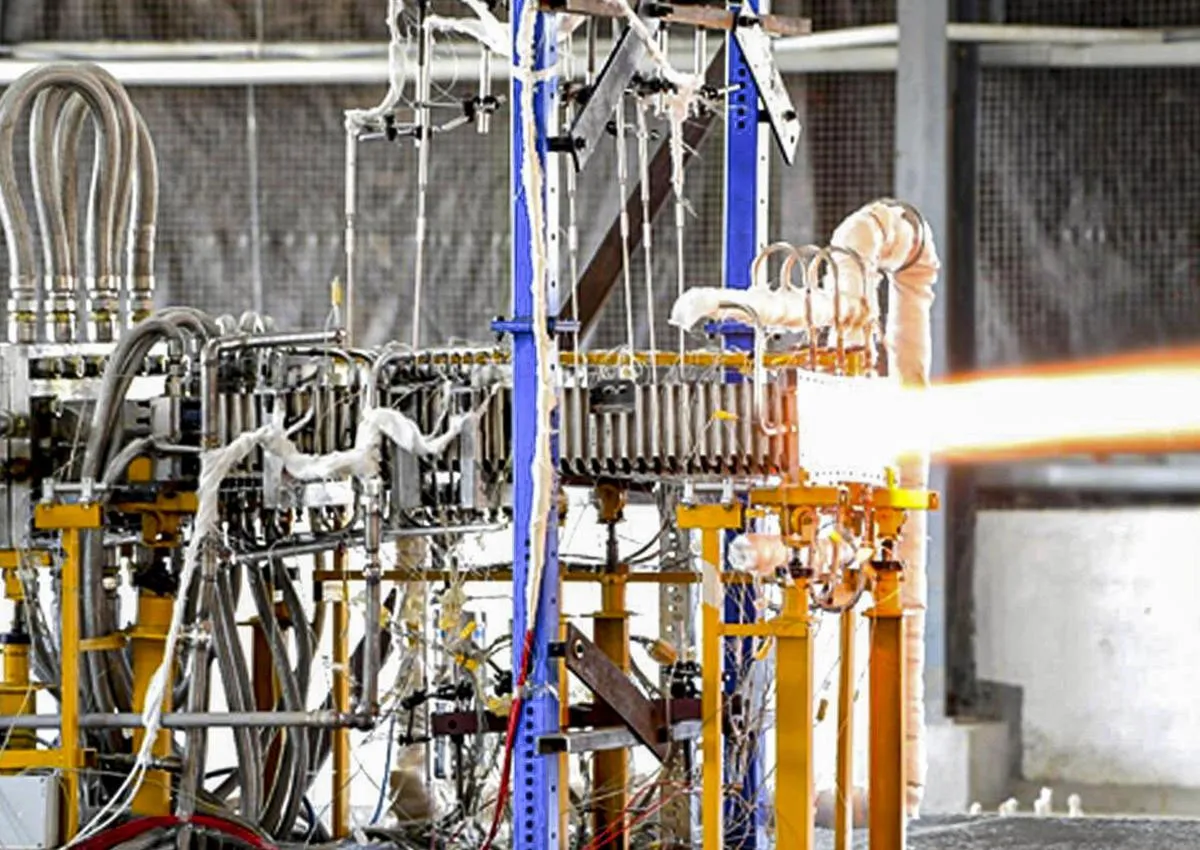
The Defence Research & Development Laboratory (DRDL), a Hyderabad-based laboratory of the Defence Research and Development Organisation (DRDO), has recently achieved a major milestone in the development of hypersonic missile technology. The laboratory successfully conducted a long-duration ground test of its Actively Cooled Scramjet Full Scale Combustor, recording a run time of over 12 minutes at the Scramjet Connect Pipe Test (SCPT) Facility on 9 January 2026.
This achievement builds on an earlier successful subscale long-duration test carried out in April 2025 and represents a significant advancement in India’s hypersonic cruise missile programme. The combustor and the associated test facility were designed and developed by DRDL and realised with support from industry partners.
A hypersonic cruise missile is capable of travelling at speeds exceeding Mach 5, or more than 6,100 km per hour, for sustained durations. This capability is enabled by an advanced air-breathing scramjet engine that uses supersonic combustion. The recent ground tests at the SCPT facility validated both the design of the full-scale scramjet combustor and the performance of the state-of-the-art testing infrastructure.
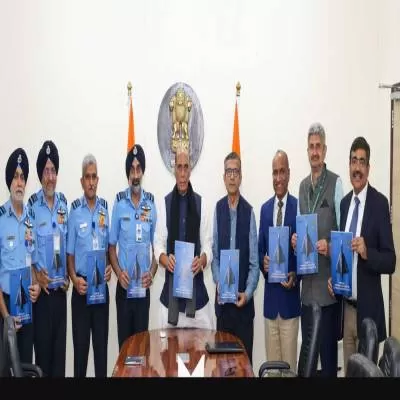
Rajnath Singh, Raksha Mantri, congratulated DRDO, its industry partners and academia on the successful test, describing it as a strong foundation for the nation’s hypersonic cruise missile development programme.
Samir V Kamat, Secretary, Department of Defence R&D and Chairman of DRDO, also commended the teams involved for the achievement, highlighting its importance in strengthening India’s advanced aerospace and defence capabilities.

The Defence Research & Development Laboratory (DRDL), a Hyderabad-based laboratory of the Defence Research and Development Organisation (DRDO), has recently achieved a major milestone in the development of hypersonic missile technology. The laboratory successfully conducted a long-duration ground test of its Actively Cooled Scramjet Full Scale Combustor, recording a run time of over 12 minutes at the Scramjet Connect Pipe Test (SCPT) Facility on 9 January 2026.This achievement builds on an earlier successful subscale long-duration test carried out in April 2025 and represents a significant advancement in India’s hypersonic cruise missile programme. The combustor and the associated test facility were designed and developed by DRDL and realised with support from industry partners.A hypersonic cruise missile is capable of travelling at speeds exceeding Mach 5, or more than 6,100 km per hour, for sustained durations. This capability is enabled by an advanced air-breathing scramjet engine that uses supersonic combustion. The recent ground tests at the SCPT facility validated both the design of the full-scale scramjet combustor and the performance of the state-of-the-art testing infrastructure.Rajnath Singh, Raksha Mantri, congratulated DRDO, its industry partners and academia on the successful test, describing it as a strong foundation for the nation’s hypersonic cruise missile development programme.Samir V Kamat, Secretary, Department of Defence R&D and Chairman of DRDO, also commended the teams involved for the achievement, highlighting its importance in strengthening India’s advanced aerospace and defence capabilities.

Next Story
Infrastructure Urban

India Expands Semiconductor Training To 500 Institutions

Under the Chips to Startups programme of the India Semiconductor Mission, the Union minister responsible for Railways, Information and Broadcasting, and Electronics and IT reported notable progress in talent development. He indicated that over the past four years substantial steps have been taken towards a 10-year target of training 85,000 engineers in semiconductor design. World-class EDA tools have been deployed in 315 academic institutions across the country to provide students with practical exposure to chip design. These EDA tools are supported by leading global firms and are accessible t..

Next Story
Infrastructure Urban

Delhi Institutions Support India Semiconductor Mission

The Government of India has prioritised talent development through training, upskilling and workforce development under the Chips to Startups initiative of the India Semiconductor Mission, with officials noting progress in four years towards a 10-year target of training 85,000 engineers in semiconductor design. Electronic design automation tools provided by Synopsys, Cadence, Siemens, Renesas, Ansys and AMD have been deployed in 315 academic institutions, enabling students to gain practical chip design experience. Chips have been fabricated and tested at the Semiconductor Laboratory, Mohali, a..

Next Story
Infrastructure Urban

NHA Announces Winners Of NHCX Hackathon At IIT Hyderabad

The National Health Authority (NHA) has concluded the NHCX Hackathon under the Ayushman Bharat Digital Mission (ABDM) to stimulate innovation around the National Health Claims Exchange (NHCX). The winning teams presented their solutions at the NHCX Innovation Meet held at IIT Hyderabad during a two-day event in March 2026 that also served as the hackathon grand finale. The hackathon itself ran from 22 to 28 February 2026 and aimed to accelerate paperless, transparent claims processing across India. The event was organised with a range of ecosystem partners, including the Insurance Regulatory a..

Advertisement

Subscribe to Our Newsletter

Get daily newsletters around different themes from Construction world.

STAY CONNECTED

Advertisement

Advertisement

Advertisement