GMR Group partners with Safran to build largest engine MRO Facility
AVIATION & AIRPORTS

GMR Group partners with Safran to build largest engine MRO Facility

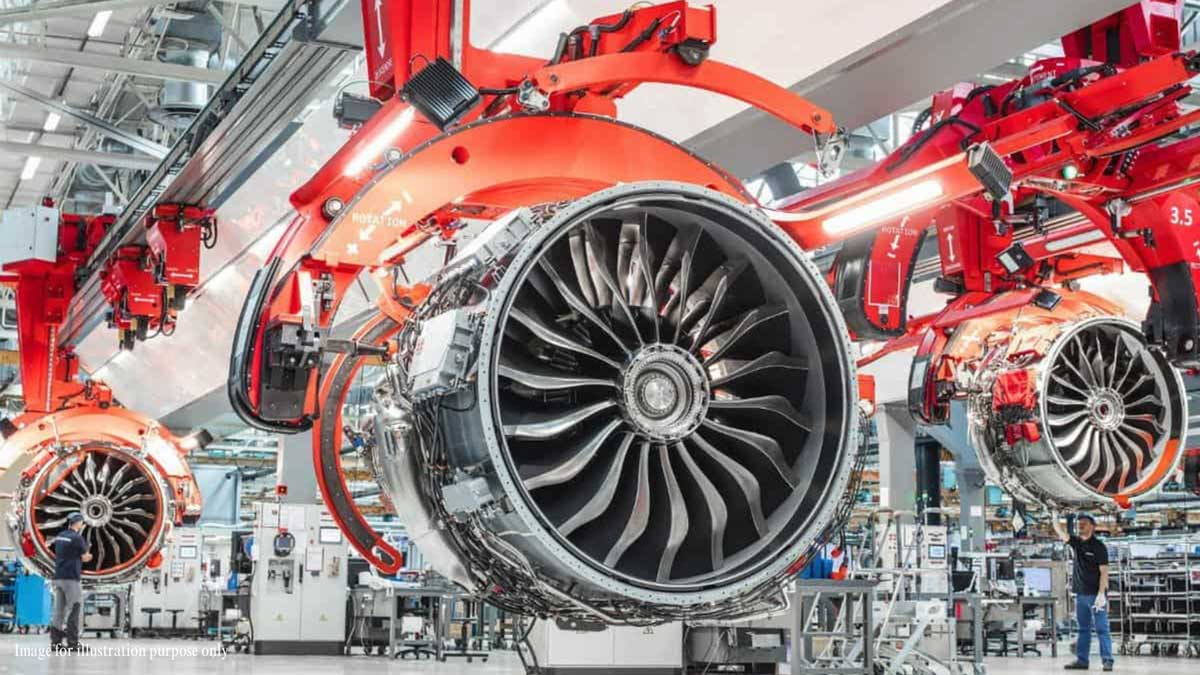
GMR Hyderabad Aviation SEZ (GHASL), a company under the GMR Group, recently inked a Land Lease Agreement with Safran Aircraft Engines Services India, a subsidiary of Safran, the Paris-based aerospace company. The agreement grants Safran the lease of land within the SEZ area of GMR Aerospace and Industrial Park in Hyderabad. The purpose of the lease is for Safran to construct and operate an Engine MRO facility dedicated to LEAP turbofan engines. According to a press release by GMR, the facility will cover an area of 23.5 acres and will have a built-up space of approximately 36,500 sqm.

Initially, the facility will have the capacity to service 100 engines per year, with plans to gradually increase that number to around 300 engines by 2035. The establishment of this facility is expected to create numerous employment opportunities in the state of Telangana, as stated by a GMR official. Construction of the facility is scheduled to commence in September 2023, and it is projected to be completed and handed over by December 2024. Upon its completion, the Safran MRO facility in Hyderabad will become the largest maintenance, repair, and overhaul centre in the Safran Aircraft Engines network. Operations are set to begin in 2025, employing approximately 1,000 workers at its peak operation capacity.

Aman Kapoor, CEO of GMR Airport Land Development, expressed enthusiasm about the selection of GMR Industrial Park as the location for Safran's large-scale Engine MRO. Nicolas Potier, Vice-President of Support and Services at Safran Aircraft Engines, extended congratulations to GMR for being chosen and highlighted the significance of this MRO project as a major investment in Safran's future in India. Potier emphasised that the new facility would increase capacity to support airline operations and contribute to the growth of the aeronautical ecosystem around Hyderabad International Airport.

In addition to the new MRO facility, Safran already operates two industrial facilities for Cable Harnessing and Aircraft Engine Component manufacturing within the SEZ area of GMR Aerospace & Industrial Park. Furthermore, CFM, a joint venture between Safran and GE, operates an Engine Maintenance training facility at the park.

GMR Hyderabad Aviation SEZ (GHASL), a company under the GMR Group, recently inked a Land Lease Agreement with Safran Aircraft Engines Services India, a subsidiary of Safran, the Paris-based aerospace company. The agreement grants Safran the lease of land within the SEZ area of GMR Aerospace and Industrial Park in Hyderabad. The purpose of the lease is for Safran to construct and operate an Engine MRO facility dedicated to LEAP turbofan engines. According to a press release by GMR, the facility will cover an area of 23.5 acres and will have a built-up space of approximately 36,500 sqm.Initially, the facility will have the capacity to service 100 engines per year, with plans to gradually increase that number to around 300 engines by 2035. The establishment of this facility is expected to create numerous employment opportunities in the state of Telangana, as stated by a GMR official. Construction of the facility is scheduled to commence in September 2023, and it is projected to be completed and handed over by December 2024. Upon its completion, the Safran MRO facility in Hyderabad will become the largest maintenance, repair, and overhaul centre in the Safran Aircraft Engines network. Operations are set to begin in 2025, employing approximately 1,000 workers at its peak operation capacity.Aman Kapoor, CEO of GMR Airport Land Development, expressed enthusiasm about the selection of GMR Industrial Park as the location for Safran's large-scale Engine MRO. Nicolas Potier, Vice-President of Support and Services at Safran Aircraft Engines, extended congratulations to GMR for being chosen and highlighted the significance of this MRO project as a major investment in Safran's future in India. Potier emphasised that the new facility would increase capacity to support airline operations and contribute to the growth of the aeronautical ecosystem around Hyderabad International Airport.In addition to the new MRO facility, Safran already operates two industrial facilities for Cable Harnessing and Aircraft Engine Component manufacturing within the SEZ area of GMR Aerospace & Industrial Park. Furthermore, CFM, a joint venture between Safran and GE, operates an Engine Maintenance training facility at the park.

Next Story
Infrastructure Transport

Tunnelling Begins for Thane–Borivali twin tunnel project

Tunnelling work has commenced for the 11.84-km Thane–Borivali Twin Tunnel, set to be India’s longest urban road tunnel, marking a key milestone in Mumbai’s infrastructure development.As per a post shared by Mumbai Metropolitan Region Development Authority on social media platform X, the tunnel boring machine (TBM) ‘Nayak’—the country’s largest single-shield hard rock TBM for an urban tunnel—was launched by Devendra Fadnavis on Tuesday. The event was attended by Eknath Shinde and Sunetra Pawar, among other dignitaries. A second TBM, ‘Arjuna’, is expected to be launched so..

Next Story
Infrastructure Transport

Large Format Store Planned At M G Road Metro Station

M G Road station in Bengaluru is set to host the city’s first large-format commercial and experience space, with planning led by Bangalore Metro Rail Corporation Limited. BMRCL has invited proposals to develop and operate a central business district destination at the Purple?Pink Line interchange. The plan positions the station as a commercial hub designed to serve a broad commuter base across the city. The proposal is part of a broader effort to activate transit nodes commercially. Tender documents set a minimum monthly rental of Rs 0.944 million (mn), inclusive of GST, for the large-format..

Next Story
Infrastructure Energy

Government Cancels Auction Of Eleven Critical Mineral Blocks

The government has cancelled the auction of 11 critical and strategic mineral blocks after receiving a poor investor response and failing to attract a sufficient number of qualified bidders. The decision represents a setback to plans to ramp up domestic exploration and production of critical minerals amid global supply chain disruptions and rising demand for materials used in clean energy and advanced technologies. The mines ministry issued an annulment notice setting out the reasons for the cancellations. The annulment notice indicated that the auction process for five mineral blocks was canc..

Advertisement

Subscribe to Our Newsletter

Get daily newsletters around different themes from Construction world.

STAY CONNECTED

Advertisement

Advertisement

Advertisement