+
Indian Airlines Face 32 Per Cent Drop In Inductions In 2025
AVIATION & AIRPORTS

Indian Airlines Face 32 Per Cent Drop In Inductions In 2025

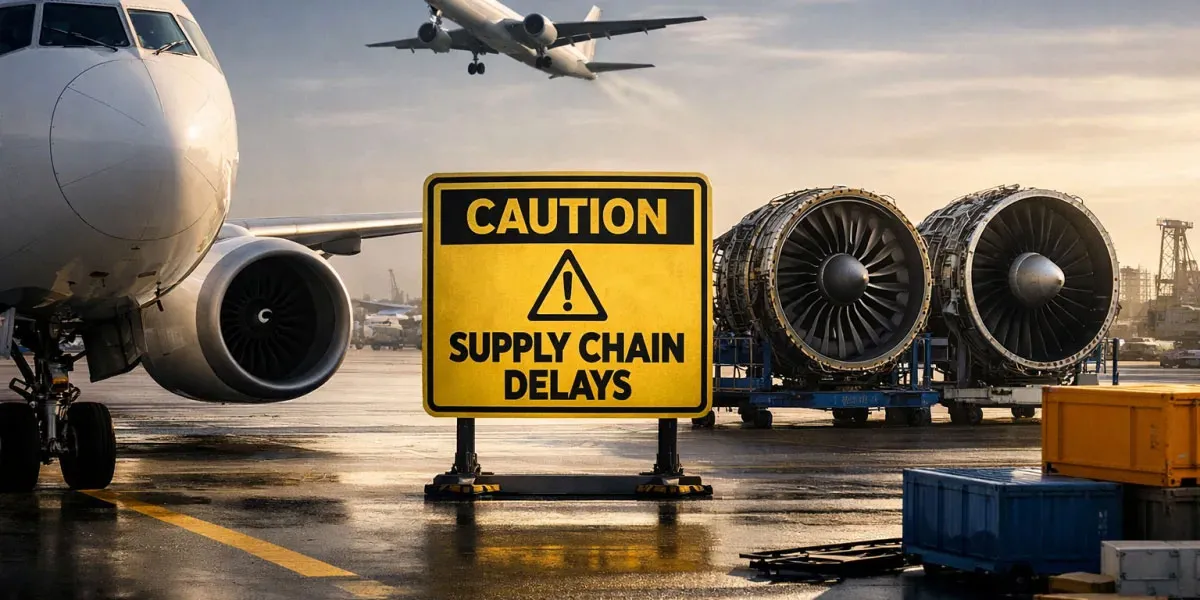
India's aviation sector recorded a marked slowdown in fleet expansion in 2025 as carriers inducted 95 aircraft, a decline of 32 per cent from 2024 when 140 aircraft were added. The contraction occurred despite a backlog of 1,600-plus aircraft on order, reflecting widening global supply chain bottlenecks and persistent engine reliability problems. Industry observers linked the slowdown to both manufacturer production issues and operational constraints within domestic carriers.\n\nOfficial data presented in the Lok Sabha by the Union Minister of State for Civil Aviation indicated that all inductions were narrow-body types and that there were no wide-body deliveries in the year. 

The composition emphasised continued reliance on Airbus A320neo and Boeing 737 MAX families for short and medium-haul services. Airlines serving domestic and regional routes adjusted schedules and capacity plans to reflect the reduced inflow of new airframes.\n\nDeliveries in 2024 had comprised 129 narrow-body and 11 wide-body aircraft, while 2023 saw 104 narrow-body and eight wide-body deliveries, underscoring volatility in the wide-body segment. 

The year opened with a modest start as carriers inducted seven narrow-body and one wide-body aircraft in January. The absence of wide-body additions in 2025 constrained airlines planning for long haul expansion and cargo capacity growth.\n\nManufacturers Boeing and Airbus have been managing production hurdles as parts suppliers and engine makers address quality and delivery timelines, which has fed into the induction shortfall. 

Regulators also influenced operational priorities when the Directorate General of Civil Aviation introduced stricter Flight Duty Time Limitation rules in late 2025, prompting carriers to focus on crew training and operational stability. Smaller carriers that rely on short-haul fleets were particularly affected by the constrained deliveries.\n\nA recovery is expected in 2026 as manufacturers plan to raise output and engine serviceability improves. Trade measures with the United States may lower tariffs on aerospace parts and support local sourcing.      

India's aviation sector recorded a marked slowdown in fleet expansion in 2025 as carriers inducted 95 aircraft, a decline of 32 per cent from 2024 when 140 aircraft were added. The contraction occurred despite a backlog of 1,600-plus aircraft on order, reflecting widening global supply chain bottlenecks and persistent engine reliability problems. Industry observers linked the slowdown to both manufacturer production issues and operational constraints within domestic carriers.\n\nOfficial data presented in the Lok Sabha by the Union Minister of State for Civil Aviation indicated that all inductions were narrow-body types and that there were no wide-body deliveries in the year. The composition emphasised continued reliance on Airbus A320neo and Boeing 737 MAX families for short and medium-haul services. Airlines serving domestic and regional routes adjusted schedules and capacity plans to reflect the reduced inflow of new airframes.\n\nDeliveries in 2024 had comprised 129 narrow-body and 11 wide-body aircraft, while 2023 saw 104 narrow-body and eight wide-body deliveries, underscoring volatility in the wide-body segment. The year opened with a modest start as carriers inducted seven narrow-body and one wide-body aircraft in January. The absence of wide-body additions in 2025 constrained airlines planning for long haul expansion and cargo capacity growth.\n\nManufacturers Boeing and Airbus have been managing production hurdles as parts suppliers and engine makers address quality and delivery timelines, which has fed into the induction shortfall. Regulators also influenced operational priorities when the Directorate General of Civil Aviation introduced stricter Flight Duty Time Limitation rules in late 2025, prompting carriers to focus on crew training and operational stability. Smaller carriers that rely on short-haul fleets were particularly affected by the constrained deliveries.\n\nA recovery is expected in 2026 as manufacturers plan to raise output and engine serviceability improves. Trade measures with the United States may lower tariffs on aerospace parts and support local sourcing.      

Next Story
Infrastructure Energy

Jyoti Structures expands manufacturing capacity in Nashik

The announcement Jyoti Structures (JSL) reported steady operational performance in 2025, supported by stable project execution across its power transmission portfolio. The company commissioned galvanisation operations at its second Nashik manufacturing unit, adding 33,000 MT of annual capacity. This increased aggregate tower manufacturing capability at Nashik to approximately 69,000 MT per annum, aimed at improving fabrication accuracy, scheduling control and delivery predictability. JSL also expanded its workforce to over 750 employees, onboarding more than 70 engineers during the year. C..

Next Story
Infrastructure Energy

TSPL Mega Health Camp Reaches 338 Residents in Mansa

Talwandi Sabo Power (TSPL), Punjab’s largest and North India’s largest private thermal power plant, organised a Mega Health Camp at Village Raipur, Mansa, under its flagship healthcare initiative Project SEHAT. The camp benefitted 338 community members through free consultations and diagnostic services.A team comprising a General Physician, Gynaecologist, Dermatologist and Dentist provided medical advice and treatment. Beneficiaries received free diagnostic tests including BP, HB, blood sugar, malaria, dengue and blood group tests, along with free medicines.The camp was inaugurated by Vill..

Next Story
Infrastructure Transport

Mumbai Coastal Road Musical Path Plays Jai Ho

Mumbai inaugurated India’s first musical path on the Coastal Road that plays the song Jai Ho for motorists. The civic administration said the installation used Hungarian technology and that the intention was to implement the concept of Sangeet Marg in future projects. A senior official suggested implementing a pilot on the Samruddhi Expressway, which connects Mumbai and Nagpur. City officials described the inauguration as a symbolic demonstration of collaboration between municipal authorities and foreign partners. The inauguration was attended by the Consul General of Hungary Ferenc Jari, f..

Advertisement

Subscribe to Our Newsletter

Get daily newsletters around different themes from Construction world.

STAY CONNECTED

Advertisement

Advertisement

Advertisement

Open In App