Kerala government to implement Sabarimala airport project
AVIATION & AIRPORTS

Kerala government to implement Sabarimala airport project

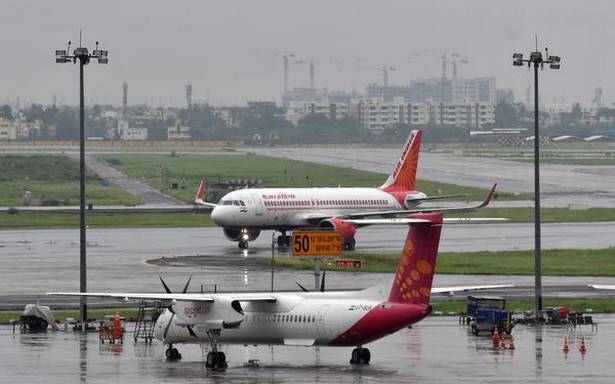
Despite the queries raised by the Ministry of Civil Aviation (MoCA) on the planned airport project at Sabarimala, the government will execute the project.

The government began preparations for the site survey, and a drone survey of Cheruvally estate has been allotted for the project.

On September 8, a review meeting held by CM Pinarayi Vijayan had evaluated the project, reviewed its status and the measures that need to be taken promptly to expedite its execution.

Quoting the views of the director general of civil aviation (DGCA), the Ministry of civil aviation had asked for some clarifications from the government regarding the application for project approval. A decision was taken during the CM’s review to provide a reply in this regard. Ministry of defence approval is anticipated soon since the Indian Air Force (IAF) has conveyed that it has no problem giving site permission.

But, a social impact assessment study, soil test could not be conducted because of pending litigations on ownership of the designated land. Whatever MoCA stated in the letter quoting DGCA’s report is part of routine administrative communication. The letter itself shows that despite the guidelines on greenfield airports that the planned airport may not meet, the project still can be approved by the government.

The proposed site will need a considerable amount of preparatory work to make it suitable for the project. According to the environmental impact assessment report provided by the consultant Louis Berger Consulting Pvt Ltd, a preliminary analysis of the site topography shows that the current elevation ranges from 40 m to 170 m, while the current average mean elevation is about 112 m.

The observed site is challenging in terms of grading requirements since there is a vast difference between maximum and minimum elevation. The fundamental part of the project site is at a higher elevation, while the boundaries are at a lower elevation. Current topography comprises moderately-high to steep slopes in a considerable area of the project site.

The consultant told the media that it has been assessed that 130 structures and five common property resources will be affected (approximately), comprising a temple, a church, a mosque and a hospital. The airport, which is considered to have 800 passengers by 2029-30 and 1,850 passengers during peak hours by 2049-50, is likely to break even only in 60 years. It raises many questions about the economic viability of the project.

Image Source


Also read: DCGA issues Aerodrome license to IRB Sindhudurg Airport

Despite the queries raised by the Ministry of Civil Aviation (MoCA) on the planned airport project at Sabarimala, the government will execute the project. The government began preparations for the site survey, and a drone survey of Cheruvally estate has been allotted for the project. On September 8, a review meeting held by CM Pinarayi Vijayan had evaluated the project, reviewed its status and the measures that need to be taken promptly to expedite its execution. Quoting the views of the director general of civil aviation (DGCA), the Ministry of civil aviation had asked for some clarifications from the government regarding the application for project approval. A decision was taken during the CM’s review to provide a reply in this regard. Ministry of defence approval is anticipated soon since the Indian Air Force (IAF) has conveyed that it has no problem giving site permission. But, a social impact assessment study, soil test could not be conducted because of pending litigations on ownership of the designated land. Whatever MoCA stated in the letter quoting DGCA’s report is part of routine administrative communication. The letter itself shows that despite the guidelines on greenfield airports that the planned airport may not meet, the project still can be approved by the government. The proposed site will need a considerable amount of preparatory work to make it suitable for the project. According to the environmental impact assessment report provided by the consultant Louis Berger Consulting Pvt Ltd, a preliminary analysis of the site topography shows that the current elevation ranges from 40 m to 170 m, while the current average mean elevation is about 112 m. The observed site is challenging in terms of grading requirements since there is a vast difference between maximum and minimum elevation. The fundamental part of the project site is at a higher elevation, while the boundaries are at a lower elevation. Current topography comprises moderately-high to steep slopes in a considerable area of the project site. The consultant told the media that it has been assessed that 130 structures and five common property resources will be affected (approximately), comprising a temple, a church, a mosque and a hospital. The airport, which is considered to have 800 passengers by 2029-30 and 1,850 passengers during peak hours by 2049-50, is likely to break even only in 60 years. It raises many questions about the economic viability of the project. Image SourceAlso read: DCGA issues Aerodrome license to IRB Sindhudurg Airport

Next Story
Infrastructure Transport

India Becomes First to Produce Bio-Bitumen for Roads

India has become the first country in the world to commercially produce bio-bitumen for use in road construction, according to Road, Transport and Highways Minister Nitin Gadkari. Bitumen, a black and viscous hydrocarbon derived from crude oil, is a key binding material in road building, and the bio-based alternative is expected to significantly improve the sector’s environmental footprint.Addressing the CSIR Technology Transfer Ceremony in New Delhi, Mr Gadkari congratulated Council of Scientific and Industrial Research on achieving the milestone, noting that the initiative would help curb ..

Next Story
Infrastructure Urban

HILT Policy Seen Boosting Telangana Revenue Sharply

The Hyderabad Industrial Land Transformation (HILT) Policy is expected to generate around Rs 1.08 billion in revenue for the Telangana state exchequer, according to Deputy Chief Minister Bhatti Vikramarka Mallu. Speaking in the Telangana Legislative Assembly, he said the policy would be implemented within a six-month timeframe in a transparent manner, with uniform rules applicable to all stakeholders. Mr Vikramarka noted that without the HILT Policy, the state would have earned only about Rs 1.2 million per acre. Under the new framework, however, revenue is projected to rise sharply to Rs 70 ..

Next Story
Infrastructure Urban

India Post, MoRD Tie Up to Boost Rural Inclusion

The Department of Posts and the Ministry of Rural Development have signed a Memorandum of Understanding to accelerate rural transformation and expand financial, digital and logistics services for Self-Help Groups (SHGs) and rural households across India. The agreement was signed in the presence of Union Minister of Communications and Development of North Eastern Region Jyotiraditya M. Scindia and Union Minister of Rural Development and Agriculture and Farmers’ Welfare Shivraj Singh Chouhan. The collaboration aligns with the government’s “Dak Sewa, Jan Sewa” vision and seeks to repositi..

Advertisement

Subscribe to Our Newsletter

Get daily newsletters around different themes from Construction world.

STAY CONNECTED

Advertisement

Advertisement

Advertisement

Advertisement

Open In App