



Navi Mumbai Airport Begins Commercial Operations
AVIATION & AIRPORTS

Navi Mumbai Airport Begins Commercial Operations

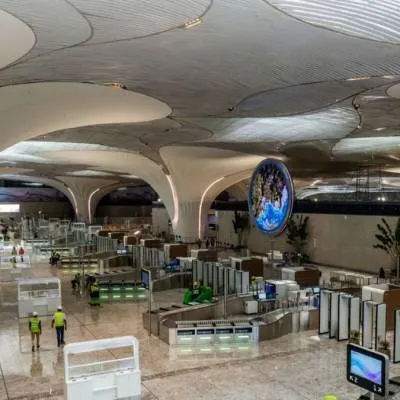
Navi Mumbai International Airport (NMIA) commenced commercial operations on Thursday, marking a major expansion of Mumbai’s aviation capacity and a significant milestone in India’s infrastructure development. With NMIA now operational, Mumbai joins global aviation hubs such as London, New York, Tokyo and Shanghai that operate multiple airports to cater to rising passenger demand, according to a statement released by the Adani Group.

For the Mumbai Metropolitan Region (MMR), the launch signals the beginning of a fully integrated multi-airport system designed to enhance scale, resilience and long-term growth. Developed and operated by Adani Airports Holdings Limited (AAHL), a wholly owned subsidiary of Adani Enterprises Limited (AEL), NMIA is among India’s largest greenfield airport projects and has been conceived to ease congestion at Chhatrapati Shivaji Maharaj International Airport.

The inaugural commercial arrival was IndiGo flight 6E460 from Bengaluru, which landed at 08:00 hours to a traditional water cannon salute. On the first day of operations, the airport handled 48 flights connecting nine domestic destinations and served more than 4,000 passengers, with peak traffic recorded between 05:00 and 07:00 hours, reflecting strong early demand and operational readiness.

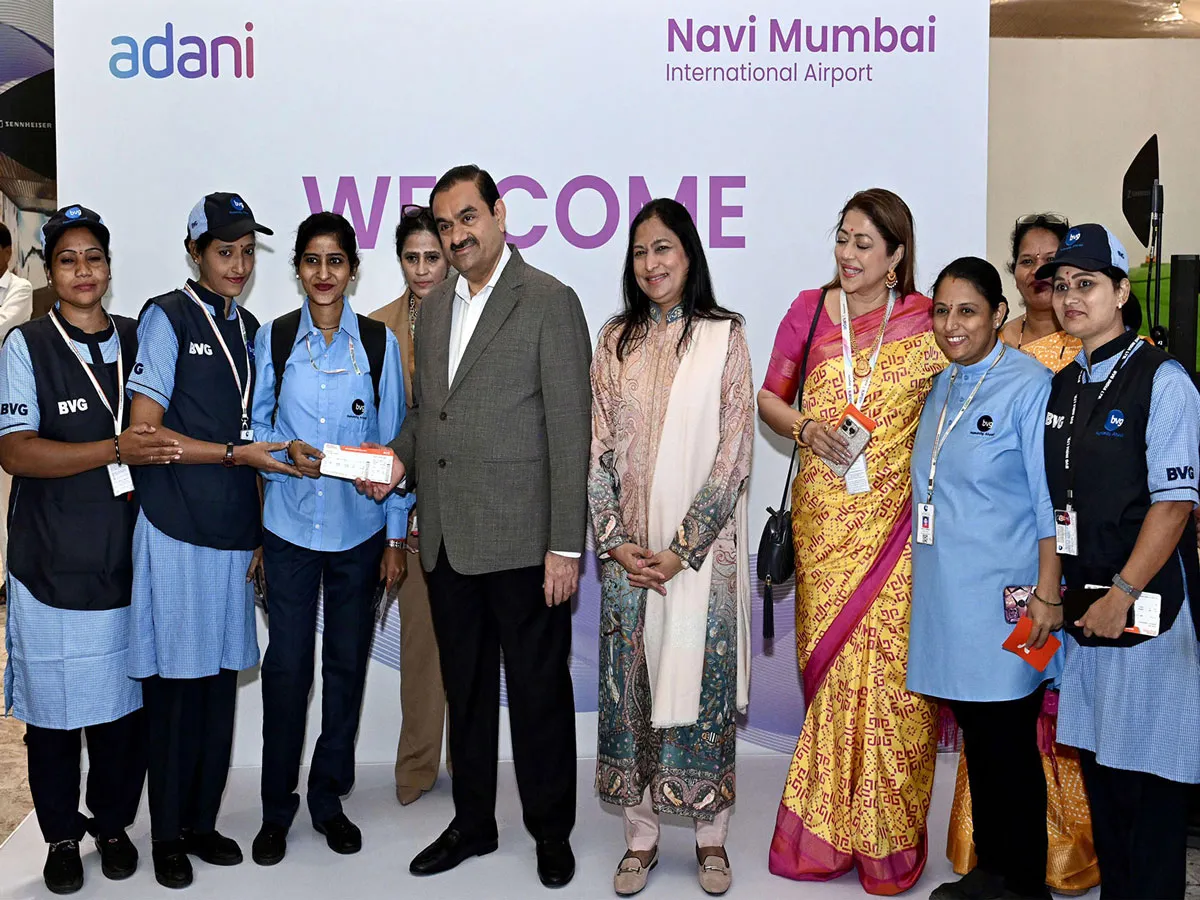
Adani Group Chairman Gautam Adani personally welcomed passengers from the inaugural flight and interacted with airport staff, frontline workers and first-time flyers. He later joined a ceremonial walk through the departure terminal with employees, community representatives and Adani Foundation beneficiaries. The launch concluded with a flag-hoisting ceremony led by Param Vir Chakra awardees Captain Bana Singh and Subedar Major Sanjay Kumar, followed by the national anthem. Leading sportspersons, including Suryakumar Yadav, Mithali Raj and Sunil Chhetri, along with social influencers, were also present.

Airline leadership from IndiGo, Air India Express and Akasa Air participated in the launch, confirming the start of scheduled departures from Navi Mumbai. Cultural performances featuring traditional Maharashtrian Lezim, Dhol and Tutari added a strong local flavour, while farmers, underprivileged families and colleagues with disabilities experienced their first flight through a special chartered aerial tour of Mumbai. India Post also released a commemorative First Flight Carried Special Cover featuring the NMIA terminal.

Jeet Adani, Director at AAHL, said NMIA establishes a resilient multi-airport system for the MMR by boosting capacity, enhancing passenger experience and future-proofing the region’s aviation growth. On the eve of operations, NMIA’s skyline was illuminated by a drone spectacle featuring 1,515 synchronised drones themed “Rise of India”, showcasing the airport’s iconic design, sustainability focus and aspirations for the future.

Calling the launch “a proud day for Mumbai and for India”, Gautam Adani said NMIA stands as a promise of what the country can achieve when ambition is guided by purpose and delivered with speed and execution.

Navi Mumbai International Airport (NMIA) commenced commercial operations on Thursday, marking a major expansion of Mumbai’s aviation capacity and a significant milestone in India’s infrastructure development. With NMIA now operational, Mumbai joins global aviation hubs such as London, New York, Tokyo and Shanghai that operate multiple airports to cater to rising passenger demand, according to a statement released by the Adani Group. For the Mumbai Metropolitan Region (MMR), the launch signals the beginning of a fully integrated multi-airport system designed to enhance scale, resilience and long-term growth. Developed and operated by Adani Airports Holdings Limited (AAHL), a wholly owned subsidiary of Adani Enterprises Limited (AEL), NMIA is among India’s largest greenfield airport projects and has been conceived to ease congestion at Chhatrapati Shivaji Maharaj International Airport. The inaugural commercial arrival was IndiGo flight 6E460 from Bengaluru, which landed at 08:00 hours to a traditional water cannon salute. On the first day of operations, the airport handled 48 flights connecting nine domestic destinations and served more than 4,000 passengers, with peak traffic recorded between 05:00 and 07:00 hours, reflecting strong early demand and operational readiness. Adani Group Chairman Gautam Adani personally welcomed passengers from the inaugural flight and interacted with airport staff, frontline workers and first-time flyers. He later joined a ceremonial walk through the departure terminal with employees, community representatives and Adani Foundation beneficiaries. The launch concluded with a flag-hoisting ceremony led by Param Vir Chakra awardees Captain Bana Singh and Subedar Major Sanjay Kumar, followed by the national anthem. Leading sportspersons, including Suryakumar Yadav, Mithali Raj and Sunil Chhetri, along with social influencers, were also present. Airline leadership from IndiGo, Air India Express and Akasa Air participated in the launch, confirming the start of scheduled departures from Navi Mumbai. Cultural performances featuring traditional Maharashtrian Lezim, Dhol and Tutari added a strong local flavour, while farmers, underprivileged families and colleagues with disabilities experienced their first flight through a special chartered aerial tour of Mumbai. India Post also released a commemorative First Flight Carried Special Cover featuring the NMIA terminal. Jeet Adani, Director at AAHL, said NMIA establishes a resilient multi-airport system for the MMR by boosting capacity, enhancing passenger experience and future-proofing the region’s aviation growth. On the eve of operations, NMIA’s skyline was illuminated by a drone spectacle featuring 1,515 synchronised drones themed “Rise of India”, showcasing the airport’s iconic design, sustainability focus and aspirations for the future. Calling the launch “a proud day for Mumbai and for India”, Gautam Adani said NMIA stands as a promise of what the country can achieve when ambition is guided by purpose and delivered with speed and execution.

Next Story
Infrastructure Urban

Jyoti Structures FY26 profit rises 56.5%

Jyoti Structures (JSL) recently reported strong financial results for the quarter and year ended 31 March 2026, driven by disciplined execution, cost management and steady progress across its order book.For Q4 FY2025-26, total income rose 44.2 per cent to Rs 2.41 billion from Rs 1.67 billion in Q4 FY2024-25. EBITDA increased 58.6 per cent to Rs 237 million, while EBITDA margin improved by 89 basis points to 9.84 per cent. Profit before tax grew 53.3 per cent to Rs 188.5 million, and net profit rose 51.9 per cent to Rs 181.4 million.For FY2025-26, total income grew 53.1 per cent to Rs 7.72 bill..

Next Story
Infrastructure Energy

Cat BEPU to Power Doppstadt Separator at IFAT 2026

Caterpillar’s Cat Battery Electric Power Unit (BEPU) has been selected by Doppstadt to power its SWS 6 Spiral Shaft Separator, which will be showcased for the first time at IFAT 2026 in Munich, Germany, from 4–7 May.The compact plug-and-play BEPU is designed to replace a diesel engine within the same space, using the same mounting locations and relative machine position. It integrates the battery, motor, inverter, onboard charging, cooling and controls, enabling OEMs to electrify existing chassis platforms without extensive redesign.Caterpillar and Cat dealer Zeppelin Power Systems have be..

Next Story
Infrastructure Urban

VECV sales rise 6.9% in April 2026

VE Commercial Vehicles, a joint venture between Volvo Group and Eicher Motors, recorded sales of 7,318 units in April 2026, compared to 6,846 units in April 2025, registering 6.9 per cent growth. The total included 7,159 units under the Eicher brand and 159 units under the Volvo brand.Eicher branded trucks and buses reported sales of 7,159 units during the month, up 6.6 per cent from 6,717 units in April 2025. In the domestic commercial vehicle market, Eicher sales rose 8.6 per cent to 6,797 units from 6,257 units a year earlier.Exports declined 21.3 per cent, with VECV recording 362 units in ..

Advertisement

Subscribe to Our Newsletter

Get daily newsletters around different themes from Construction world.

STAY CONNECTED

Advertisement

Advertisement

Advertisement