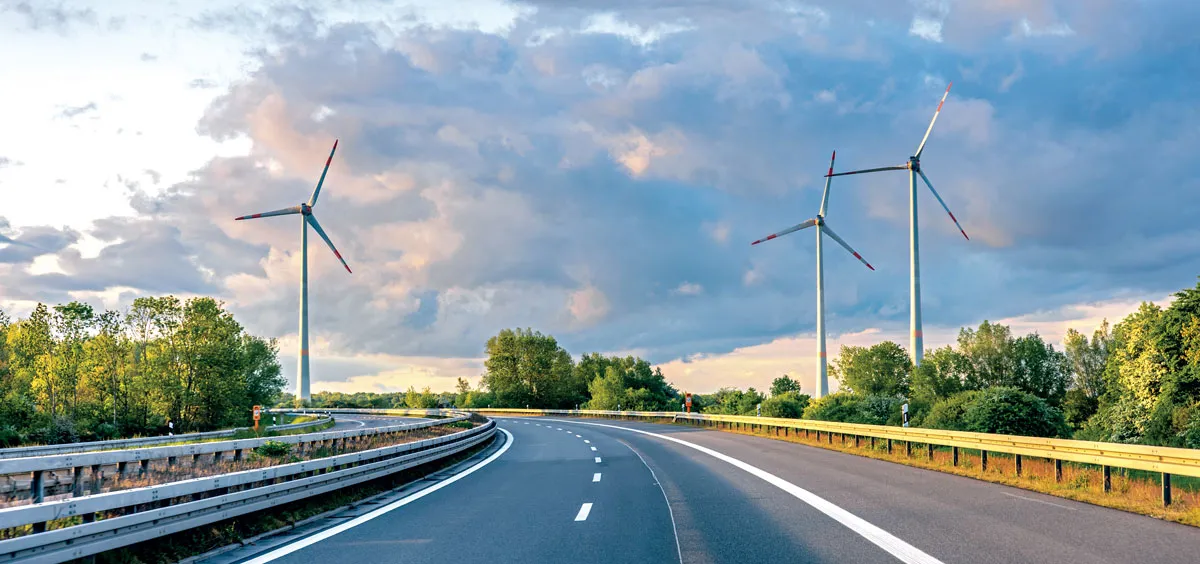
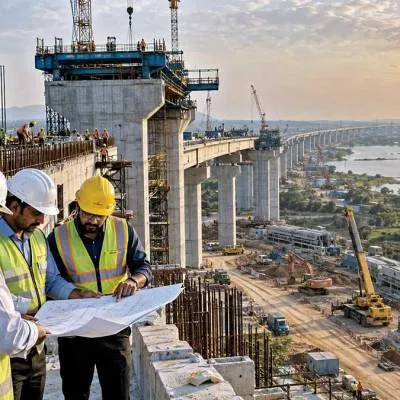
Building Roads for a Changing ClimateIndia’s roads infrastructure faces a new test as extreme weather, resource constraints and sustainability demands reshape conventional design and construction.India’s expanding road network must do more than connect places. Roads need to withstand changing climatic conditions, use resources efficiently and deliver value across their lifecycle.Designing for extreme weatherErratic rainfall, flash floods, heatwaves and changing freeze-thaw cycles are testing conventional road designs. Prof Satish Pandey, Head, Flexible Pavement Division, CSIR-CRRI, says climate resilience must be embedded in road design, construction and maintenance.Intense rainfall allows moisture to weaken pavements. Mixes therefore need greater moisture resistance, supported by technologies that strengthen the bond between bitumen and aggregates. Pandey cited work on NH-66 Mumbai-Goa, where hydrophobic slag aggregates, stripping agents and organosilane treatments are being explored to minimise moisture-related damage.In vulnerable and high-altitude terrain, changing rainfall and freeze-thaw patterns also raise slope-failure risks. Rock bolting, net stabilisation and bioengineering, including deep-rooted vegetation, can supplement conventional measures. Roads must be designed for the climate they will face, not historical weather patterns alone.Recycling needs a stronger pushIndia has the technical knowledge to recycle substantial portions of existing pavements, but adoption remains limited. Prof Dharamveer Singh, Professor, Department of Civil Engineering, IIT Bombay, notes that Indian Roads Congress guidelines have long supported pavement recycling. It conserves aggregates, reduces costs and carbon emissions, and lowers environmental impact. The obstacle is implementation.Without stronger mandates, recycling loses out to conventional practices. Quality aggregates are also harder to source in several regions and may need to travel hundreds of kilometres, adding cost and emissions. Steel slag and other industrial byproducts can also serve as construction resources. Recycled and alternative materials must become part of project planning.Rethinking the DPRSustainability cannot be achieved by simply adding specifications to an existing project document. Prof Venkatesh Balasubramanian, Professor, Department of Engineering Design, IIT Madras, argues that road planning must return to first principles: what is the road meant to achieve, and how can this be delivered efficiently?A sustainable DPR should prioritise local materials and reflect geography, traffic, climate and human behaviour. It must anticipate changing traffic loads and future requirements, allowing roads to adapt without complete reconstruction. Specifications should be practical, measurable and executable onsite, making sustainability commitments verifiable during construction and maintenance.Making innovation commercially viableFor Himanshu Agarwal, COO - Roads & Infrastructure, Zydex Group, contractors build what the DPR specifies. To secure long-term performance, the document must define pavement performance over its life, not just construction parameters. Drainage and moisture resilience must be addressed from the outset.India has a large stock of potentially reusable materials, including earth, aggregates and industrial residues. Plastic waste and mining byproducts could also find infrastructure applications if properly evaluated and engineered for stability.Innovation needs evidence and trust. Contractors on BOT and HAM projects have an incentive to adopt maintenance-reducing technologies because they bear the long-term consequences of pavement performance. Evidence-based pathways are needed to move proven innovations from laboratories into mainstream projects.From lowest price to lifecycle valueRoad construction economics remain dominated by initial cost, but lifecycle thinking is gaining ground. Navin Bhuwalka, Director, SRMB Steel, highlights the importance of ESG, particularly in long-duration road concessions where maintenance costs can outweigh initial construction-cost differences.A higher-performing material may cost more upfront but deliver better value by extending service life and reducing maintenance. Procurement and DPR specifications must look beyond L1 selection and give greater weight to performance, durability and lifecycle economics. A higher initial investment can make commercial sense when it improves long-term returns.The human factorTechnology and specifications deliver results only when site teams can implement them. Singh identifies capacity building as a key challenge: engineers, supervisors and laboratory personnel need to understand why specifications and processes matter. They must also have the authority to reject substandard materials or workmanship without fear of repercussions.Pandey notes that the road-construction ecosystem remains focused on speed and minimum cost. Sustainability, new materials and long-term performance must become part of this framework. Third-party quality audits, independent technical assessments and collaboration among government agencies, research institutions and contractors can bridge the gap between design and execution.From sustainable roads to resilient infrastructureIndia’s road-building ambitions will require significant materials, energy and capital. Continuing with conventional approaches will increase pressure on natural resources and maintenance. The shift must begin at the DPR stage and continue through construction and rehabilitation: use local and recycled materials where appropriate, design for extreme weather, build in adaptability, strengthen site-level capacity and assess projects on lifecycle value rather than initial cost.Sustainability is not only about reducing carbon emissions. It means infrastructure that uses fewer resources, lasts longer, adapts to changing conditions and performs reliably. India has the technologies, research capabilities and material resources to make this transition. The task is to align policy, procurement, design, execution and stakeholder incentives around that goal.The road of the future must be resilient, resource-efficient and designed for an unpredictable climate.This article is based on insights shared during the session titled “Designing Roads on Sustainability, Durability and Climate Change”, held at RAHSTA 2026 on July 9, 2026.KEY TAKEAWAYSRoad designs must account for flash floods, intense rainfall and changing freeze-thaw cycles.Pavement-recycling guidelines need stronger implementation and mandates.Local materials, geography, traffic and climate must shape road design.Specifications must prioritise durability and serviceability, not just initial cost.Material selection must consider performance and lifecycle costs.Evidence-based evaluation can move new materials into road projects.Training and authority to reject substandard work are essential.All stakeholders must work towards common performance goals.- KARTHIK M