Coal Imports by Imported-Fuel Power Plants Rise Marginally in August
POWER & RENEWABLE ENERGY

Coal Imports by Imported-Fuel Power Plants Rise Marginally in August

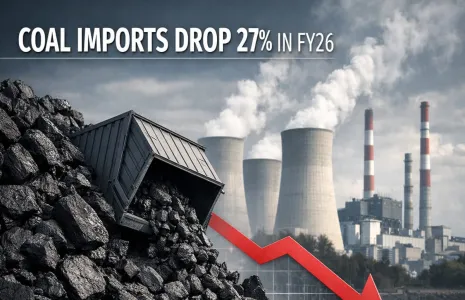
Coal imports by thermal power plants dependent on imported fuel rose marginally to 18.31 mn t in August 2026 from 18.13 mn t in August 2025, according to data released by the coal ministry. The increase came as the government continued efforts to reduce dependence on overseas coal in the power sector.

These plants are designed to operate primarily on imported coal. Their imports accounted for a limited increase even as overall coal imports declined during the month, indicating a differing trend among power stations based on fuel requirements and plant design.

The country's total coal imports fell 5.83 per cent to 104.57 mn t in August from 111.05 mn t in the corresponding month of the previous fiscal year. The ministry attributed the decline to efforts to raise domestic coal production, improve availability and strengthen the supply chain.

Coal imports by power plants decreased 6.39 per cent to 21.32 mn t in August from 22.77 mn t in August 2025. The ministry linked the reduction to improved domestic coal availability and lower requirements for imported coal blending at domestic coal-based power plants.

The share of imported coal in India's total coal consumption also declined in August compared with the same month last year. Coking coal imports fell 4.18 per cent to 27.30 mn t from 28.49 mn t. Coking coal is an important raw material for steel production, while domestic supplies remain constrained by the quality and characteristics of indigenous reserves.

Import requirements for coking coal therefore continue to depend on the specific raw material needs of the steel industry. The government is working to increase domestic coal production, expand evacuation capacity, improve supply-chain efficiency and strengthen coal quality management, while maintaining reliable supplies for the power and industrial sectors.

Coal imports by thermal power plants dependent on imported fuel rose marginally to 18.31 mn t in August 2026 from 18.13 mn t in August 2025, according to data released by the coal ministry. The increase came as the government continued efforts to reduce dependence on overseas coal in the power sector. These plants are designed to operate primarily on imported coal. Their imports accounted for a limited increase even as overall coal imports declined during the month, indicating a differing trend among power stations based on fuel requirements and plant design. The country's total coal imports fell 5.83 per cent to 104.57 mn t in August from 111.05 mn t in the corresponding month of the previous fiscal year. The ministry attributed the decline to efforts to raise domestic coal production, improve availability and strengthen the supply chain. Coal imports by power plants decreased 6.39 per cent to 21.32 mn t in August from 22.77 mn t in August 2025. The ministry linked the reduction to improved domestic coal availability and lower requirements for imported coal blending at domestic coal-based power plants. The share of imported coal in India's total coal consumption also declined in August compared with the same month last year. Coking coal imports fell 4.18 per cent to 27.30 mn t from 28.49 mn t. Coking coal is an important raw material for steel production, while domestic supplies remain constrained by the quality and characteristics of indigenous reserves. Import requirements for coking coal therefore continue to depend on the specific raw material needs of the steel industry. The government is working to increase domestic coal production, expand evacuation capacity, improve supply-chain efficiency and strengthen coal quality management, while maintaining reliable supplies for the power and industrial sectors.

Related Stories

Gold Stories

Next Story
Infrastructure Urban

Jupiter Wagons Wins Rs. 3.24 bn ACT2 Wagon Orders from Private Firms

Jupiter Wagons has secured private-sector orders worth more than Rs. 3.24 bn from GATX India and Chetak International for its ACT2 automobile carrier wagons. The company announced the orders on 2 November 2026, saying the contracts would strengthen its business with private wagon-leasing and logistics operators. GATX India has issued a Letter of Intent (LOI) for the manufacture and supply of 10 rakes comprising 270 ACT2 wagons. The LOI is valued at Rs. 2.15 bn and covers the production and delivery of the company’s new-design automobile carrier platform. Chetak International has separately p..

Next Story
Infrastructure Urban

Tata Motors Takes Control of Iveco with 89.42 Per Cent Stake

Tata Motors has taken control of Italian commercial-vehicle maker Iveco after acquiring an 89.42 per cent stake for approximately €3.43 bn, or Rs. 363.87 bn. The transaction gives India’s largest commercial-vehicle manufacturer control of a European business with annual revenue of Rs. 1.42 tn, while shifting attention to integration, cash-flow generation and repayment of acquisition debt. TML CV Holdings B.V., Tata Motors’ indirect wholly owned subsidiary, acquired 238.16 mn common shares at €14.40 apiece. The holding represents 89.42 per cent of Iveco’s common share capital, excludi..

Next Story
Building Material

Ambuja Cements to Invest Rs. 145 bn to Raise Capacity by FY30

Ambuja Cements will invest Rs. 145 bn to expand its cement capacity to 155 mn tonnes per annum by fiscal 2030. The planned investment, equivalent to $1.53 bn, will increase production capacity from the company’s current level of 113.5 MTPA. The company expects capacity to reach 119 MTPA by March 2027, with the wider expansion programme adding facilities across several major cement markets. The investment is intended to support the company’s long-term growth and strengthen its manufacturing network in India. The new capacity will be developed across Assam, Bihar, Jharkhand, Gujarat, Maharas..

Advertisement

Subscribe to Our Newsletter

Get daily newsletters around different themes from Construction world.

STAY CONNECTED

Advertisement

SPECIAL OFFER
QR Code