


Delhi-Dehradun Expressway Cave In Near Shamli
ROADS & HIGHWAYS

Delhi-Dehradun Expressway Cave In Near Shamli

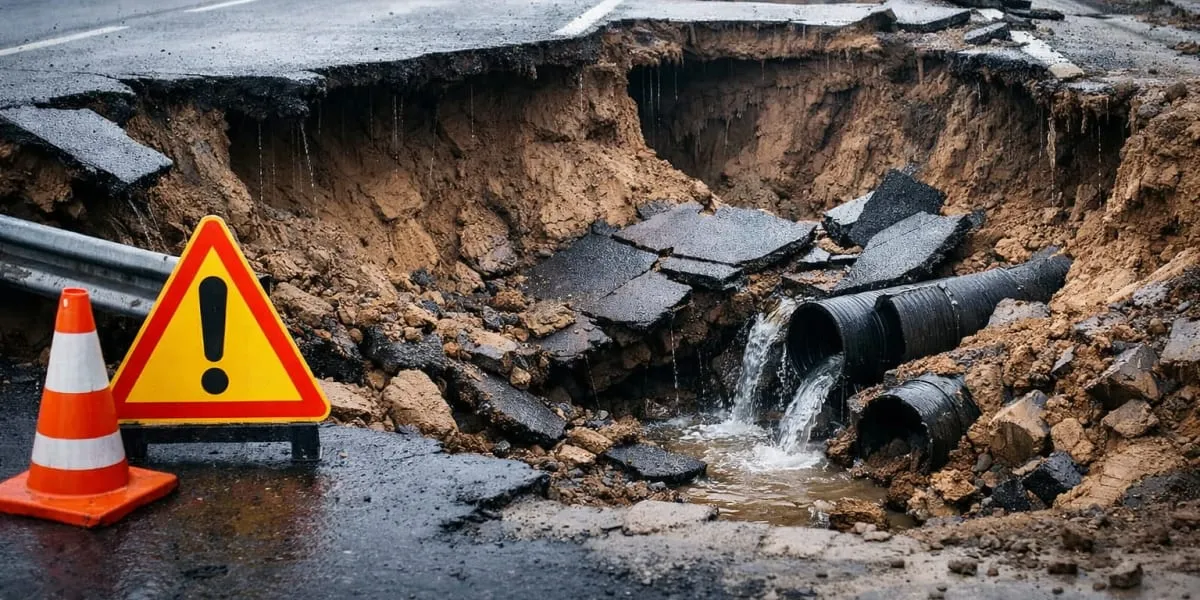
A portion of the newly built Delhi-Dehradun expressway caved in near Shamli on Wednesday morning after overnight rainfall, prompting widespread circulation of videos on social media and renewed concern over motorist safety and the durability of a flagship infrastructure project only months after it became operational. The incident occurred at Gogwan Jalalpur village in Shamli and drew attention to drainage and construction issues along the corridor.

The National Highways Authority of India said the damaged stretch had been repaired and attributed the cave-in to localized water stagnation and constraints in integrating the cross?drainage system at the site. The authority explained that a culvert had been constructed to carry rainwater from the expressway but that the drainage could not be integrated because local residents had been using the culvert opening as a vehicular crossing. It also said permanent slope protection and chute drain works remained pending owing to an ongoing land arbitration dispute.

To address immediate risks, the authority reported that it had initiated construction of an interim parallel drain of approximately one and a half kilometres and was redesigning the drainage gradient to convey rainwater safely to the entry and exit location at kilometre 56+500, pending commissioning of the balancing culvert. Repair teams restored the road surface promptly and traffic was managed to minimise disruption while engineering works continued.

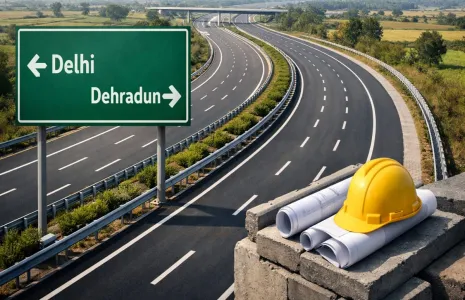
The 213 km expressway was built at a cost of around Rs 120 billion and was inaugurated on 14 April by Prime Minister Narendra Modi. It has reduced travel time between Delhi and Dehradun to about two and a half hours from the earlier six and a half hours and is designed for a maximum speed of 100 kmph. The route connects with major expressways including the Delhi-Mumbai, Delhi-Katra and Delhi-Meerut corridors and will link to future projects such as the Gorakhpur-Shamli Expressway and the Haridwar Spur.

"Join industry leaders at RAHSTA Expo, India's premier platform for roads, highways and traffic infrastructure. Register now to explore innovations, network with experts and shape the future of mobility."

A portion of the newly built Delhi-Dehradun expressway caved in near Shamli on Wednesday morning after overnight rainfall, prompting widespread circulation of videos on social media and renewed concern over motorist safety and the durability of a flagship infrastructure project only months after it became operational. The incident occurred at Gogwan Jalalpur village in Shamli and drew attention to drainage and construction issues along the corridor. The National Highways Authority of India said the damaged stretch had been repaired and attributed the cave-in to localized water stagnation and constraints in integrating the cross?drainage system at the site. The authority explained that a culvert had been constructed to carry rainwater from the expressway but that the drainage could not be integrated because local residents had been using the culvert opening as a vehicular crossing. It also said permanent slope protection and chute drain works remained pending owing to an ongoing land arbitration dispute. To address immediate risks, the authority reported that it had initiated construction of an interim parallel drain of approximately one and a half kilometres and was redesigning the drainage gradient to convey rainwater safely to the entry and exit location at kilometre 56+500, pending commissioning of the balancing culvert. Repair teams restored the road surface promptly and traffic was managed to minimise disruption while engineering works continued. The 213 km expressway was built at a cost of around Rs 120 billion and was inaugurated on 14 April by Prime Minister Narendra Modi. It has reduced travel time between Delhi and Dehradun to about two and a half hours from the earlier six and a half hours and is designed for a maximum speed of 100 kmph. The route connects with major expressways including the Delhi-Mumbai, Delhi-Katra and Delhi-Meerut corridors and will link to future projects such as the Gorakhpur-Shamli Expressway and the Haridwar Spur.

Next Story
Real Estate

SNN Estates Expands North Bengaluru Housing Project

SNN Estates has announced an expansion of its SNN Estates Felicity residential project in North Bengaluru following strong buyer demand, with 75 per cent of the first-phase inventory sold within three days of launch.The developer will add 76 apartments in the new phase, taking the project's estimated revenue potential to around Rs 1,000 crore upon completion of Phase 2.Spread across 6.5 acres in Rachenahalli, near Manyata Tech Park, the project comprises 604 apartments in 1.5, 2, 2.5, 3 and 4 BHK configurations. The development includes a 50,000-sq-ft clubhouse with amenities such as sports co..

Next Story
Infrastructure Urban

SCG Drives ASEAN Industrial Transformation Strategy

SCG is strengthening its focus on ASEAN as a key growth region by advancing industrial transformation, enhancing competitiveness and building resilient regional value chains. Thammasak Sethaudom, President and Chief Executive Officer, SCG, highlighted the need for industries to continuously develop capabilities, strengthen resilience and deepen regional cooperation to achieve sustainable long-term growth.SCG views ASEAN as an important growth engine alongside China, supported by favourable demographics, trade connectivity and investment flows. With ASEAN’s GDP projected to grow by around 4.7..

Next Story
Products

EUROBOND Expands NABL Accreditation to 51 Testing Parameters

EUROBOND, the flagship brand of Euro Panel Products, has expanded the National Accreditation Board for Testing and Calibration Laboratories (NABL) accreditation of its in-house laboratory from 16 to 51 mechanical and chemical testing parameters, making it the only Indian aluminium composite panel (ACP) manufacturer with accreditation covering such an extensive testing scope.The expanded accreditation enables the company to independently test coils, coatings, cores, aluminium composite panels (ACP) and metal composite panels (MCP) in accordance with international standards, including IS, ASTM, ..

Advertisement

Subscribe to Our Newsletter

Get daily newsletters around different themes from Construction world.

STAY CONNECTED

Advertisement

Advertisement

Advertisement